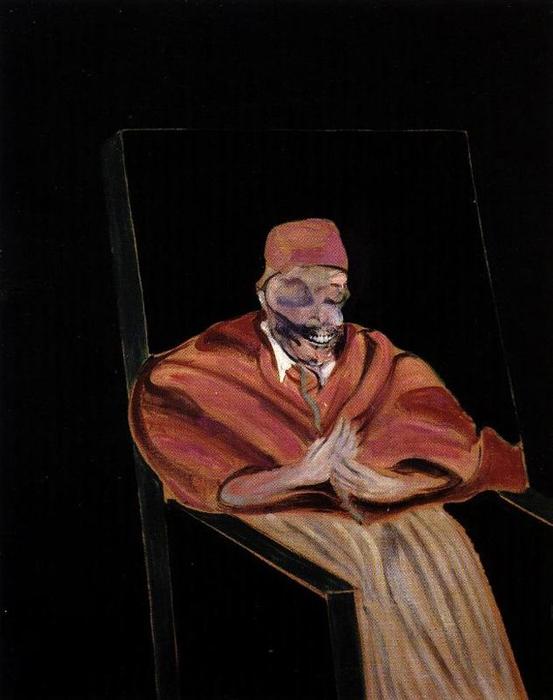
Study for a Pope IV - Francis Bacon
A haunting depiction of mortality and psychological torment, this study captures the essence of Bacon's signature style – grotesque figures juxtaposed against stark backgrounds.
The painting portrays a man with a skeleton face seated in a chair, embodying themes of decay and existential dread. Its unsettling imagery reflects Bacon’s preoccupation with human vul
Explore Francis Bacon's (1909-1992) emotionally charged figurative paintings. Known for distorted forms, existential themes & bold expressionism, he remains a cornerstone of modern art. Discover key works & legacy.
A Visceral Confrontation with Mortality
The moment one encounters Study for a Pope IV, there is an undeniable sense of psychological weight that commands the room. Francis Bacon presents us not with a traditional portrait of power, but with a haunting distillation of human suffering and the unsettling beauty of decay. A figure sits rigidly within a chair, his face transformed into a skeletal mask that stares back with hollow, circular eyes and a gaping, silent mouth. The striking contrast of a deep red robe against an abyscal, monochrome backdrop creates a visual tension that is both unsettling and profoundly captivating. This is art that does not merely sit on a wall; it demands an emotional response, pulling the viewer into a realm where the boundaries between life and death begin to blur.
The Alchemy of Anatomical Horror
Bacon’s mastery lies in his ability to translate internal torment into physical texture. Utilizing a method he famously referred to as “squeeze,” the artist applied intense pressure to the canvas, stretching the surface to heighten the viewer's sense of unease. His technique is a complex layering of oil paints and encaustic wax—a revival of techniques used by masters like Rembrandt—which lends the work a remarkable, luminous depth despite its somber palette. The resulting surface is often riddled with fine cracks and fissures, acting as a physical metaphor for the fractured psyche of his subject. For the discerning collector or interior designer, this tactile quality offers a profound sensory experience, making a high-quality reproduction a centerpiece of textural intrigue and intellectual depth.
Echoes of Post-War Anxiety
To understand the gravity of this piece, one must look to the era of its creation. Painted in the immediate aftermath of World War II, the work vibrates with the pervasive existential dread and trauma of a world recovering from unprecedented horror. By taking the traditional, opulent iconography of the Papacy and stripping it down to a grotesque, solitary figure, Bacon subverts religious grandeur to reveal a more universal truth about human vulnerability and loss. This deliberate provocation makes Study for a Pope IV an essential acquisition for those seeking art that transcends mere decoration. It is a piece designed for sophisticated spaces that value the courage to confront the darker, more complex aspects of the human condition, offering a powerful conversation starter that resonates with timeless intensity.