A Portrait of Despair: Exploring Francis Bacon’s “Study for a Portrait”
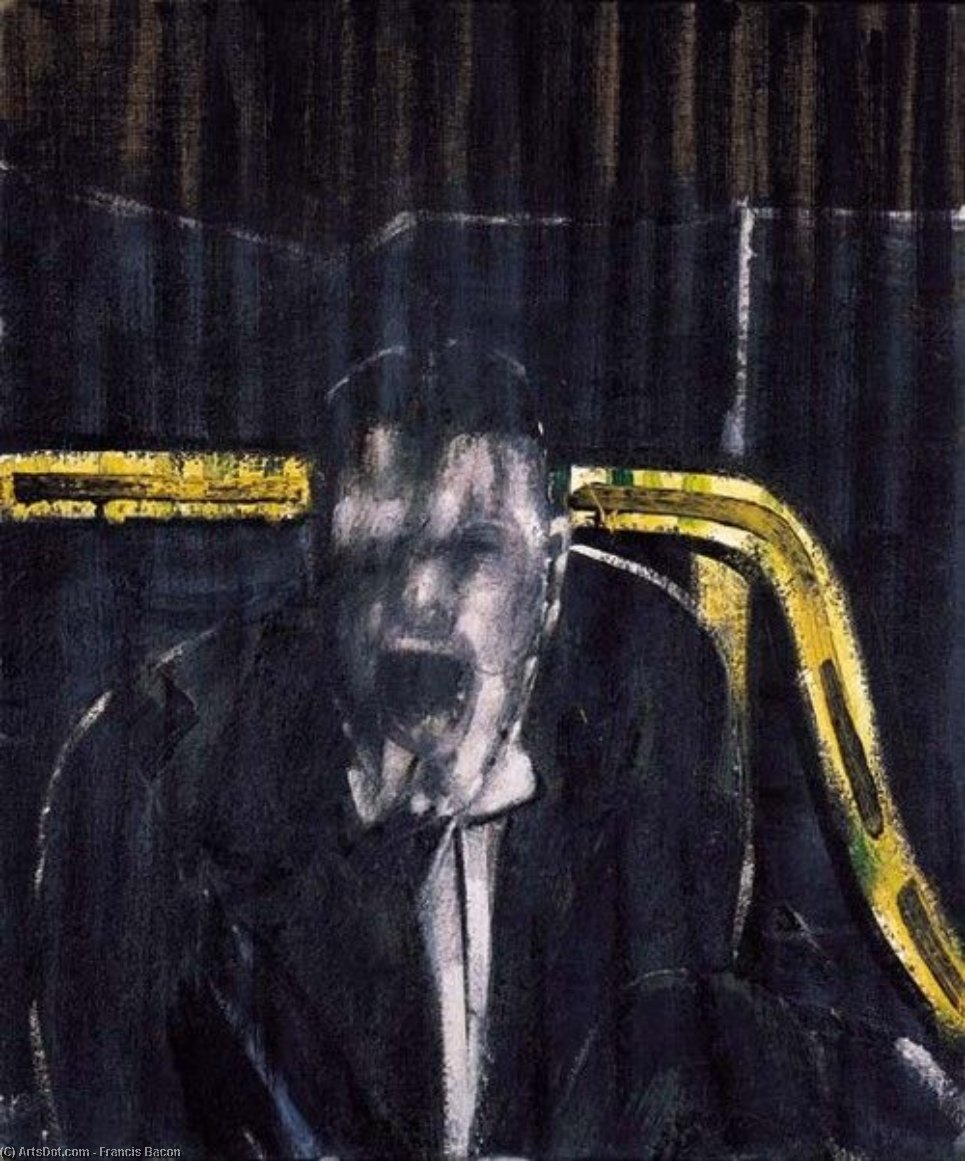
Francis Bacon’s “Study for a Portrait,” painted in 1952, stands as one chilling testament to the artist's unflinching exploration of human emotion. More than just a depiction of a man—though undeniably so—it embodies a profound psychological drama rendered with visceral intensity and unsettling beauty.
The painting’s style is unmistakably expressionistic, rejecting representational accuracy in favor of conveying inner turmoil. Bacon eschewed traditional methods, prioritizing spontaneity and intuition over meticulous planning. He employed a technique known as “squeeze,” applying paint directly onto the canvas with pressure, creating textured surfaces that mirror the fractured state of consciousness.
Historical Context: The Shadow of Postwar Britain
Created in the aftermath of World War II, "Study for a Portrait" reflects the pervasive anxieties and disillusionment of its time. Bacon’s work emerged from a cultural landscape grappling with trauma and questioning established values. The painting captures a mood of profound unease—a feeling that permeated British society as it struggled to rebuild itself amidst the ruins of conflict.
Symbolism: Anatomy and Emotion Converge
The figure seated in a chair dominates the composition, his posture conveying vulnerability and despair. Bacon’s masterful use of anatomy—particularly the distorted musculature of the torso—serves as a conduit for emotional expression. The open mouth, rendered with grotesque detail, symbolizes not merely vocal utterance but also an eruption of suppressed anguish.
The two chairs flanking the figure are significant symbols themselves. They represent isolation and confinement—the inescapable reality of human experience when confronted by overwhelming emotion. Their positioning reinforces the sense that the man is trapped within his own psychological landscape.
Emotional Impact: Confronting Darkness Within
"Study for a Portrait" compels viewers to confront uncomfortable truths about the human condition. Bacon’s aim wasn't merely to depict emotion; he sought to evoke it—to force us to acknowledge the darkness that resides within ourselves and our relationships with others.
The painting’s unsettling beauty derives from its ability to capture the essence of suffering without resorting to sentimental clichés. It lingers in the mind long after viewing, prompting reflection on themes of vulnerability, fear, and the inescapable limitations of human perception. Bacon's masterpiece continues to resonate powerfully with audiences today, cementing his place as a pivotal figure in modern art.
- Artist: Francis Bacon
- Year Painted: 1952
- Medium: Oil Paint on Canvas
- Style: Expressionism
A reproduction of “Study for a Portrait” offers an opportunity to experience Bacon’s masterful technique and profound psychological insight—a glimpse into the artist's uncompromising vision of human emotion.