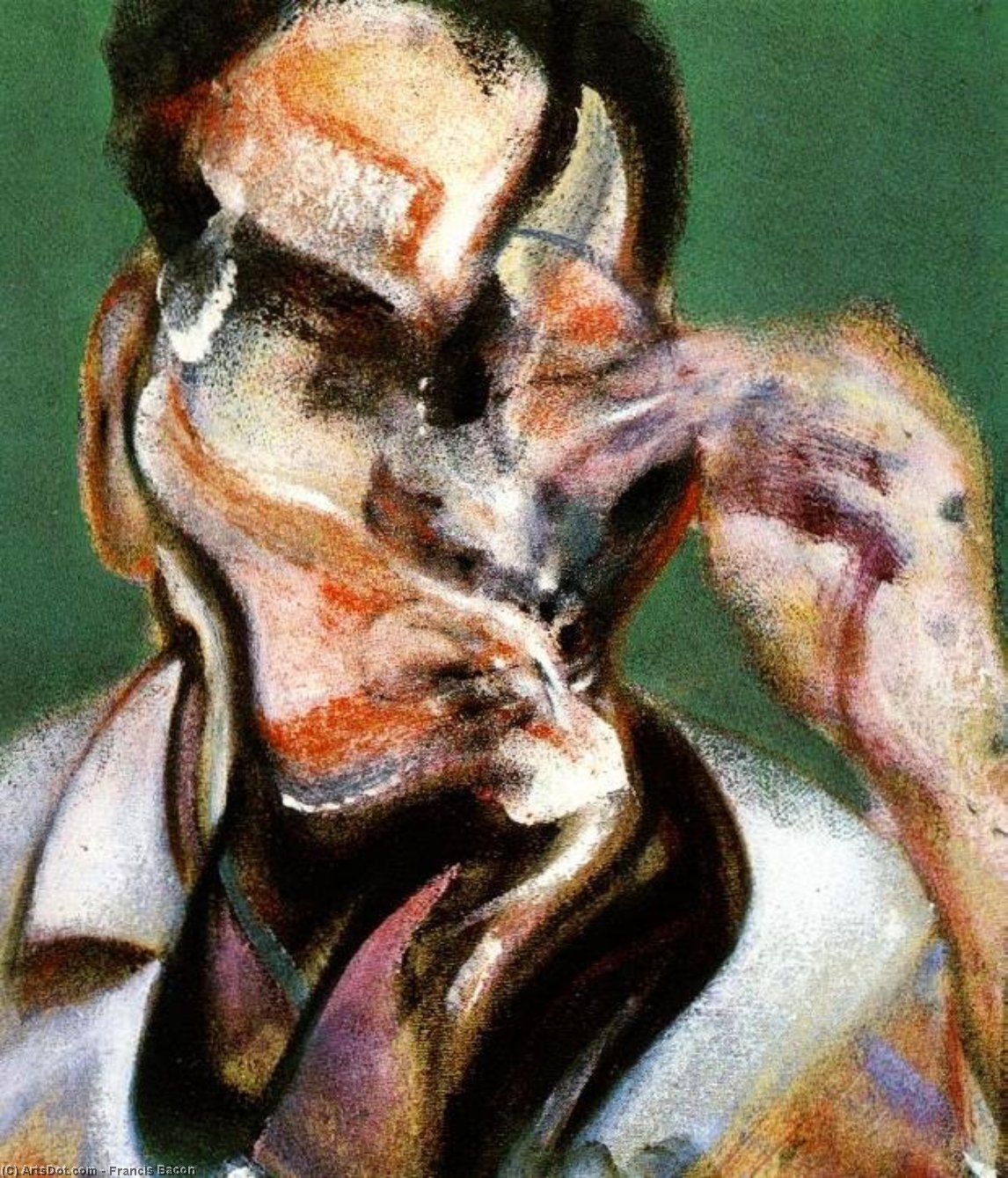
A haunting study by Francis Bacon depicting Isabel Rawsthorne, rendered with his signature distorted features and unsettling expressionism. Explore the visceral intensity of this iconic 1966 portrait.
Explore Francis Bacon's (1909-1992) emotionally charged figurative paintings. Known for distorted forms, existential themes & bold expressionism, he remains a cornerstone of modern art. Discover key works & legacy.
A Visceral Study: Unpacking Francis Bacon’s ‘Study for a Portrait of Isabel Rawsthorne,’ 1966
Francis Bacon's oeuvre is synonymous with confronting the darkest corners of the human psyche, and few works embody this intensity more profoundly than “Study for a Portrait of Isabel Rawsthorne,” created in 1966. This seemingly simple oil painting on canvas transcends the traditional portraiture genre, becoming instead a raw, unsettling exploration of vulnerability, anxiety, and the precariousness of identity – a hallmark of Bacon’s mature style. The image itself is arresting: a man, his mouth agape in what appears to be a silent scream, dominates the composition. His features are distorted, almost violently so, hinting at an underlying torment barely contained within the confines of the canvas. A subtle green hue pervades the background, adding a layer of unease and suggesting a claustrophobic space, further amplifying the subject’s distress. This isn't a celebration of beauty; it’s a brutal, honest depiction of psychological strain.
The Context of a Delayed Start: Bacon’s Artistic Journey
Understanding “Study for a Portrait of Isabel Rawsthorne” requires acknowledging Francis Bacon’s unique artistic trajectory. Born in Dublin in 1909, his early life was marked by instability and displacement – a constant relocation due to his mother's health issues profoundly shaped his worldview. Initially drawn to the excitement of horse racing and gambling, he drifted through various occupations before finding his true calling as a painter in his late twenties. This delayed entry into the art world is crucial; it imbued his work with an urgency and intensity born from a lifetime spent grappling with emotional turmoil. Bacon eschewed formal training, forging his own path by absorbing influences from diverse sources – Surrealism, Cubism, and the expressive distortions of German Expressionism all contributed to his distinctive visual language. He wasn’t interested in replicating reality; he sought to externalize inner experience, translating psychological states onto canvas with unflinching honesty.
Deconstructing the Technique: Distortion as Emotional Revelation
Bacon's technique is central to the painting’s power. The distorted features of the subject aren’t merely stylistic flourishes; they are deliberate attempts to bypass rational representation and tap directly into primal emotions. He employed a layering technique, building up the paint in thick, gestural strokes – visible brushwork that conveys movement and instability. The simplification of form, particularly the mouth, amplifies its impact, transforming it from a mere anatomical feature into a symbol of suppressed anguish. Note the way Bacon uses color; the muted palette—dominated by earthy tones and punctuated by the unsettling green—creates a sense of confinement and psychological pressure. The painting’s surface is not smooth or polished; it's deliberately rough and textured, mirroring the subject’s inner turmoil.
Symbolism and the Fragility of Identity
“Study for a Portrait of Isabel Rawsthorne” invites multiple interpretations. The open mouth suggests a desperate plea, a silent scream trapped within the confines of the canvas. Some art historians connect it to Bacon's own anxieties about mortality and the loss of control – themes that recur throughout his work. The green background could represent envy, sickness, or even the suffocating nature of societal expectations. Isabel Rawsthorne herself was a close friend of Bacon’s nanny, Jessie Lightfoot, adding another layer of personal significance to the portrait. More broadly, the painting speaks to the fragility of identity in the face of trauma and the inherent vulnerability of the human condition. It's a powerful meditation on isolation, fear, and the struggle to maintain composure amidst overwhelming emotional distress – a timeless exploration of the darker aspects of our shared experience.
Bringing Bacon’s Vision Home: A High-Quality Reproduction
ArtsDot offers meticulously crafted hand-painted reproductions that capture the essence of “Study for a Portrait of Isabel Rawsthorne.” Our skilled artists replicate Bacon's distinctive technique, faithfully reproducing the painting’s textural complexity and emotional intensity. By choosing a ArtsDot reproduction, you don't just acquire an image; you obtain a tangible representation of a seminal work of 20th-century art – a piece that invites contemplation and serves as a poignant reminder of the complexities of human emotion. Explore our range of sizes and canvas options to find the perfect addition to your collection or interior space, allowing Bacon’s powerful vision to resonate within your environment.