A Portrait of Anxiety: Exploring Francis Bacon’s Study for Van Gogh III
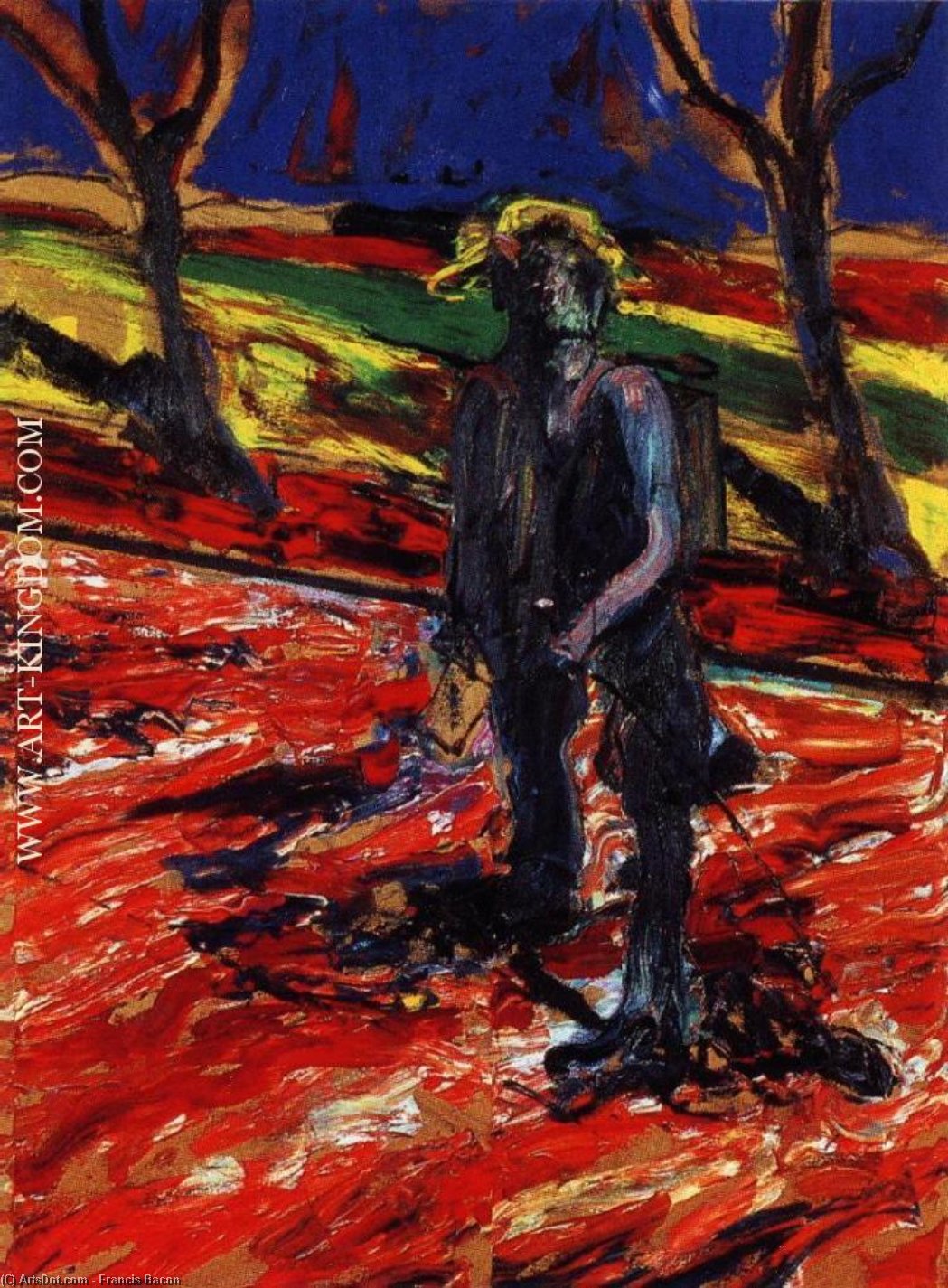
The painting, “Study for a Portrait of Van Gogh III,” produced in 1957 by the celebrated Irish artist Francis Bacon, isn't merely an image; it’s a distillation of existential dread rendered with unsettling precision. Captured on canvas, this piece embodies Bacon’s signature style—a brutal honesty that confronts viewers with uncomfortable truths about human vulnerability and psychological torment. It stands as a testament to his unwavering commitment to portraying the darker recesses of the human psyche.
- Subject Matter: The composition centers around a solitary figure, positioned against a backdrop of stylized trees—a deliberate echo of Vincent van Gogh’s landscapes, hinting at an artist grappling with artistic inspiration and perhaps wrestling with personal demons.
- Style & Technique: Bacon's technique is characterized by a visceral approach. He employs thick impasto – applying paint in heavy layers – creating textured surfaces that seem to pulsate with energy. The figure’s distorted anatomy—a grotesque caricature of human form—is rendered in shades of grey and black, emphasizing the artist’s preoccupation with decay and suffering.
Historical Context: Echoes of Trauma and Artistic Legacy
Bacon's artistic journey was profoundly shaped by personal experiences. Marked by instability and loss—including the death of his beloved nanny Jessie Lightfoot—he channeled these traumas into his art, creating works that resonate with a palpable sense of anguish. The painting’s influence extends beyond its immediate aesthetic qualities; it speaks to the broader anxieties of the post-war era, reflecting a disillusionment with optimism and a fascination with confronting mortality. Bacon himself acknowledged Van Gogh's profound impact on his artistic vision, recognizing in him a kindred spirit who dared to express emotion without restraint.
- Symbolism: The guitar held by the figure serves as a potent symbol of creativity and expression—yet it’s simultaneously presented as an instrument of confinement, mirroring the artist's struggle to liberate his inner turmoil. The trees represent both beauty and isolation, highlighting the paradoxical nature of human existence.
- Emotional Impact: Viewing “Study for a Portrait of Van Gogh III” is undeniably unsettling. Bacon’s masterful manipulation of form and color compels viewers to confront uncomfortable emotions—fear, despair, and vulnerability—leaving an indelible impression on the psyche.
Beyond Reproduction: Capturing the Essence of Bacon's Vision
A high-quality reproduction aims to convey not just the visual appearance of this artwork but also its emotional core. Skilled artisans meticulously recreate Bacon’s technique, painstakingly layering pigments to achieve the same textural richness and expressive intensity as the original canvas. When adorning a home or interior space, this print allows one to engage with the artist's profound exploration of human emotion—a reminder that art can serve as both solace and provocation.