A Portrait of Anxiety: Exploring Bacon’s ‘Study for a Self-Portrait’, 1964
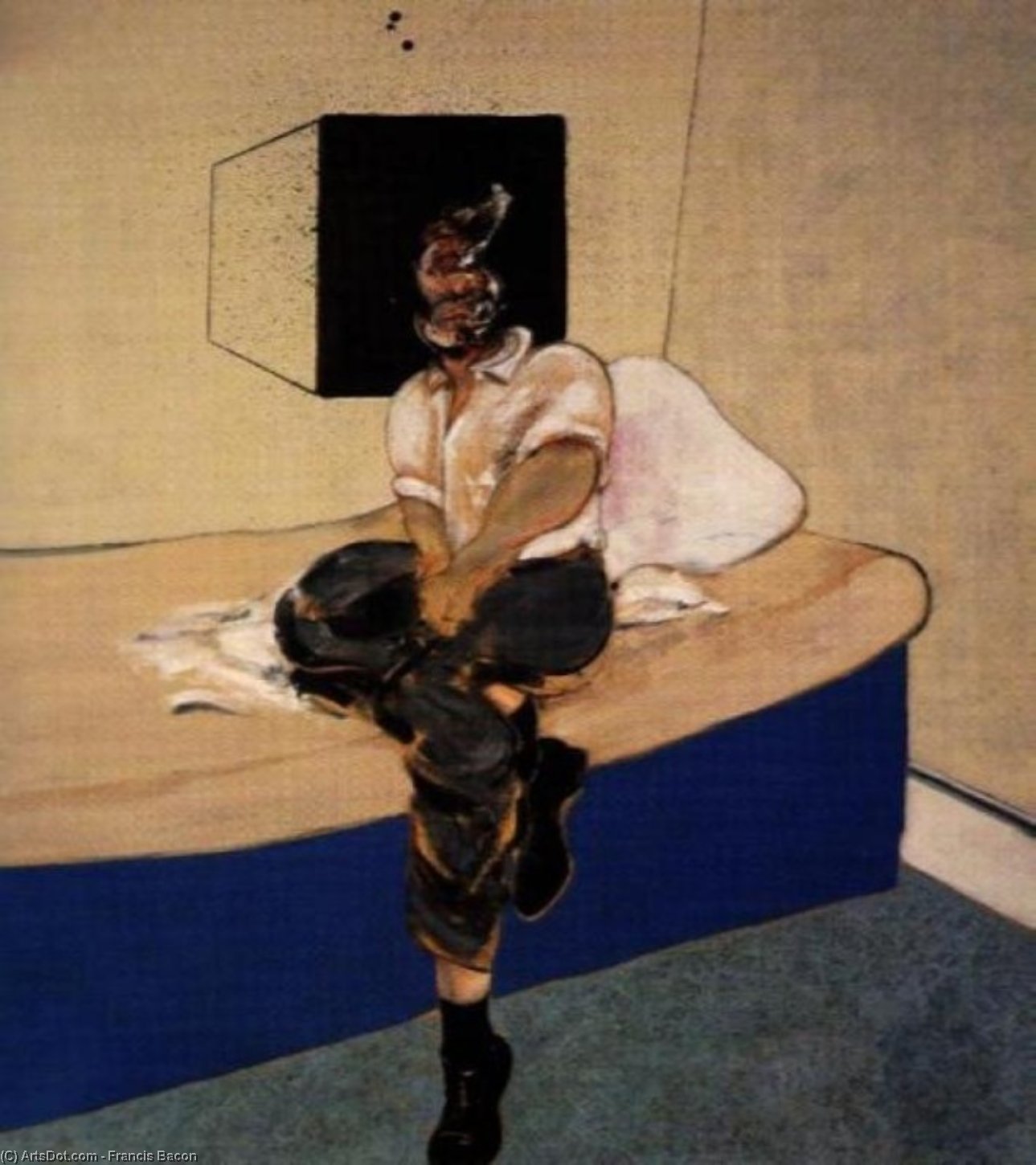
The painting “Study for a Self-Portrait,” created by Francis Bacon in 1964, isn't merely an image; it’s a visceral distillation of existential dread—a cornerstone of Bacon’s oeuvre and a testament to his masterful ability to convey profound psychological torment. Captured in muted tones of grey and ochre, the artwork depicts a solitary figure seated on a bed, shrouded by a stark black square that obscures his face and neck. This deliberate concealment speaks volumes about the artist's preoccupation with confronting inner demons and shielding himself from external judgment.
- Subject Matter: The central figure embodies vulnerability and isolation—a man stripped bare not only physically but emotionally, mirroring Bacon’s own anxieties regarding identity and mortality.
- Style: Bacon’s signature style – characterized by distorted figures rendered in unsettlingly realistic detail – is powerfully evident here. He eschewed traditional portraiture conventions, opting instead for a fragmented representation that prioritizes emotional expression over accurate depiction.
- Technique: Executed with oil paint on canvas, Bacon employed a technique known as “pressure painting,” where he applied thick layers of pigment directly onto the surface using a palette knife. This method creates textured surfaces and imbues the image with palpable physicality, amplifying its unsettling impact.
The historical context surrounding this work is crucial to understanding its significance. Produced in the aftermath of World War II, “Study for a Self-Portrait” reflects the pervasive anxieties of the time—the disillusionment following heroic ideals, the fear of nuclear annihilation, and the questioning of societal norms. Bacon’s art served as a conduit for grappling with these profound uncertainties, articulating the unspoken horrors lurking beneath the veneer of civilized existence.
Symbolism: The black square itself functions as a potent symbol—representing darkness, repression, and the impenetrable barrier between consciousness and subconsciousness. It encapsulates Bacon's relentless exploration of psychological trauma and his refusal to sugarcoat the darker aspects of human experience. Furthermore, the bed symbolizes vulnerability and confinement, reinforcing the figure’s sense of isolation and despair.
Emotional Impact: Viewing “Study for a Self-Portrait” evokes a feeling of unease and discomfort—a deliberate intention on Bacon's part to provoke contemplation about the human condition. The painting doesn’t offer comfort or reassurance; instead, it confronts us with the uncomfortable truth that suffering is an inescapable element of life. It remains a haunting reminder of Bacon’s unwavering commitment to portraying the darkest recesses of the human psyche and continues to resonate powerfully with audiences today.