A Descent into Psychological Torment: Analyzing Francis Bacon’s “Study for Figure II”
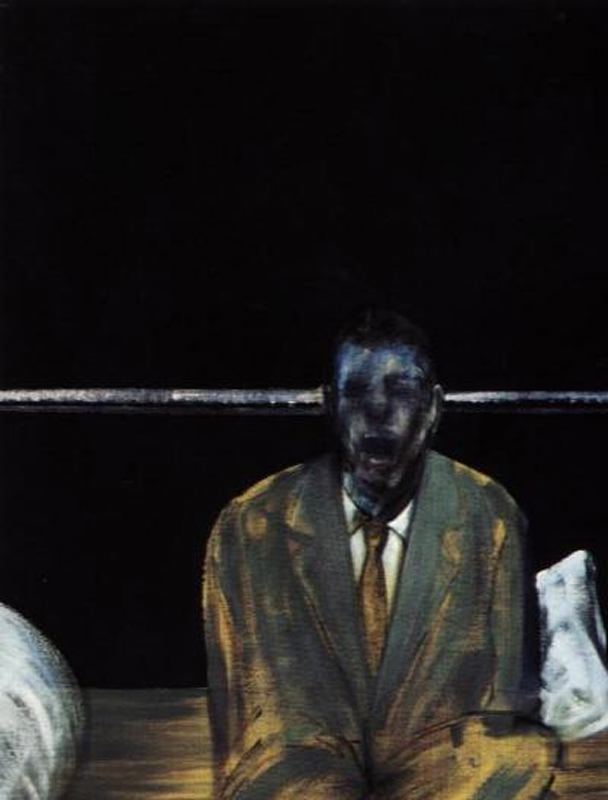
Francis Bacon's "Study for Figure II" isn’t merely a portrait; it’s an unflinching confrontation with the darkest recesses of human experience. Executed in 1953, this unsettling canvas embodies the core tenets of Expressionism – distortion, raw emotion, and a deliberate rejection of idealized beauty—solidifying Bacon's reputation as one of the most influential artists of his era. The painting depicts a solitary figure seated on what appears to be a bench or chair, rendered in shades of black punctuated by jarring bursts of muted yellow and hints of blue and green. Immediately arresting is the posture of the subject: contorted, screaming silently into the void, embodying palpable anguish and isolation.
- Composition & Perspective: The painting’s claustrophobic framing emphasizes the figure's vulnerability against a starkly minimal backdrop—a deliberate flattening of perspective that amplifies the sense of unease and removes any illusion of depth. This constricted space mirrors the psychological confinement experienced by the subject, mirroring themes prevalent in Bacon’s oeuvre.
- Color Palette & Texture: Bacon eschews conventional color harmonies, opting for a palette dominated by somber blacks and grays, punctuated by fleeting yellows and greens that serve as unsettling counterpoints. The textured surface—achieved through layering paint—adds to the immediacy of the image, conveying a visceral sense of physicality alongside psychological distress.
- Stylistic Influences & Technique: Heavily influenced by Surrealism and particularly by Picasso’s Guernica, Bacon utilizes expressive brushstrokes and deliberate distortions to convey emotion rather than represent reality accurately. The technique is characterized by spontaneity and layering, mirroring the artist's own preoccupation with capturing fleeting moments of intense feeling.
The painting’s symbolism resonates deeply within the context of post-war Britain—a period marked by disillusionment and anxiety following the devastation of World War II. Bacon’s exploration of human suffering aligns with broader artistic concerns about confronting mortality and grappling with existential dread. The figure's silent scream speaks volumes about the inability to articulate profound emotional pain, highlighting the limitations of language in conveying the complexities of psychological turmoil. It’s a portrait not of someone recognizable, but of something far more fundamental: the human condition itself.
“Study for Figure II” exemplifies Bacon’s masterful ability to distill emotion into visual form—a testament to his enduring legacy as an artist who dared to confront the uncomfortable truths about human existence.