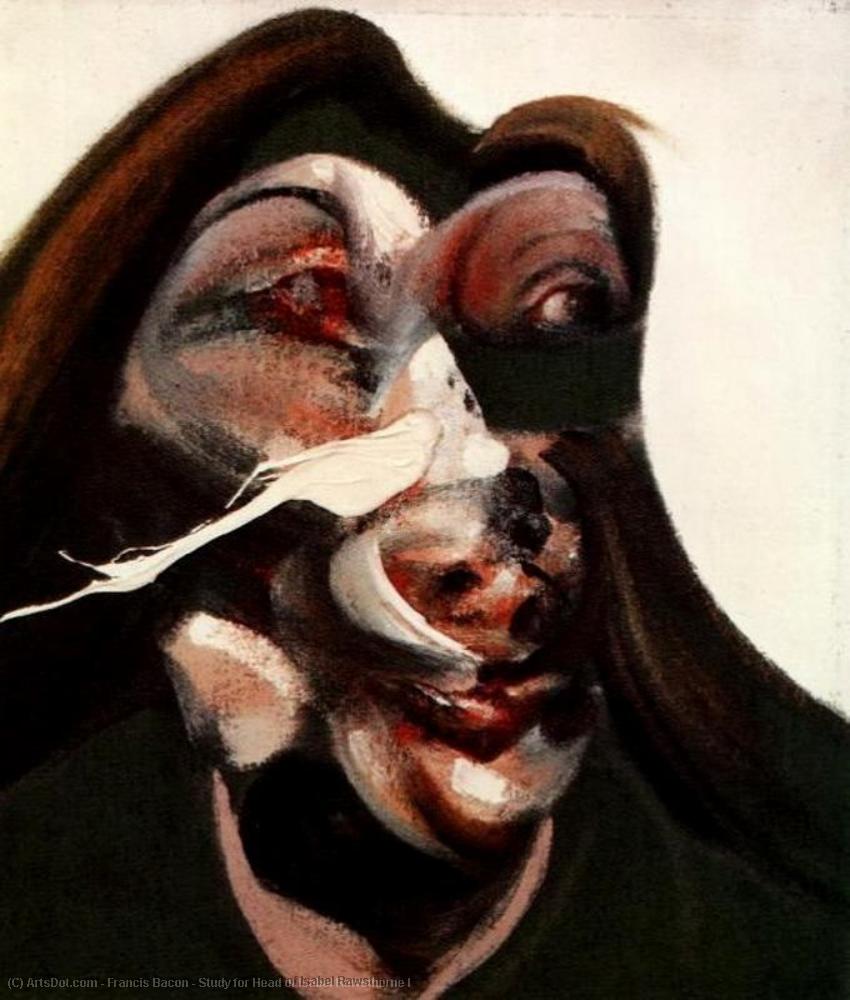
Study for Head of Isabel Rawsthorne I by Francis Bacon – A haunting portrait featuring a bird perched on the subject’s nose, capturing a moment of unsettling tension and visceral emotion.
Explore Francis Bacon's (1909-1992) emotionally charged figurative paintings. Known for distorted forms, existential themes & bold expressionism, he remains a cornerstone of modern art. Discover key works & legacy.
A Study for Head of Isabel Rawsthorne I: Confrontation with Mortality
The painting by Francis Bacon, “Study for Head of Isabel Rawsthorne I,” isn’t merely an image; it's a visceral confrontation with the anxieties inherent in human existence. Completed in 1967, during Bacon’s prolific period of artistic exploration—a time marked by both profound personal turmoil and unparalleled creative output—this piece encapsulates his signature style: unsettling realism infused with psychological depth. It depicts a close-up portrait of a person's face, dominated by an unnervingly pale complexion and shadowed eyes that convey a palpable sense of vulnerability. However, the true drama unfolds in the presence of a bird perched precariously on the subject’s nose—a motif recurrent throughout Bacon’s oeuvre and one laden with symbolic significance.
Style and Technique: The Brutal Beauty of Expressionism
Bacon's approach to painting defies categorization, yet it firmly resides within the realm of Expressionism. Rejecting illusionistic representation in favor of conveying emotion directly onto the canvas, he employs a technique characterized by fractured planes, distorted forms, and aggressive brushstrokes—a deliberate departure from traditional artistic conventions. The paint is applied with thick impasto, creating palpable texture that mimics the physicality of flesh and bone. Bacon meticulously builds up layers of pigment, manipulating color to heighten emotional impact; the dominant hues are muted greens and browns, reflecting a mood of melancholy and decay. This uncompromising style isn’t intended to seduce or delight but rather to shock and disturb—to force the viewer to confront uncomfortable truths about mortality and psychological fragility.
Historical Context: The Shadow of Existentialism
The painting emerged during the height of existentialist thought – a philosophical movement championed by thinkers like Jean-Paul Sartre and Albert Camus that questioned fundamental assumptions about human freedom, responsibility, and meaninglessness. Bacon’s art reflects this intellectual climate, mirroring the anxieties surrounding nuclear annihilation and the perceived absurdity of life in a universe devoid of divine purpose. The bird on the nose serves as a potent symbol of predation—representing death's inescapable grip upon humanity—while simultaneously highlighting the vulnerability of the individual face to external forces. It speaks to the pervasive fear of loss and decay that permeated European culture during the mid-20th century.
Symbolism: Birds, Flesh, and the Face – Layers of Meaning
Beyond its stylistic innovations and philosophical resonance, “Study for Head of Isabel Rawsthorne I” is replete with symbolic imagery. The bird itself embodies death—a recurring motif in Bacon’s work—but also represents disruption and intrusion; it disrupts the serene stillness of the face, exposing its fragility beneath a veneer of composure. Bacon frequently utilized flesh as a visual metaphor for vulnerability and decay—a deliberate provocation against idealized representations of beauty. The pale complexion of the subject underscores the inevitability of aging and illness, reminding us that physical appearance is merely one facet of our experience of time and mortality.
Emotional Impact: A Portrait of Unease
Ultimately, Bacon’s masterpiece succeeds in eliciting a profound emotional response from the viewer. It compels us to contemplate uncomfortable questions about human existence—to confront our own fears of death and decay—and to acknowledge the inherent instability of psychological states. The painting doesn't offer solace or reassurance but rather presents a stark depiction of inner turmoil—a portrait of unease that lingers long after viewing. Its unsettling beauty resides precisely in its refusal to compromise on emotional honesty, cementing Bacon’s legacy as one of the most influential artists of his generation and ensuring that “Study for Head of Isabel Rawsthorne I” continues to provoke contemplation and inspire awe for decades to come.