The Haunting Portrait: Francis Bacon’s Exploration of Inner Turmoil
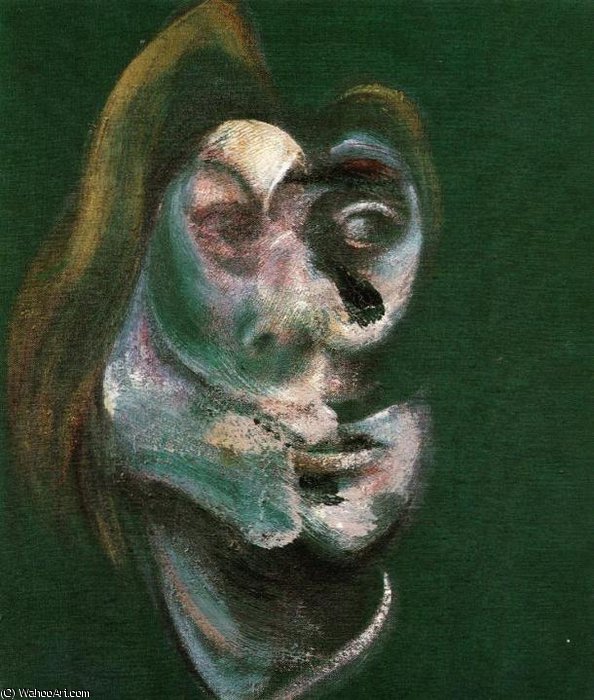
Francis Bacon's "Study for Head of Isabel Rawsthorne III," painted in 1967, isn’t merely a portrait; it’s a visceral excavation of the human psyche. This unsettling work, rendered in layers of dark greens, browns, and punctuated by flashes of pale pink and white, immediately commands attention with its fragmented form and deliberate distortion. It's a piece that refuses easy interpretation, inviting viewers into a realm where beauty and horror intertwine, mirroring the complexities of the human condition – particularly the anxieties and vulnerabilities often concealed beneath a veneer of composure.
Bacon’s late-period work is characterized by an intense preoccupation with mortality, psychological distress, and the grotesque. He moved away from the more overtly theatrical figures of his earlier years, opting instead for studies that felt intensely personal and deeply introspective. “Study for Head of Isabel Rawsthorne III” embodies this shift, representing a departure from traditional portraiture towards an expressionistic exploration of inner states. The subject’s face is not presented as a unified whole but rather as a collection of disjointed planes and fractured features – a visual representation of the fragmented self.
A Masterclass in Technique: Oil Paint and Layered Texture
The painting's power lies significantly in Bacon’s masterful technique. He employs thick, gestural brushstrokes, layering oil paints with an almost sculptural quality. The dark greens and browns dominate the composition, creating a sense of claustrophobia and unease. Notice how the paint is applied – not smoothly blended but deliberately scraped and manipulated, revealing the physicality of the process itself. This textural richness isn’t merely decorative; it actively contributes to the painting's unsettling atmosphere, suggesting instability and decay.
The strategic use of color is equally crucial. The pale pink and white areas, strategically placed around the eye sockets and other key features, serve as anchors within the darkness, offering fleeting glimpses of humanity amidst the chaos. These highlights aren’t comforting; they amplify the sense of vulnerability and isolation. Bacon's deliberate choice to work with a limited palette – primarily dark hues punctuated by these strategic bursts of light – intensifies the emotional impact.
Symbolism and the Weight of History
The title itself, “Study for Head of Isabel Rawsthorne III,” hints at the painting’s layered significance. It's not a finished portrait but rather an exploration, a preliminary sketch that reveals Bacon’s process of investigation. The subject, Isabel Rawsthorne III, was a close friend and confidante of the artist, and the work is believed to be a deeply personal reflection on their relationship – perhaps exploring themes of intimacy, vulnerability, and the inevitable passage of time.
Considering Bacon’s broader artistic context—his fascination with mortality, his exploration of psychological states, and his engagement with the anxieties of post-war Britain—this painting can be seen as a microcosm of these larger concerns. The fragmented face echoes the shattered realities of a world grappling with trauma and uncertainty. The work resonates with the spirit of Expressionism, prioritizing emotional impact over realistic representation.
Bringing Bacon Home: Reproductions and Artistic Legacy
ArtsDot offers meticulously crafted hand-painted reproductions of “Study for Head of Isabel Rawsthorne III,” allowing you to experience the depth and intensity of Bacon’s vision in your own space. These reproductions capture not only the visual details but also the textural richness and emotional weight of the original painting. Whether displayed as a statement piece or integrated into a carefully curated collection, this artwork offers a profound connection to one of the 20th century's most influential artists.