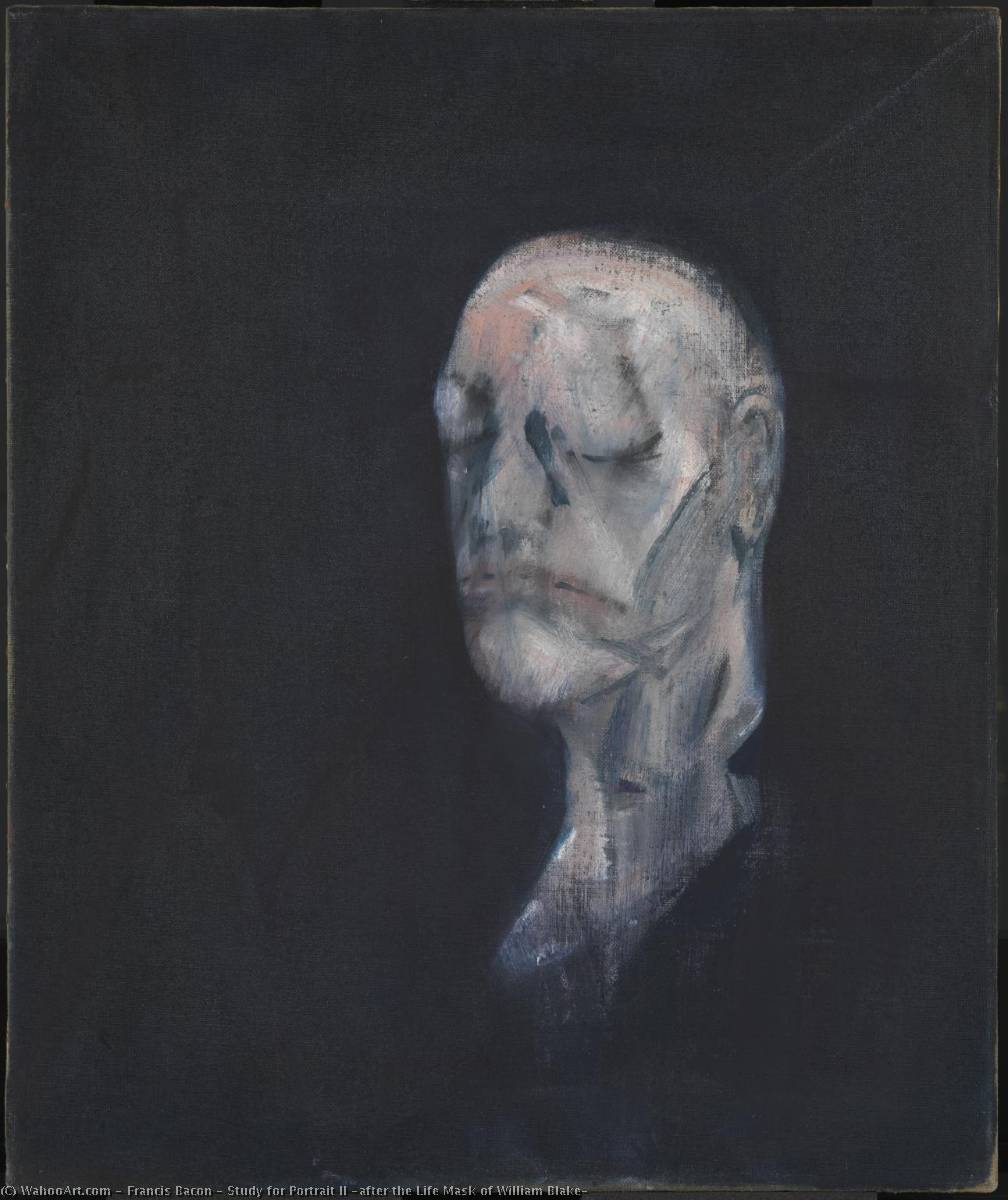
Francis Bacon’s ‘Study for Portrait II’ (1955) – a hauntingly beautiful exploration of form & expression. Inspired by Blake, this muted oil study evokes melancholy & mortality. #Bacon #Portraiture #ArtHistory
Explore Francis Bacon's (1909-1992) emotionally charged figurative paintings. Known for distorted forms, existential themes & bold expressionism, he remains a cornerstone of modern art. Discover key works & legacy.
A Study in Somber Reflection: Exploring Bacon’s Echoes of Blake
Francis Bacon's "Study for Portrait II (after the Life Mask of William Blake)" isn’t merely a depiction of a human head; it’s an immersion into a profound psychological landscape—a testament to the artist’s masterful ability to distill emotion onto canvas. Executed in 1955, this oil painting stands as a cornerstone of Bacon's oeuvre and exemplifies his signature style: brutally honest expressionism tempered with meticulous observation. The artwork immediately captivates with its claustrophobic framing, pulling the viewer into an intimate confrontation with the subject’s visage—a deliberate tactic designed to heighten the sense of unease and introspection that permeates the piece.
Style and Technique – Embracing Raw Emotion
Bacon eschewed traditional portraiture conventions, prioritizing visceral impact over idealized beauty. He achieved this through a technique characterized by loose brushstrokes and layering of muted blues and grays—a deliberate departure from academic precision. The artist’s hand is visible throughout the composition, conveying a palpable sense of immediacy and capturing the fleeting nature of human experience. Unlike polished surfaces, the canvas surface retains textural irregularities, mirroring the artist's preoccupation with confronting uncomfortable truths about existence. Influenced by Surrealism and Expressionism alike, Bacon skillfully blended these movements to produce an unsettling yet undeniably compelling visual language. The wet-on-wet method allowed for subtle blending and tonal gradations, fostering a harmonious blend of color that contributes significantly to the painting’s melancholic atmosphere.
Historical Context – Blake's Influence and Postwar Anxiety
“Study for Portrait II” draws inspiration from William Blake’s Life Mask—a sculpture embodying spiritual contemplation and confronting mortality. This connection underscores Bacon’s broader artistic concerns: a fascination with the darker aspects of human psychology and an engagement with existential anxieties prevalent in the aftermath of World War II. Blake's imagery, steeped in symbolism and imbued with a sense of visionary terror, served as a crucial catalyst for Bacon’s creative process. The painting reflects the pervasive mood of disillusionment and uncertainty that characterized the period—a feeling mirrored in Bacon’s unflinching portrayal of human vulnerability.
Symbolism – Confronting Inner Darkness
The muted palette—primarily blues and grays—is deliberately chosen to evoke feelings of sadness, isolation, and impending doom. The geometric forms—the oval head and rectangular torso—are softened by the expressive brushstrokes, creating a visual paradox that encapsulates Bacon’s artistic philosophy: confronting darkness through careful observation and meticulous technique. The gaze of the subject is averted, suggesting introspection and hinting at unspoken anxieties—a characteristic feature of Bacon's portraits that transcends mere representation to delve into the depths of human consciousness.
Emotional Impact – A Window Into the Soul
Ultimately, “Study for Portrait II” succeeds in conveying a profound emotional resonance. It’s not a comforting image; rather, it compels viewers to confront uncomfortable truths about themselves and the human condition. Like many of Bacon's works, this piece lingers in the mind long after viewing, prompting contemplation on themes of mortality, vulnerability, and the inescapable complexities of inner life. Its haunting beauty resides precisely in its refusal to offer easy answers—a characteristic that cements its place as a seminal work of art history and an enduring symbol of existential unease.