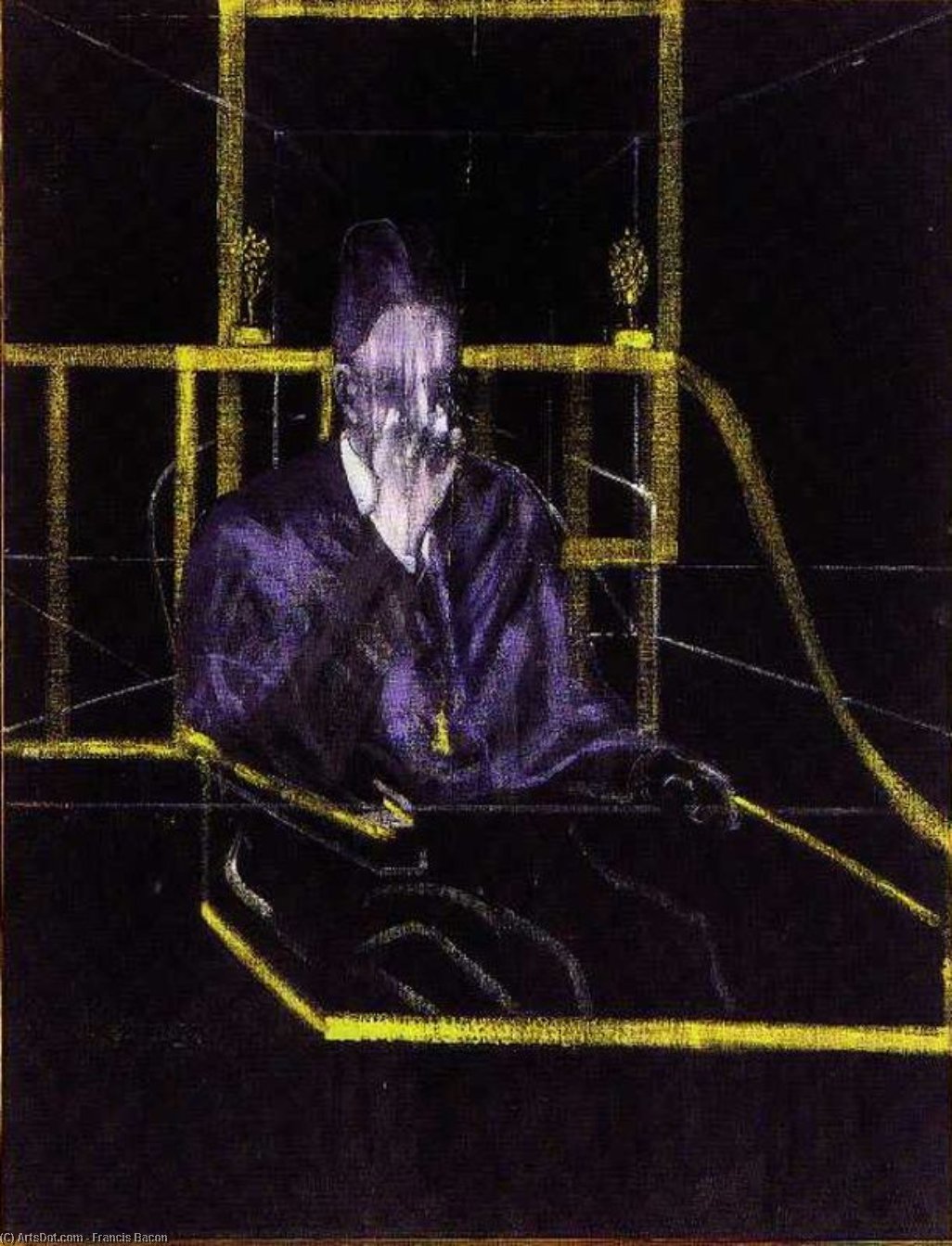
Study for Portrait IV – A Descent into Psychological Horror
Francis Bacon’s “Study for Portrait IV” isn't merely a painting; it’s an unsettling plunge into the abyss of human consciousness. Executed in 1957, this oil on canvas embodies Bacon’s signature style—a brutal honesty that confronts viewers with the grotesque realities lurking beneath the veneer of composure. It’s a piece that demands contemplation and rewards careful observation, revealing layers of meaning far beyond its deceptively simple composition.
- Subject Matter: The artwork centers around a solitary figure seated in what appears to be a chair or throne—a posture imbued with both dignity and vulnerability. Bacon deliberately eschewed realistic representation, opting instead for an abstracted form that prioritizes psychological impact over visual accuracy.
- Style & Technique: Bacon’s method involved layering charcoal and pastel on paper, resulting in a textured surface that pulsates with energy. Vigorous mark-making—gestural strokes—dominates the canvas, conveying a palpable sense of unease and instability. The artist's deliberate distortion amplifies the emotional core of the image.
- Composition & Framing: The painting’s claustrophobic atmosphere stems from its framing elements – specifically, a cage-like structure formed by intersecting yellow lines encircling the central figure. This geometric framework serves as both structural element and symbolic representation of confinement, mirroring the psychological imprisonment experienced by the subject.
- Color Palette & Lighting: Despite employing a predominantly monochrome palette—black, gray, and white—Bacon strategically utilizes bursts of vibrant yellow to highlight key features and create dramatic contrasts with shadow. The luminous yellow lines emit an ethereal glow, intensifying the figure’s isolation and amplifying the painting's unsettling emotional resonance.
- Symbolism & Emotional Impact: Beyond its formal elements, “Study for Portrait IV” speaks volumes about existential anxieties. The fragmented form of the figure—a deliberate rejection of idealized beauty—suggests psychological distress and alienation. Bacon aimed to capture not just what he saw but what he *felt*, transforming a portrait into an exploration of the human condition’s darkest recesses.
Historical Context & Influences
Bacon's artistic journey was profoundly shaped by the anxieties of postwar Britain and his fascination with Surrealist artists like Salvador Dalí and Giorgio Morandi. He drew inspiration from Velázquez’s “Portrait of Pope Innocent X,” recognizing its masterful depiction of psychological complexity—a technique he adopted to convey similar themes of vulnerability and repression. The painting reflects a broader artistic preoccupation with confronting uncomfortable truths about human nature, mirroring the spirit of Expressionism prevalent during the period.
Further Exploration
To delve deeper into Bacon’s oeuvre, consider examining “Man in Blue IV,” another masterful depiction of solitude and melancholy—a testament to his ability to distill profound emotion onto canvas. Alternatively, explore "Study for a Portrait of Van Gogh IV" which showcases similar stylistic choices and thematic concerns. These artworks offer invaluable insight into Bacon's artistic vision and underscore his enduring legacy as one of the most influential painters of the 20th century.