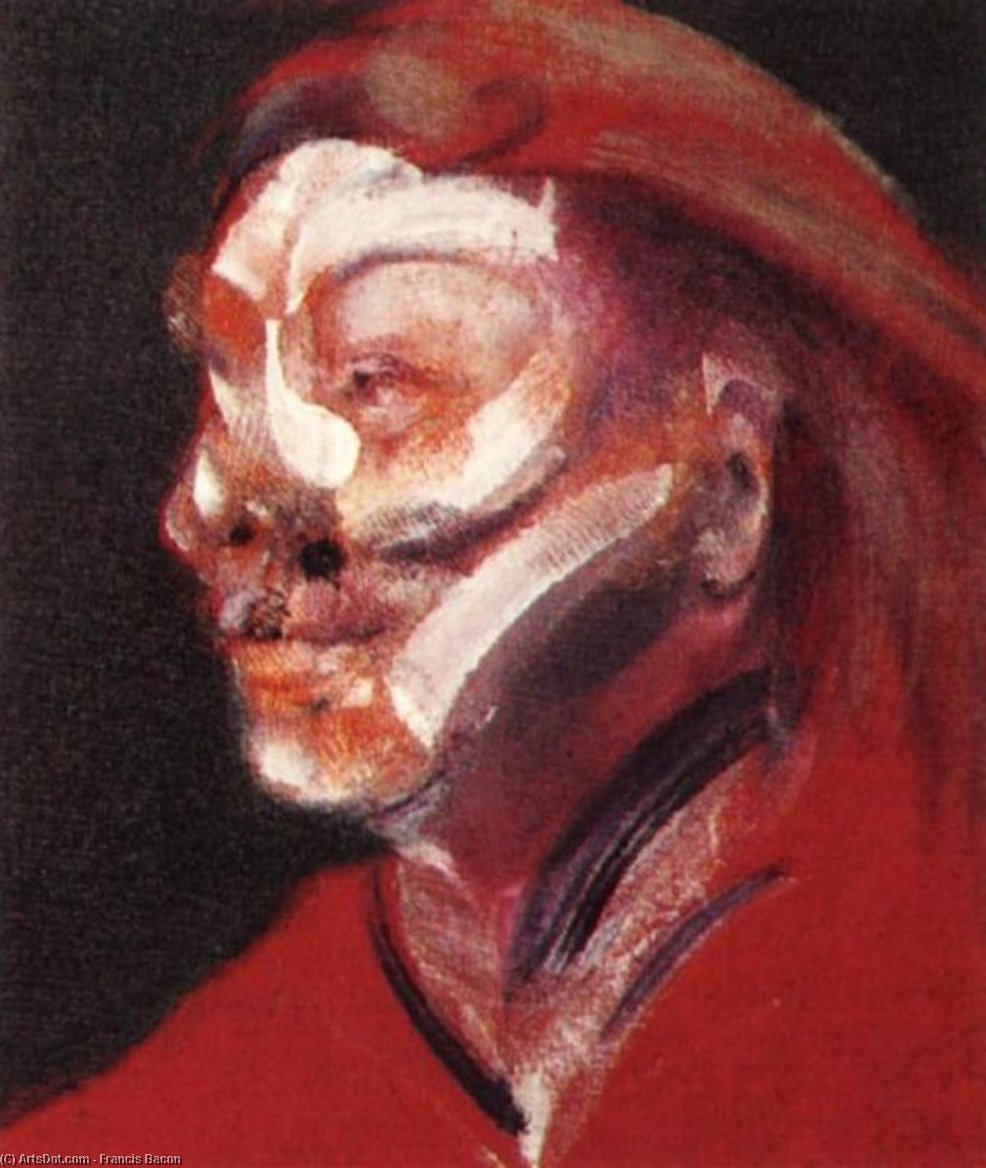
A Portrait of Existential Angst: Examining Francis Bacon’s “Study After Velázquez”
Francis Bacon's "Study After Velázquez," completed in 1953, stands as one of the most unsettling and psychologically astute paintings of its era. It’s not merely a depiction of a figure; it’s an excavation into the depths of human consciousness—a visceral confrontation with fear, vulnerability, and the inescapable awareness of mortality.
The painting's genesis lies in Bacon’s fascination with Diego Velázquez’s monumental portrait of Philip IV. Rather than attempting to recreate Velázquez’s masterpiece faithfully, Bacon deliberately distorted and fragmented it, transforming it into a landscape of psychological torment. He meticulously studied Velázquez’s composition—the central figure positioned slightly off-center, the subtle interplay of light and shadow—and then systematically dismantled these elements, layering them upon one another in a manner that defies conventional representation.
Bacon employed a technique he termed “psychological fracturing,” which involved applying thin layers of paint to create an illusion of depth and texture. He utilized encaustic wax mixed with oil pigment – a method favored by Byzantine artists—to achieve remarkable luminosity and permanence. The resulting surface is riddled with cracks and fissures, mirroring the fractured psyche that Bacon sought to portray. These imperfections aren’t accidental; they are integral to the painting's expressive power.
Historical Context: Postwar Britain and Artistic Rebellion
Bacon emerged onto the British art scene during a period of profound upheaval following World War II. The devastation inflicted upon Europe fueled an artistic rebellion against academic conventions, rejecting idealized beauty in favor of confronting uncomfortable truths about human experience. Artists like Bacon embraced abstraction and distortion as tools for conveying emotion—a deliberate rejection of the prevailing aesthetic sensibilities.
The influence of Surrealism is palpable in Bacon’s work, particularly his preoccupation with dreamlike imagery and irrational juxtapositions. However, Bacon transcended Surrealist tropes, forging a uniquely personal style that prioritized psychological realism above all else. He wasn't interested in capturing appearances; he aimed to penetrate the subconscious mind and expose its hidden anxieties.
Symbolism: The Figure as Embodiment of Fear
The central figure in “Study After Velázquez” is rendered in a grotesque caricature—a distorted torso with elongated limbs, devoid of discernible facial features. This deliberate anonymity serves to universalize the figure’s experience of terror. Bacon famously stated that he wanted to depict "the human animal," stripped bare of illusion and confronted with its primal fears.
The fragmented composition reinforces this symbolic message. The overlapping planes of paint create a sense of claustrophobia, trapping the figure within an inescapable space of psychological distress. The cracks and fissures in the surface symbolize the disintegration of identity—the fracturing of consciousness under pressure.
Emotional Impact: A Profound Meditation on Mortality
"Study After Velázquez" isn’t merely disturbing; it's profoundly unsettling. It compels viewers to confront their own mortality, acknowledging the inevitability of suffering and decay. Bacon achieved this effect not through explicit narrative but through masterful manipulation of visual language—creating an image that speaks directly to the viewer’s emotions.
Ultimately, Bacon’s painting transcends mere representation, becoming a conduit for exploring the fundamental questions of human existence. It remains a testament to the power of art to provoke introspection and illuminate the darkest recesses of the human psyche—a masterpiece that continues to resonate with audiences today.