Explore Francis Bacon's (1909-1992) emotionally charged figurative paintings. Known for distorted forms, existential themes & bold expressionism, he remains a cornerstone of modern art. Discover key works & legacy.
A Study in Darkness and Reverence: Francis Bacon’s Homage to Van Gogh
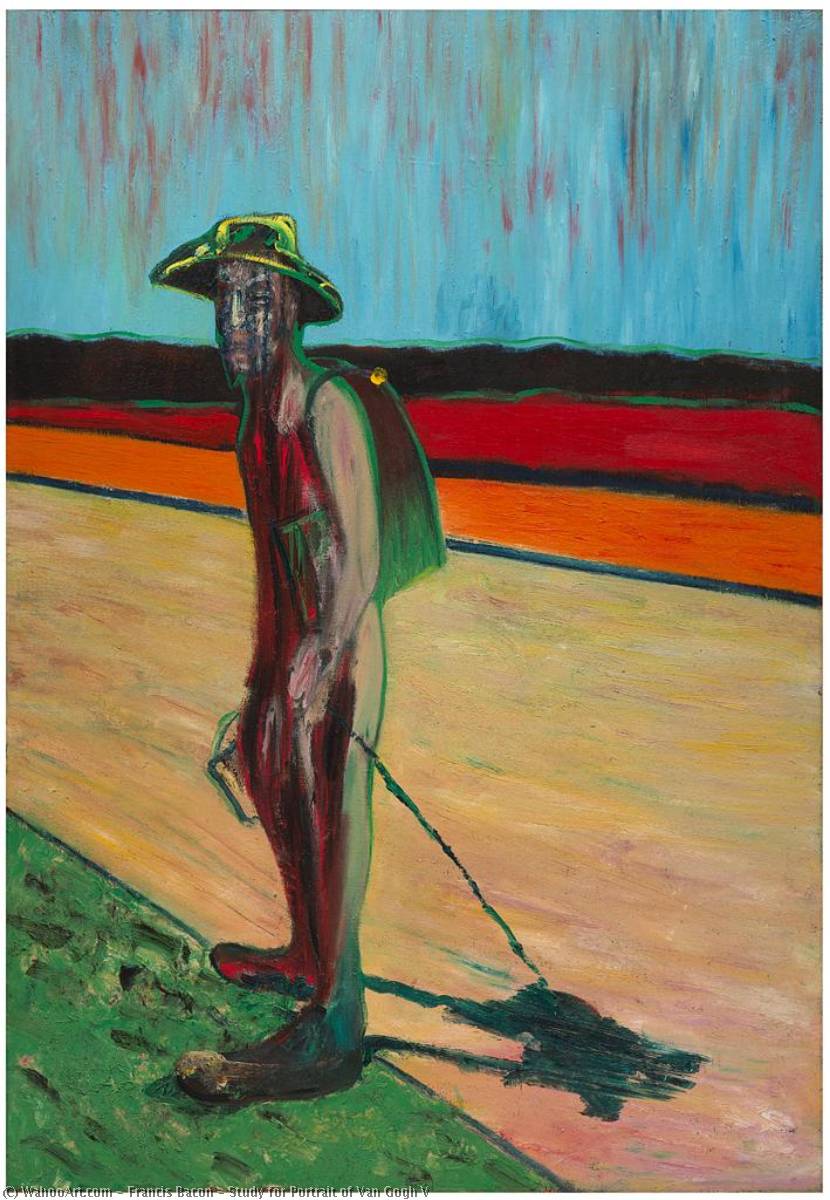
Francis Bacon's "Study for Portrait of Van Gogh V," completed in 1957, stands as a haunting testament to the artist’s profound engagement with the legacy of Vincent van Gogh. More than just an imitation, it’s a deeply felt meditation on artistic influence and the inescapable anxieties inherent within the human condition—a characteristic blend that cemented Bacon's place among the titans of 20th-century art. Executed in oil on canvas measuring 199 x 138 cm and housed at the Smithsonian American Art Museum, this painting transcends mere representation; it embodies a visceral response to Van Gogh’s tormented vision.
The Canvas Speaks Volumes: Composition and Technique
Bacon's masterful technique is immediately apparent upon observation. He eschews traditional portraiture conventions, opting instead for a fragmented depiction of a man—a figure heavily inspired by Van Gogh—standing on what appears to be a desolate road or pathway. The artist employs bold, expressive brushstrokes that swirl across the canvas, creating a palpable sense of movement and unease. Color is deliberately muted, dominated by shades of grey and brown, mirroring the bleakness of Van Gogh’s landscapes and reflecting Bacon's own preoccupation with psychological darkness. Unlike Van Gogh’s vibrant palettes, Bacon utilizes color sparingly, emphasizing texture and contour to convey emotional intensity rather than visual spectacle. The deliberate blurring of edges contributes to an unsettling ambiguity, forcing the viewer to confront the figure’s isolation and vulnerability.
Echoes of Genius: Historical Context and Artistic Influences
“Study for Portrait of Van Gogh V” resides firmly within Bacon's broader artistic exploration of human suffering—a preoccupation that aligns powerfully with the spirit of his time. The post-war era witnessed a surge in existentialist thought, questioning traditional moral frameworks and grappling with the trauma of global conflict. Bacon absorbed these intellectual currents, channeling them into his art through a process of relentless experimentation and self-examination. His fascination with Freud’s psychoanalytic theories fueled his desire to depict inner turmoil—to expose the hidden anxieties beneath the surface of seemingly calm exteriors. The painting's genesis can be traced back to Bacon’s ongoing preoccupation with Van Gogh, whom he regarded as an exemplar of artistic courage and honesty.
Symbolism Beneath the Surface: Landscape and Figure
The surrounding landscape – trees rendered in dark hues – serves as a crucial element of symbolic significance. They represent not merely scenery but also confinement and oppression—mirroring the psychological state of the central figure. The man himself, positioned centrally on the road, embodies vulnerability and solitude. His posture conveys a sense of stillness amidst chaos, suggesting an internal struggle that transcends visual representation. The hat he wears adds to this feeling of detachment, emphasizing his separation from the external world. Bacon’s deliberate use of these motifs underscores the painting's overarching theme: the confrontation with mortality and the inescapable awareness of human fragility.
A Legacy of Emotion: Impact and Relevance Today
“Study for Portrait of Van Gogh V” continues to resonate powerfully with audiences today, demonstrating Bacon’s enduring influence on contemporary art. His uncompromising vision—his willingness to confront uncomfortable truths about human psychology—remains remarkably relevant in an era increasingly concerned with mental health awareness. This artwork isn't merely a depiction; it’s an invitation to contemplate the complexities of emotion and the unsettling beauty found within darkness. Like other pieces from Bacon’s oeuvre, “Study for Portrait of Van Gogh V” exemplifies his ability to transform personal experience into universal expression—a feat that secures its place as a cornerstone of modern art history.