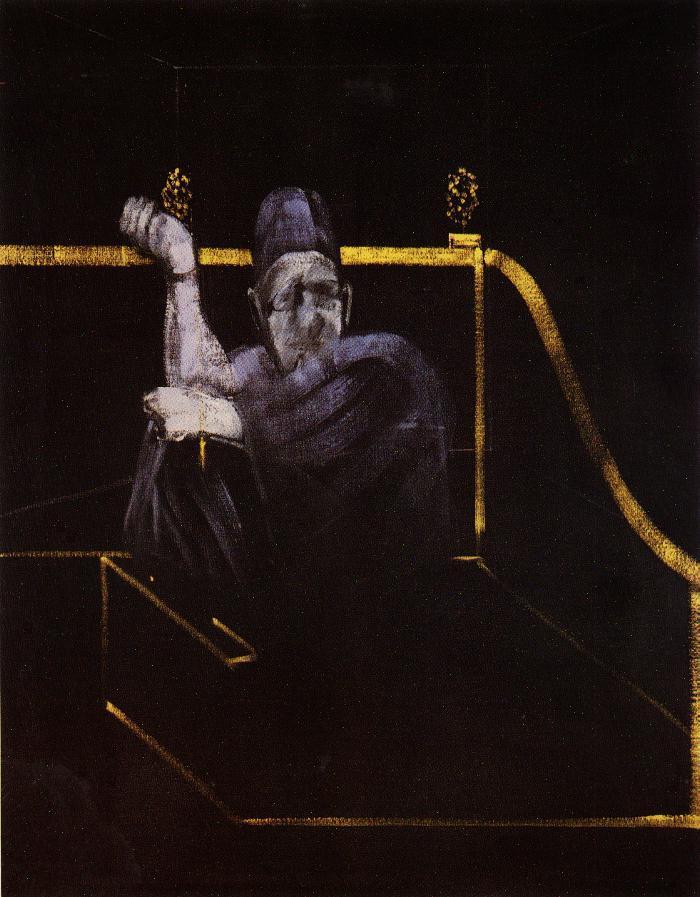
Study for Portrait VIII, 1953 – A Descent Into Psychological Horror
The artwork presents a chilling portrait study by Francis Bacon, born in Dublin, Ireland, in 1909, and profoundly shaped by his nomadic upbringing. Bacon’s artistic vision wasn't nurtured through formal training but forged in the crucible of experimentation, absorbing influences from Surrealism and Expressionism—movements that mirrored the anxieties of their time. He famously declared, “I would like someday to trap a moment of life in its full violence, its full beauty,” encapsulating his relentless pursuit of visceral emotion within his canvases. This particular piece, *Study for Portrait VIII*, exemplifies this ethos with unsettling precision.
- Subject Matter & Composition: The painting depicts a man seated rigidly on a chair within an ambiguous framework—a cage-like structure that immediately conveys confinement and psychological distress. Bacon deliberately eschewed traditional portraiture conventions, opting instead for a fragmented depiction of the human form, mirroring the fractured psyche he sought to portray. The central figure dominates the frame, positioned slightly off-center, emphasizing his isolation and vulnerability.
- Style & Technique: Bacon’s signature style—characterized by distorted figures and jarring imagery—is evident in every brushstroke. He employed rapid, gestural marks with oil paint mixed with charcoal, creating a textured surface that captures the immediacy of emotion. The technique deliberately disregards representational accuracy, prioritizing expressive force over visual realism.
- Color Palette & Lighting: Dominated by shades of gray and black, the color palette contributes to an oppressive atmosphere. Sparse accents of gold highlight structural elements—specifically the chair’s gilded frame—creating a stark contrast that underscores the painting's unsettling mood. Dramatic directional lighting casts harsh shadows, intensifying the figure’s expression and amplifying the sense of unease.
- Symbolism & Historical Context: Bacon drew inspiration from Diego Velázquez’s *Portrait of Pope Innocent X*, transforming it into an exploration of power dynamics and existential terror. The chair itself symbolizes societal constraints and imprisonment—a visual metaphor for the psychological pressures faced by individuals. This study reflects the broader anxieties surrounding postwar Europe, mirroring the pervasive fear of violence and decay that permeated artistic discourse during Bacon’s era.
- Emotional Impact: *Study for Portrait VIII* transcends mere depiction; it confronts viewers with a profound meditation on human suffering and vulnerability. The man's expression—difficult to decipher yet undeniably fraught with anguish—commands attention, forcing contemplation of the darker aspects of human experience. It’s a painting that lingers in the mind long after viewing, prompting reflection on themes of isolation, fear, and the inescapable confrontation with mortality.
Materials Used: Oil paint mixed with charcoal were skillfully applied to canvas, resulting in a textured surface that embodies Bacon's uncompromising commitment to expressive technique. The meticulous layering of pigment captures both subtle nuances of emotion and the raw physicality of artistic creation.