A Visceral Encounter with the Distorted Soul
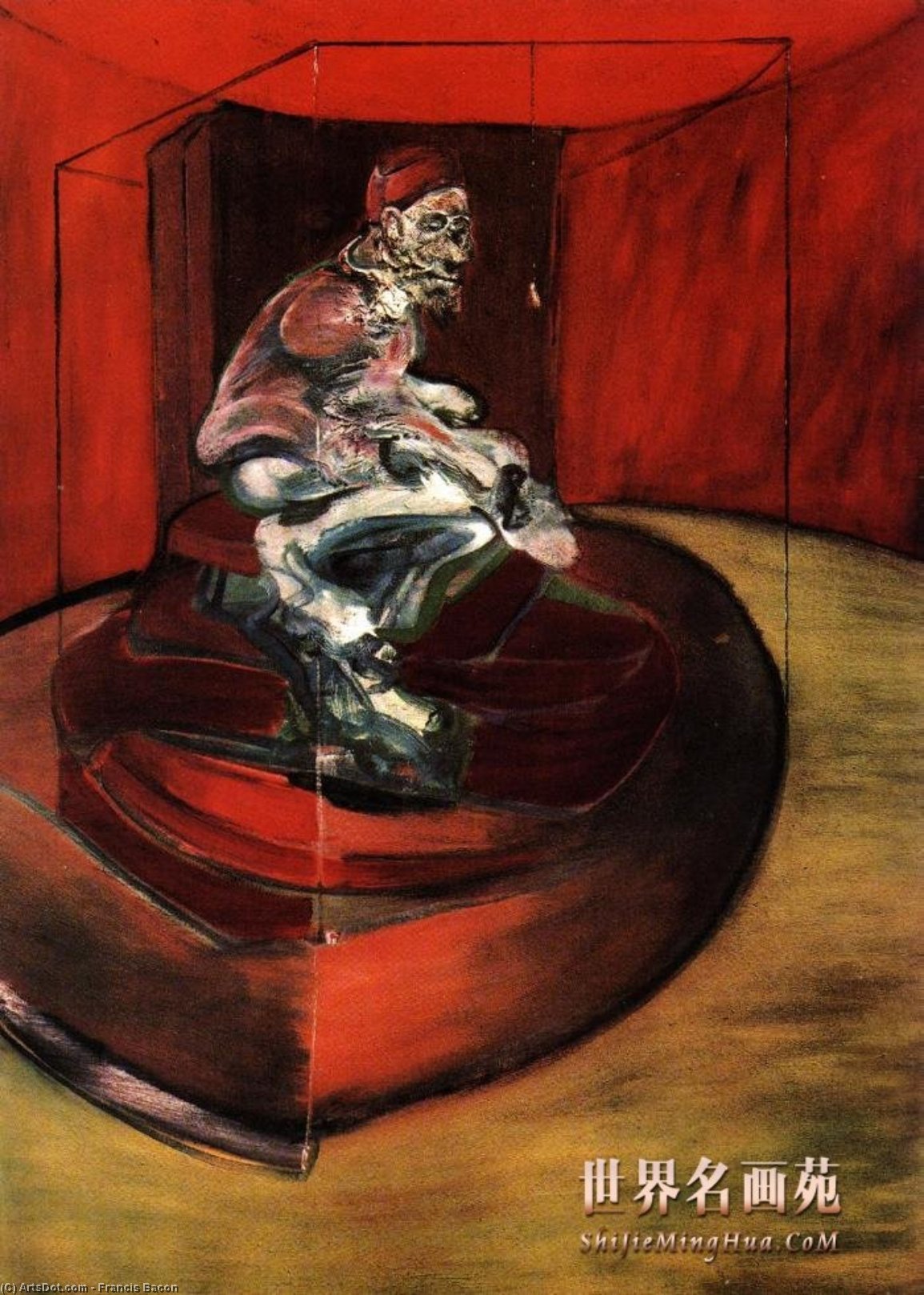
In the hauntingly beautiful 1962 masterpiece, Study from Innocent X, Francis Bacon invites the viewer into a realm where reality fractures and emotion bleeds through the canvas. This profound oil on canvas is far more than a mere portrait; it is a psychological landscape that captures the raw, unvarnified essence of human suffering and isolation. At its center sits a figure, heavily inspired by Diego Velázquez's iconic 1650 portrait of Pope Innocent X, yet stripped of all papal grandeur. Instead of a monarch of the Church, we encounter a soul trapped within a stark, geometric glass enclosure—a cuboid cage that serves as both a physical boundary and a metaphor for the inescapable confines of the human condition.
The composition is an exercise in controlled chaos and claustrophobia. Dominated by a palette of intense, bruised reds and deep, earthy browns, the painting creates an atmosphere that feels thick with tension. The figure, draped in traditional vestments but obscured by a ghostly, mask-like distortion, appears aged and burdened by an unseen grief. This use of color is not merely decorative; the pervasive red hues evoke a sense of primal passion, danger, and even blood, heightening the viewer's visceral reaction to the subject's apparent distress.
The Mastery of Expressionist Technique
Bacon’s technique in this work exemplifies the pinnacle of mid-century Expressionism. Eschewing the polished finish of classical portraiture, he employs a distinctly painterly approach characterized by bold, gestural brushstrokes and thick impasto layers. These heavy applications of paint create a textured surface that seems to vibrate with life and unrest. The lines are forceful and often jagged, contributing to an overall feeling of agitation and movement within the stillness of the cage.
The lighting within the piece is particularly striking, appearing almost artificial, as if emanating from within the display case itself. This internal glow illuminates the subject's features while simultaneously casting deep, dramatic shadows that emphasize the hollows of the face and the folds of the clothing. Such a technique flattens the perspective, prioritizing emotional truth over realistic spatial depth, which forces the observer to confront the psychological weight of the figure directly. For collectors and designers, this piece offers a commanding presence, bringing a sophisticated, avant-garde energy to any curated space.
A Dialogue Between Tradition and Modernity
To understand the profound impact of Study from Innocent X, one must look back at Bacon’s complex relationship with the Old Masters. This work is part of a legendary series of over forty variations on Velázquez's original portrait. However, Bacon was not seeking to honor tradition through imitation; rather, he sought to deconstruct it. By revisiting the authority of the Pope and subjecting it to his signature distortion, he strips away the veneer of institutional power to reveal a more vulnerable, even tormented, core.
The symbolism within the work is as layered as its paint. The glass case acts as a potent symbol of objectification—the subject is on display, yet utterly unreachable. This sense of being "trapped" resonates deeply with modern themes of societal expectation and internal psychological struggle. For those seeking to adorn their interiors with art that provokes thought and conversation, this reproduction offers an unparalleled opportunity to own a piece of history that continues to challenge, unsettle, and inspire the human spirit.