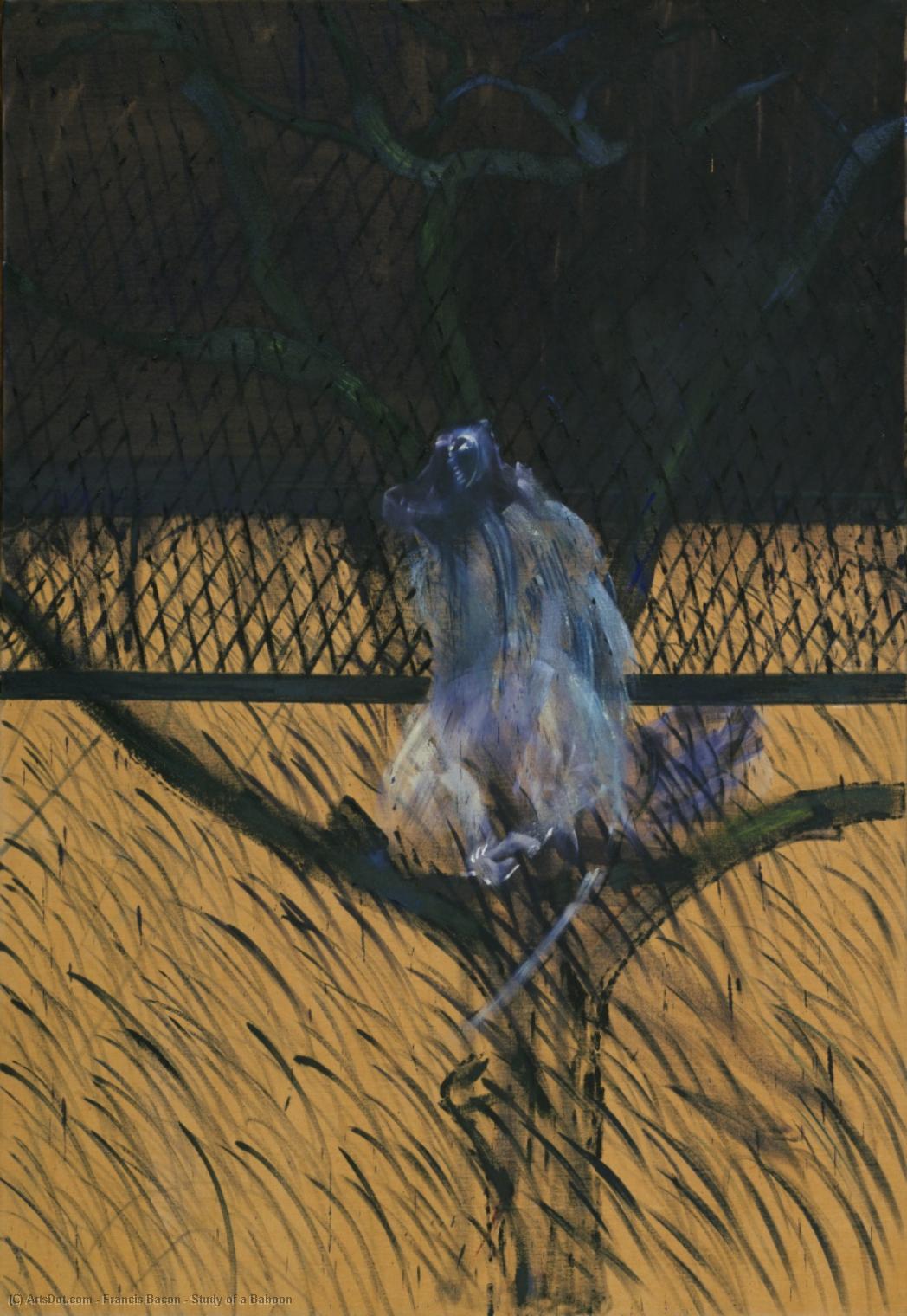
Study of a Baboon

Francis Bacon’s haunting Study of a Baboon captures the unsettling stillness of postwar Britain through his signature expressive style—a visceral depiction of human vulnerability rendered in oil on canvas. Explore this iconic piece and bring Bacon's powerful vision home.


Francis Bacon (1909 - 1992)

Explore Francis Bacon's (1909-1992) emotionally charged figurative paintings. Known for distorted forms, existential themes & bold expressionism, he remains a cornerstone of modern art. Discover key works & legacy.

A Portrait of Existential Angst: Exploring Francis Bacon’s ‘Study of a Baboon’

  • Subject Matter & Composition The painting depicts a solitary figure seated on a weathered fence, positioned in profile and facing away from the viewer. This deliberate anonymity is central to Bacon's artistic strategy—he eschews explicit representation, prioritizing psychological exploration over literal depiction. The posture itself conveys vulnerability and isolation, mirroring the anxieties inherent in the human condition.
  • Style & Technique Bacon’s signature style – characterized by distorted figures rendered in a brutal, unsettling manner – is powerfully evident here. Employing oil paint on canvas, he utilizes thick impasto strokes to create textured surfaces that capture movement and instability. The palette is muted, dominated by earthy tones punctuated by flashes of crimson—a deliberate choice designed to heighten emotional intensity.
  • Historical Context Created in 1953, ‘Study of a Baboon’ emerged from the immediate aftermath of World War II, a period marked by profound disillusionment and uncertainty. Bacon's work reflects this pervasive mood of anxiety and trauma, responding to the existential concerns prevalent in European intellectual circles at the time. It aligns with the broader artistic movement of Expressionism, which sought to convey subjective experience rather than objective reality.
  • Symbolism & Interpretation The baboon itself serves as a potent symbol—often interpreted as representing primal instinct and repressed desire. Bacon deliberately avoids providing definitive answers about its significance, encouraging viewers to confront their own anxieties and insecurities. The fence symbolizes confinement and separation, reinforcing the figure’s sense of isolation.
  • Emotional Impact ‘Study of a Baboon’ is undeniably disturbing yet profoundly captivating. Bacon's masterful manipulation of form and color generates an overwhelming feeling of unease and vulnerability. It compels contemplation on themes of mortality, suffering, and the fragility of human existence—a testament to Bacon’s ability to translate psychological turmoil into visceral visual experience.