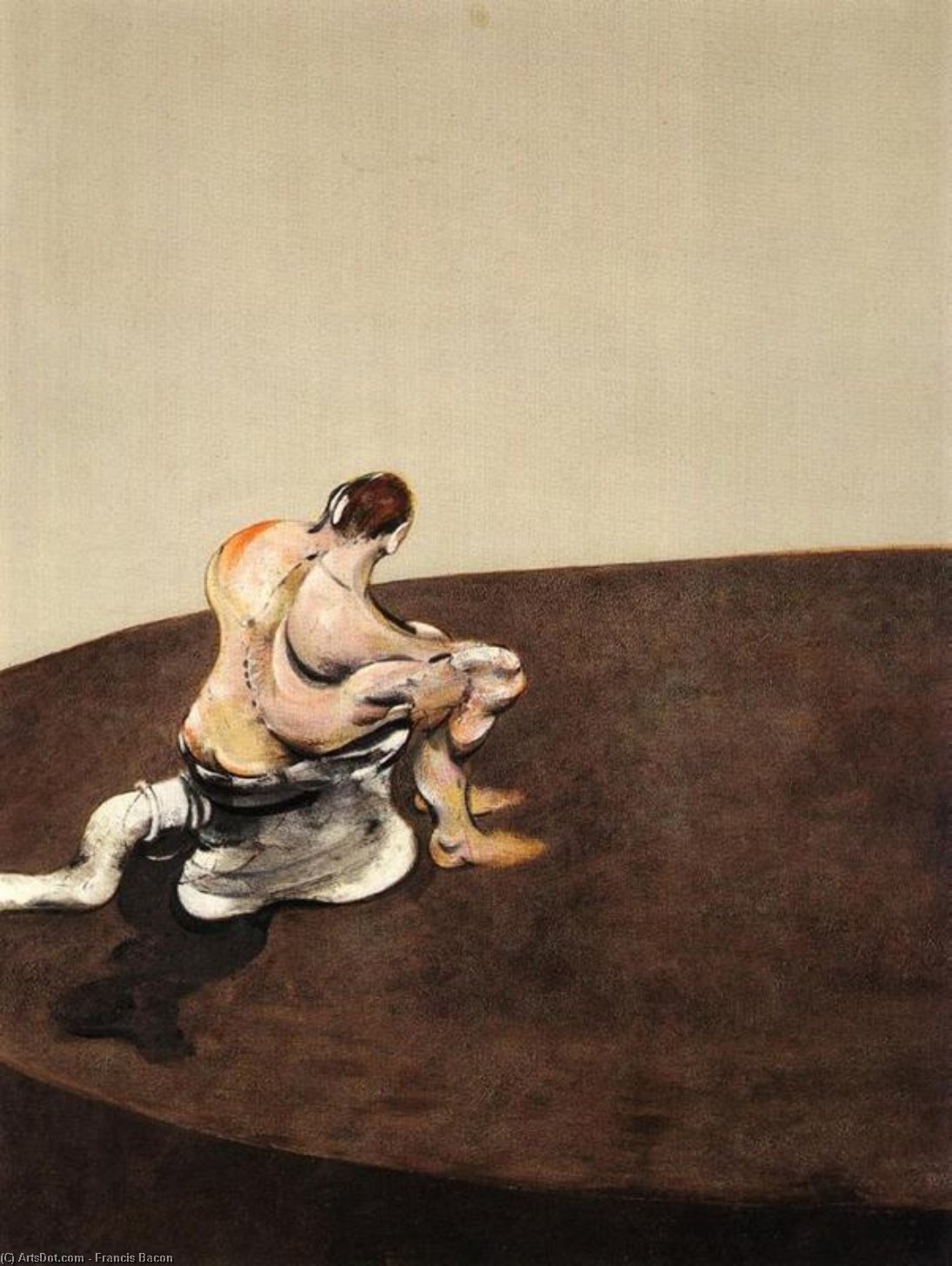
A Portrait of Existential Angst: Examining Francis Bacon’s “Three Figures”
Francis Bacon's "Three Figures," completed in 1964, stands as one of the most unsettling and iconic paintings of the mid-century period. More than just a depiction of three individuals inhabiting a room—though that alone is fraught with tension—it’s an exploration of profound psychological distress, rendered with a masterful blend of technique and symbolism that continues to resonate with audiences today.
The painting's style aligns squarely within Bacon’s signature Expressionist aesthetic. Rejecting representational accuracy in favor of conveying emotion directly onto the canvas, he employed a method known as “squeeze”—a process where paint is forced out of tubes under pressure, creating distorted and fragmented forms. This technique isn’t merely stylistic; it's fundamentally linked to Bacon’s belief that painting should capture the visceral experience of consciousness itself – the feeling of being overwhelmed by internal turmoil.
- Historical Context: The painting emerged during a period of considerable social upheaval in Britain following World War II. The anxieties surrounding nuclear threat, coupled with disillusionment regarding utopian ideals, fueled a pervasive sense of unease that found its visual expression in artists like Bacon.
- Composition & Technique: Bacon meticulously crafted the composition to heighten the drama. The figures are positioned awkwardly, their limbs contorted and overlapping, creating a claustrophobic space where escape seems impossible. The muted palette—primarily browns and ochres—further contributes to the painting’s oppressive atmosphere.
- Symbolism: The three figures themselves represent archetypal representations of human vulnerability and isolation. Their faces are rendered with grotesque distortions, reflecting the psychological wounds inflicted by trauma and loss. The room serves as a metaphor for the internal landscape of the mind—a space where boundaries blur and anxieties fester.
“Three Figures” transcends mere visual depiction; it’s an invitation to confront uncomfortable truths about human existence. Bacon deliberately eschewed comforting illusions, presenting instead a brutally honest portrayal of psychological suffering. The painting's enduring power lies in its ability to evoke empathy and provoke contemplation—a testament to Bacon’s genius as both artist and philosopher.
Its influence extends far beyond the art world, informing discussions about trauma, identity, and the complexities of human emotion. Collectors appreciate “Three Figures” not only for its aesthetic qualities but also for its profound intellectual depth – a reminder that art can serve as a conduit for confronting our deepest fears and vulnerabilities.
Exploring Bacon’s Method: The ‘Squeeze’ Technique
Bacon's distinctive approach to painting—the “squeeze” technique—was born out of necessity and driven by an unwavering commitment to capturing the essence of psychological experience. Rather than meticulously blending colors on a palette, he applied paint directly from tubes under considerable pressure.
- Pressure Application: Bacon would hold tubes of paint firmly in one hand while using another to squeeze them vigorously—creating bursts of pigment that erupted onto the canvas with startling force. This method deliberately disrupted traditional blending practices.
- Fragmented Forms: The resulting marks weren’t smooth or blended; instead, they produced fragmented forms and textures that mirrored the fractured nature of consciousness itself. These distortions conveyed a sense of instability and disorientation.
This technique wasn't simply about achieving visual effect; it was fundamentally rooted in Bacon’s conceptual framework—his conviction that painting should strive to represent the feeling of being overwhelmed by internal turmoil. By rejecting conventional methods, Bacon prioritized conveying emotion above all else.
The Palette: Muted Browns and Ochres – Reflecting Inner Darkness
Bacon's masterful use of color contributes significantly to the painting’s unsettling atmosphere. He predominantly employed muted browns and ochres—a palette deliberately chosen to evoke feelings of darkness, decay, and repression.
- Color Psychology: Browns are often associated with earthiness, stability, and comfort – qualities intentionally undermined by Bacon's artistic vision. The ochre tones further amplify the painting’s oppressive mood, mirroring the psychological wounds inflicted by trauma.
The subdued hues serve as a visual embodiment of Bacon’s preoccupation with existential angst—a refusal to offer solace or reassurance. Instead, he presented viewers with an unflinching depiction of inner darkness – a courageous stance that solidified Bacon's reputation as one of the most uncompromising artists of his time.