A Visceral Exploration of Human Fragility
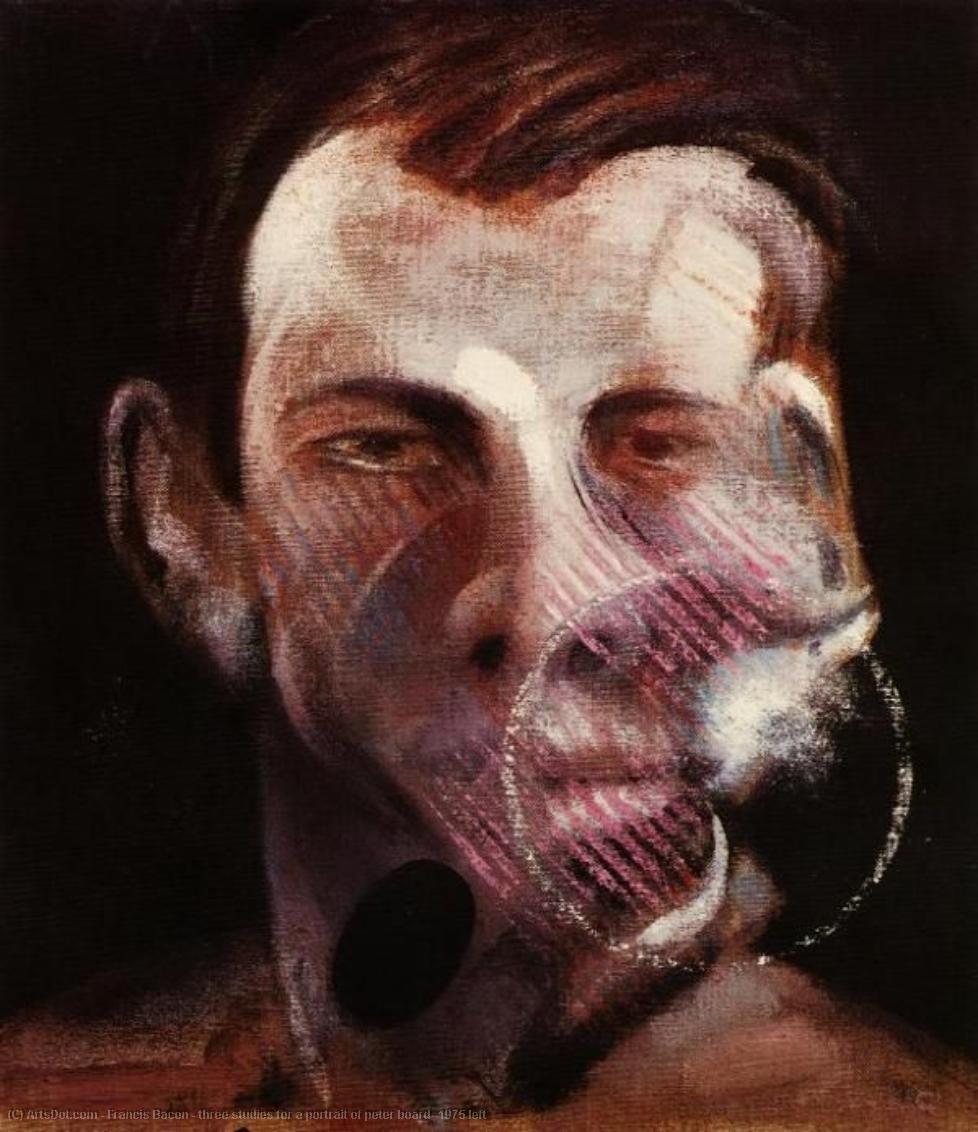
This intensely affecting work by Francis Bacon is a cornerstone of his series focusing on portraits – specifically, studies of Peter Board, a long-time companion. It’s not merely a depiction *of* a face; it's a raw and unflinching exploration of human vulnerability, rendered with a brutal honesty that defines Bacon's signature style. The painting delves into the fragility of existence, the weight of experience, and the inescapable reality of physical decay.
Deconstructing Form & Technique
Bacon masterfully employs a thick
impasto technique, building layers of oil paint to create a tactile surface that mirrors the ravaged texture of skin and wound. The brushstrokes are visible, energetic, and almost violent in their application, contributing to an overall sense of unease and immediacy. This isn’t about smooth representation; it's about conveying sensation – the roughness, the pain, the sheer physicality of being.
- The composition is tightly cropped, focusing solely on the head and shoulders, intensifying the viewer’s confrontation with the subject’s suffering.
- Dramatic chiaroscuro – the stark contrast between light and shadow – accentuates facial contours and graphic details of injuries.
- A subtly distorted circular form around the nose adds a surreal quality, hinting at psychological fragmentation or an internal struggle beyond visible wounds.
Historical Context & Bacon’s Oeuvre
Created in 1975, this piece sits firmly within Bacon's mature period, characterized by increasingly isolated and tormented figures. Following World War II, Bacon grappled with themes of existential angst, violence, and the dehumanizing aspects of modern life. He rejected traditional portraiture conventions, seeking to capture a more primal, visceral truth about the human condition.
Influenced by artists like Velázquez (whose *Portrait of Innocent X* served as inspiration for numerous works) and Picasso, Bacon forged his own unique visual language—one that continues to resonate with contemporary audiences. The “Three Studies for a Portrait of Peter Board” series is particularly poignant, reflecting a deep emotional connection to the subject and hinting at anxieties surrounding mortality and loss.
Symbolism & Emotional Resonance
While not explicitly symbolic, the wounds themselves become potent metaphors for life's inevitable traumas – both physical and psychological. The muted color palette of browns, ochres, and reds evokes a sense of decay and suffering, while flashes of pink and white in wounded areas highlight flesh’s vulnerability.
The subject’s expression is ambiguous—a blend of pain, shock, and perhaps resignation. This ambiguity invites viewers to project their own emotions onto the figure, creating a deeply personal and unsettling experience. The painting doesn't offer answers; it poses questions about what it means to be human in a world marked by suffering and impermanence.
Interior Design & Collecting Considerations
This artwork – or a high-quality reproduction – serves as a powerful statement piece in a contemporary interior. Its dramatic intensity demands space and careful consideration of surrounding elements. It pairs well with minimalist décor, allowing the painting to take center stage. The muted color palette complements neutral tones or provides a striking contrast against bolder hues.
For collectors, this work represents a significant example of Bacon’s artistic mastery and his enduring contribution to 20th-century art. Its emotional depth and technical brilliance make it a compelling investment and a thought-provoking addition to any collection – a piece that will undoubtedly spark conversation and inspire contemplation for years to come.