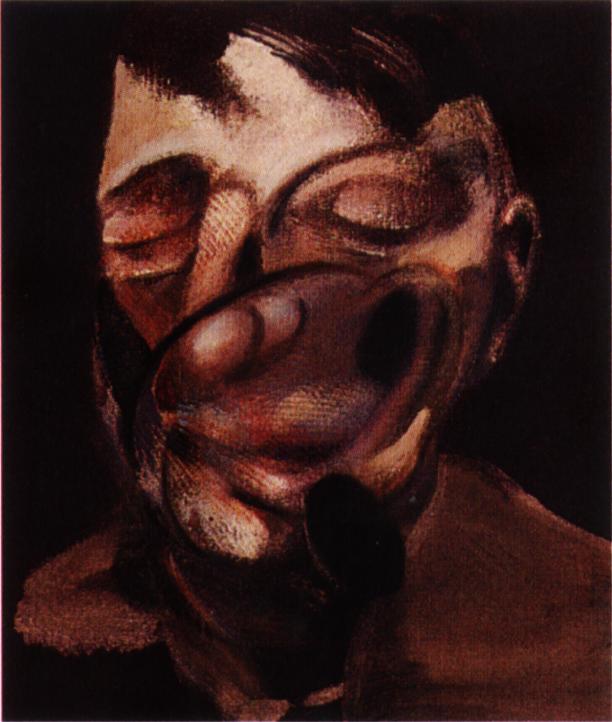
A Portrait of Existential Angst: Examining Francis Bacon’s “Study After Velázquez”
Francis Bacon’s “Study After Velázquez,” completed in 1953, stands as one of the most unsettling and iconic images produced by the British Surrealist painter. It's not merely a depiction of a painting; it’s an exploration of psychological torment—a visceral confrontation with the anxieties inherent in human existence that continues to resonate powerfully with audiences today.
- Subject Matter: The artwork centers on Velázquez’s “Las Meninas,” a monumental portrait depicting King Philip IV and his court. Bacon doesn't reproduce the painting faithfully; instead, he fragments it into grotesque distortions—a series of interconnected figures rendered in a disturbingly fleshy palette.
- Style: Bacon’s style is characterized by its brutal honesty and uncompromising portrayal of emotion. He eschews traditional representational conventions, favoring abstraction that prioritizes feeling over accurate depiction. The resulting images are unsettlingly visceral, conveying a sense of profound unease and psychological vulnerability.
Technique: A Symphony of Texture and Distortion
Bacon’s technique is revolutionary in its approach to painting. He employs encaustic—a mixture of beeswax and resin—to create surfaces that are incredibly textured and luminous. This medium allows him to build up layers of pigment, manipulating wax to achieve dramatic effects of distortion and fragmentation. The artist meticulously scrapes away sections of the surface, revealing underlying layers of color and creating a palpable sense of decay and disintegration.
- Wax Manipulation: Bacon’s masterful control over encaustic is evident in the way he sculpts the wax into grotesque forms—twisted limbs, gaping mouths, and vacant eyes. These sculptural elements contribute to the artwork's unsettling physicality and heighten its emotional impact.
- Layered Pigment Application: Bacon applies pigment in multiple layers, building up color gradations that emphasize the contours of the figures and amplify their expressive power. The resulting surface is rich with texture—a testament to his painstaking attention to detail.
Historical Context: Echoes of Trauma and Uncertainty
“Study After Velázquez” was created during a period of profound social and psychological upheaval in Britain following World War II. Bacon’s work reflects the anxieties of the time—the disillusionment with grand narratives, the fear of nuclear annihilation, and the pervasive sense that civilization itself is crumbling under pressure.
- Postwar Existentialism: Bacon's preoccupation with themes of mortality, suffering, and psychological disintegration aligns closely with the burgeoning existentialist philosophy championed by thinkers like Sartre and Camus. He captures the essence of human experience—the confrontation with absurdity and the inescapable awareness of our own vulnerability.
- Surrealist Influence: Despite Bacon’s rejection of Surrealism's formal conventions, he retains a deep appreciation for its exploration of subconscious imagery and psychological symbolism. Velázquez’s “Las Meninas” served as an inspiration—a visual springboard for Bacon’s investigation into the darker recesses of human consciousness.
Symbolism: Fragments of Memory and Decay
The fragmented figures in “Study After Velázquez” symbolize not only physical decay but also psychological fragmentation—the disintegration of identity under the onslaught of trauma. The grotesque distortions convey a sense of profound unease and suggest that reality itself is unstable.
- Distorted Forms: Bacon’s deliberate manipulation of form underscores the artwork's central theme—the breakdown of rational order and the triumph of instinctual emotion. The twisted limbs and gaping mouths represent a primal expression of pain and terror.
- Color Palette: The artist employs a palette dominated by fleshy reds, browns, and yellows—colors associated with blood, flesh, and decay. These hues amplify the artwork’s unsettling physicality and contribute to its emotional intensity.
Emotional Impact: A Confrontation With Darkness
"Study After Velázquez" compels viewers to confront their own fears and anxieties—to acknowledge the darkness that resides within the human psyche. It's a profoundly disturbing image—one that lingers in the mind long after viewing, prompting reflection on the nature of suffering and the inevitability of death.
This artwork remains a cornerstone of Bacon’s oeuvre and continues to fascinate art historians and collectors alike. Its enduring power stems from its uncompromising honesty—its refusal to sugarcoat reality and its willingness to explore the darkest corners of human experience.