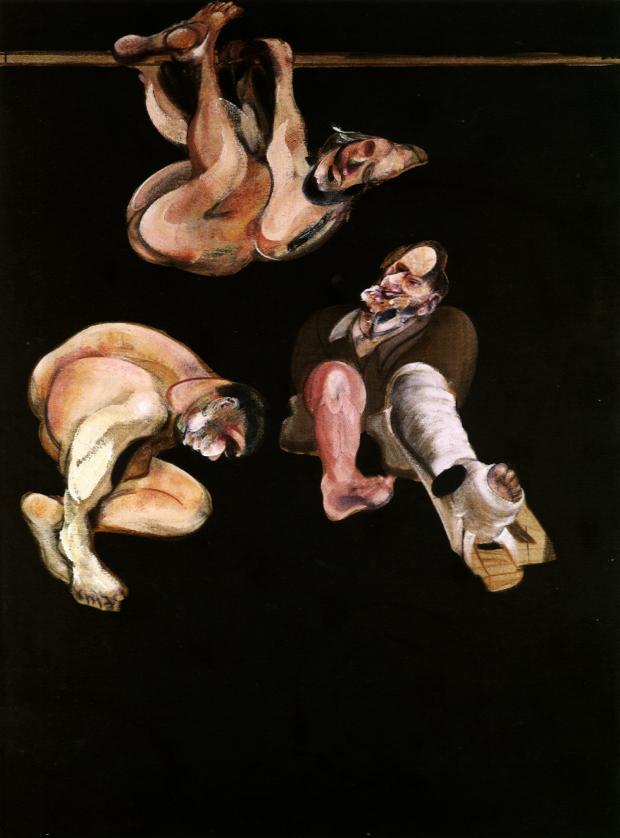
Francis Bacon's 'Three Studies from the Human Body' is a thought-provoking triptych that showcases the artist's unique style and technique. Created in 1967, this painting is a quintessential example of
Expressionism, blending elements of surrealism and abstract art. The three panels depict distorted human figures, inviting viewers to confront their own mortality and vulnerability.
About the Painting
The painting measures 140 x 140 cm and is executed in oil on canvas. Each panel focuses on various parts of the body: the head, the torso, and the legs. Bacon's use of vivid colors, bold brushstrokes, and distorted forms creates an unsettling atmosphere that draws the viewer in. The figures appear to be twisted and contorted, as if trapped in a state of perpetual suffering.
Influences and Context
Bacon's work was influenced by various art movements, including
Expressionism,
Surrealism, and
Cubism. He also drew inspiration from the works of Old Masters such as
Diego Velázquez and
Vincent van Gogh. The
Tate Modern in London and the
Metropolitan Museum of Art in New York have exhibited 'Three Studies from the Human Body', solidifying its place in the art world.
Significance and Legacy
This painting is considered one of Bacon's most important works, showcasing his mastery of color, form, and composition. To learn more about
Francis Bacon and his art, visit
Francis Bacon's page on ArtsDot. Discover more artworks by Bacon and other renowned artists on
ArtsDot, including hand-made oil painting reproductions.
Experience the haunting beauty of 'Three Studies from the Human Body' and discover the world of Expressionism with ArtsDot.
The painting's significance lies in its ability to evoke emotions and challenge our perceptions, making it a must-see for art enthusiasts and collectors alike.