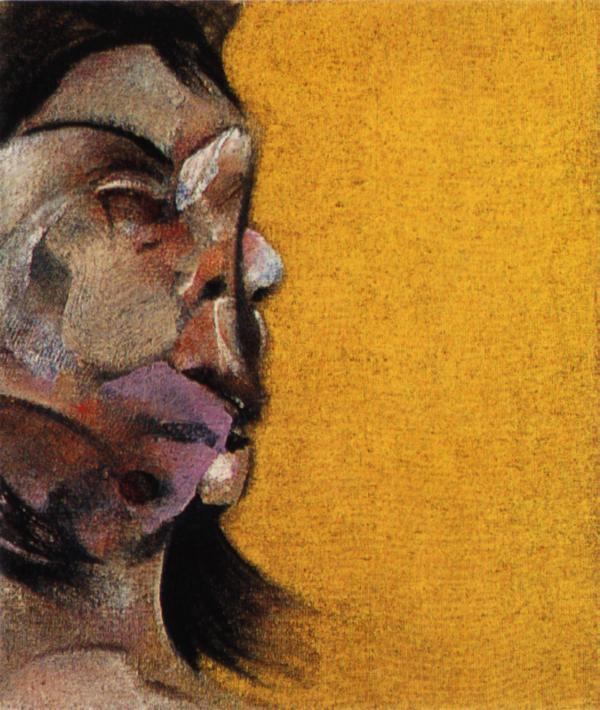
A Portrait of Trauma: Examining Francis Bacon’s ‘Three Studies of Henrietta Moraes II’
Francis Bacon's 'Three Studies of Henrietta Moraes II,' painted in 1969, stands as a haunting testament to the artist’s preoccupation with psychological torment and the grotesque beauty of suffering. This monumental canvas transcends mere representation; it plunges viewers into an abyss of emotion, forcing confrontation with themes of vulnerability, isolation, and the disintegration of identity.
- Subject Matter: The painting depicts Henrietta Moraes II, a Parisian nightclub singer known for her captivating gaze and enigmatic demeanor. Bacon meticulously recreated her face three times over, capturing not just her physical appearance but also an elusive essence of her inner life – a state perpetually on the brink of collapse.
- Style & Technique: Bacon’s signature style—characterized by distorted figures rendered in thick, viscous paint—is powerfully evident here. He employed a technique known as “pressure painting,” applying pigment directly to the canvas with a palette knife, creating textured surfaces that resemble flesh and bone. The resulting images are unsettlingly visceral, mirroring the artist's own emotional turmoil.
Historical Context: Britain Under Thatcher
Painted during Margaret Thatcher’s premiership in Britain, ‘Three Studies of Henrietta Moraes II’ reflects the anxieties of a nation grappling with social upheaval and economic austerity. Bacon’s work aligns itself with Expressionist sensibilities prevalent at the time—a rejection of idealized beauty in favor of confronting uncomfortable truths about human experience.
- Influence: Bacon drew inspiration from Surrealism, particularly Giorgio Morandi's muted landscapes, which instilled a sense of melancholy and contemplation. He also explored Freudian psychoanalysis, recognizing the significance of unconscious desires and repressed emotions in shaping artistic creation.
- Symbolism: The fragmented faces—each rendered with meticulous detail—symbolize the fractured psyche of Henrietta Moraes II and, by extension, Bacon’s own internal struggles. The recurring motif of the eye—often depicted as staring outward with an unnerving intensity—represents awareness, observation, and ultimately, inescapable vulnerability.
Emotional Impact: Confronting Darkness
‘Three Studies of Henrietta Moraes II’ is undeniably disturbing yet profoundly rewarding for those willing to engage with its unsettling power. Bacon deliberately eschewed conventional artistic conventions, prioritizing emotional honesty above aesthetic considerations. The painting compels viewers to confront their own fears and anxieties—to acknowledge the darkness that resides within us all.
- Color Palette: Dominated by shades of yellow and ochre, the canvas exudes an unsettling warmth that contrasts sharply with the pallid skin tones of Henrietta Moraes II. This deliberate juxtaposition amplifies the painting’s emotional impact, conveying a sense of impending doom.
- Legacy: Bacon's work continues to fascinate artists and critics alike—a testament to its enduring relevance as an exploration of human psychology and artistic innovation. Reproductions of ‘Three Studies of Henrietta Moraes II’ offer collectors and interior designers the opportunity to experience firsthand the visceral beauty of Bacon’s uncompromising vision.