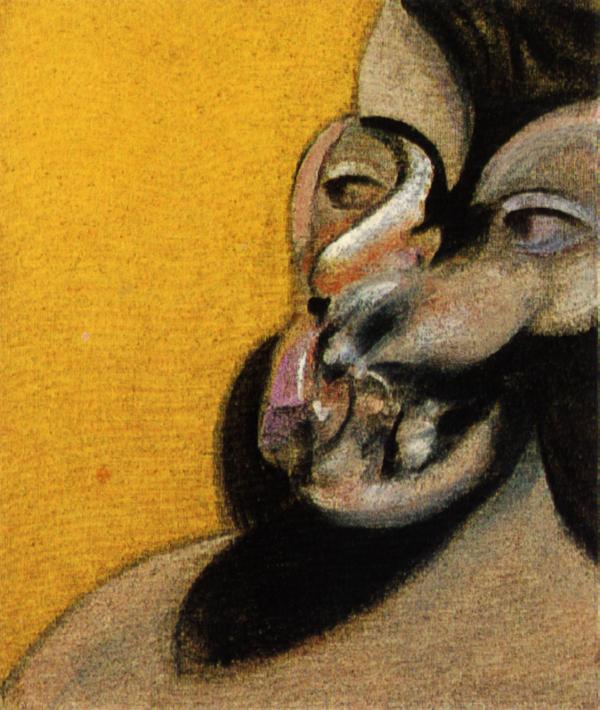
The Visceral Echoes of Francis Bacon’s ‘Three Studies of Henrietta Moraes II’
Francis Bacon's 1969 painting, ‘Three Studies of Henrietta Moraes II,’ is not merely a portrait; it’s an excavation of the human psyche rendered in a language of profound unease. This work, part of a series exploring the enigmatic figure of Henrietta Moraes, a Parisian model and actress who captivated Bacon with her unsettling beauty and rumored connections to Surrealist circles, embodies the artist's relentless pursuit of emotional truth. The painting’s power resides not in idealized representation but in its brutally honest depiction of vulnerability, anxiety, and perhaps even despair. It is a testament to Bacon’s ability to distill complex psychological states onto canvas with an almost unbearable intensity.
A Study in Distortion and Color
The composition immediately confronts the viewer with a fractured image – three distinct depictions of Henrietta Moraes, each subtly different yet united by a shared sense of anguish. The faces are rendered with a deliberate distortion, elongating features and exaggerating expressions into grotesque masks. This technique, characteristic of Bacon’s mature style, rejects traditional notions of beauty in favor of an exploration of the darker aspects of human experience. The use of color is equally significant; the dominant yellow background – a sickly, almost toxic hue – amplifies the sense of discomfort and contributes to the painting's overall atmosphere of dread. Bacon’s masterful control of paint application, utilizing thick impasto and rapid brushstrokes, adds to the visceral impact of the work, creating a surface that feels both turbulent and intensely alive.
Symbolism and the Weight of History
Henrietta Moraes herself remains an elusive subject, shrouded in mystery. Her presence within Bacon’s oeuvre is laden with symbolic weight, reflecting anxieties about identity, sexuality, and the precariousness of existence. The painting's creation occurred during a period of immense social and political upheaval – the aftermath of World War II had left Europe scarred, and the Cold War loomed large. Bacon’s work can be interpreted as a response to this atmosphere of uncertainty and disillusionment, capturing a sense of existential dread that resonated deeply with the anxieties of the time. The influence of Surrealism is undeniable, particularly in the distorted forms and unsettling imagery, yet Bacon transcends mere imitation, forging his own intensely personal vision.
Technique and Emotional Resonance
Bacon’s technique is characterized by a relentless energy and a commitment to capturing fleeting moments of emotional intensity. He employed a layering process, building up the paint in multiple layers, creating a textured surface that seems to vibrate with unspoken emotion. The use of contrasting tones – the dark flesh against the bright yellow background – further intensifies the visual impact. The painting’s power lies not just in its technical mastery but in its ability to evoke a profound emotional response from the viewer. It is a work that demands attention, forcing us to confront uncomfortable truths about ourselves and the human condition. This reproduction offers an unparalleled opportunity to experience the full force of Bacon's artistic vision.