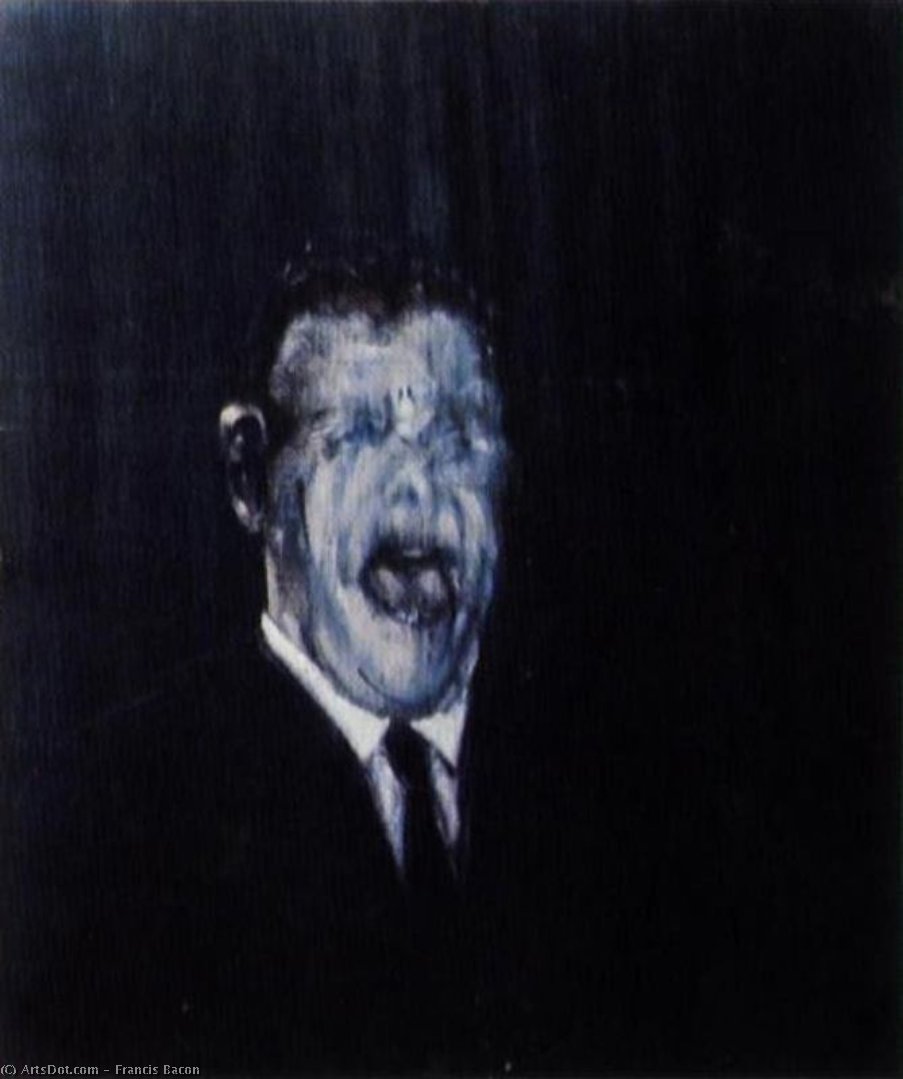
Francis Bacon's
Three Studies of the Human Head is a masterpiece that embodies the artist's unique style and emotional intensity. Created in 1953, this oil on canvas painting is a seminal work in the realm of Expressionism, characterized by its bold use of color and form.
The Artist's Vision
Francis Bacon was a British painter known for his raw, emotionally charged works. His art is characterized by its exploration of themes such as identity, isolation, and the human condition.
Three Studies of the Human Head is a powerful example of this, featuring three distorted, almost grotesque depictions of human heads.
Composition and Style
The painting's composition is notable for its innovative arrangement of the three panels, suggesting movement and dynamism. The use of color is also significant, with deep reds and blacks creating a somber, almost oppressive atmosphere. This emotional intensity is heightened by the bold, expressive brushstrokes that characterize Bacon's style.
Artistic Significance
Three Studies of the Human Head is significant in art history for its departure from traditional portraiture and its influence on contemporary art movements. The painting's innovative composition and style have made it a seminal work in the Expressionist movement, paving the way for future artists to explore new forms of expression.
- Expressionism: A style characterized by its emphasis on emotional intensity and distorted forms.
- Oil on canvas: The medium used by Bacon to create the painting, known for its rich texture and vibrant colors.
- View the painting on ArtsDot.com to experience its emotional depth and intensity.
Discover more about Francis Bacon and his works on
ArtsDot.com, including his other notable paintings such as
Figure with Meat and
Two Figures. Visit the
Tate Museum to see some of his works in person.
Learn more about the
Expressionist movement on
Wikipedia, and explore the works of other notable Expressionist artists, such as
Edvard Munch and
Egon Schiele.