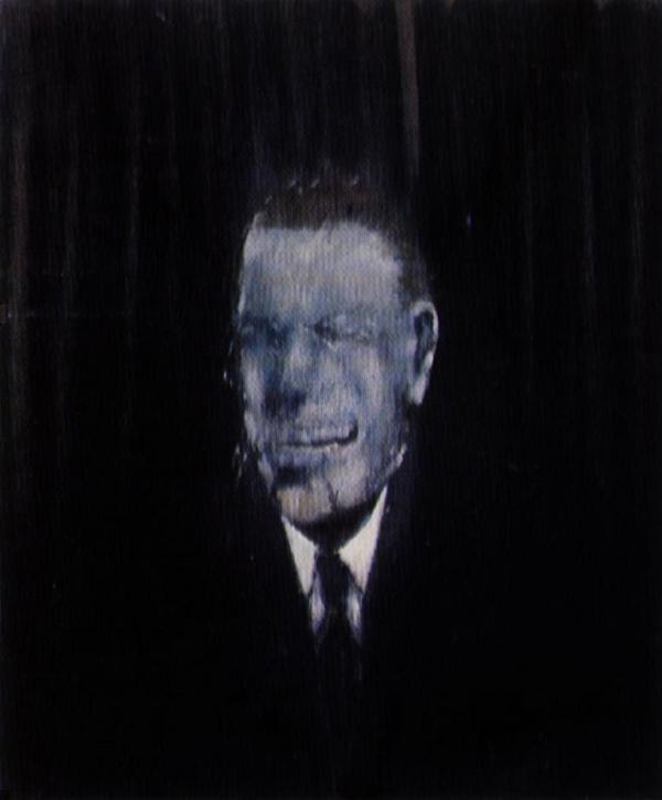
Francis Bacon, born in Dublin, Ireland, 1909, defied formal training to forge his own artistic path, absorbing influences from diverse sources and creating emotionally charged figurative paintings characterized by distorted forms and existential themes. His work explores vulnerability and brutality.
Explore Francis Bacon's (1909-1992) emotionally charged figurative paintings. Known for distorted forms, existential themes & bold expressionism, he remains a cornerstone of modern art. Discover key works & legacy.
A Portrait of Disquiet: Decoding Francis Bacon’s “Three Studies of the Human Head”
Francis Bacon's "Three Studies of the Human Head" (1953) stands as a cornerstone of Expressionist painting and an enduring emblem of existential angst. More than just a depiction of a man’s visage, it’s a visceral exploration of psychological torment rendered in thick impasto and bathed in unsettling shades of blue—a testament to Bacon's singular ability to distill profound emotion onto canvas. This essay delves into the artwork’s multifaceted layers, examining its stylistic innovations, technical prowess, historical significance, and enduring emotional resonance.
Stylistic Innovation: Beyond Realism – Embracing Distortion
Bacon deliberately rejected traditional representational conventions, opting instead for a style that prioritized feeling over accurate depiction. Unlike Impressionists who sought to capture fleeting moments of light and color, Bacon aimed to convey the inner turmoil of his subject—a preoccupation with mortality and vulnerability—through distorted forms and exaggerated expressions. The head itself is rendered in fragmented planes, mirroring the fractured psyche it embodies. This deliberate distortion isn’t merely stylistic; it's a crucial element in conveying the artwork’s core message: the human condition is inherently unstable and fraught with suffering. Influenced by Surrealism and Dada movements, Bacon pushed boundaries of artistic expression, establishing himself as a pioneer of Neo-Figuration—a movement that championed figurative painting alongside psychological exploration.
Technical Mastery: Thick Impasto and Color Palette – Tools of Emotional Intensity
The execution of “Three Studies” exemplifies Bacon’s masterful technique. He employed thick impasto—applying paint in layers upon layers—creating a palpable textural surface that amplifies the emotional impact of the image. This physicality is paramount; it forces the viewer to confront the artwork directly, mirroring the inescapable reality of human experience. The dominant color palette consists of muted grays and blacks punctuated by an insistent blue tint. This deliberate chromatic choice isn’t merely decorative—it serves as a conduit for conveying mood and atmosphere. The blue hue evokes feelings of melancholy, isolation, and unease, subtly intensifying the portrait's unsettling quality. Bacon meticulously crafted each brushstroke to maximize expressive potential, demonstrating unwavering dedication to his artistic vision.
Historical Context: Postwar Anxiety and Existential Reflection
Created in the immediate aftermath of World War II, “Three Studies” reflects the pervasive anxieties of its time—a period marked by disillusionment, trauma, and a questioning of traditional values. Bacon’s preoccupation with themes of death and decay aligns perfectly with the intellectual currents of existential philosophy, which wrestled with questions of meaninglessness and freedom in the face of an indifferent universe. The artwork speaks to the broader cultural anxieties surrounding nuclear weapons and the fragility of human existence—concerns that resonated deeply within the artistic community of the era. Bacon’s unflinching gaze confronts these weighty issues head-on, refusing to offer easy answers or comforting illusions.
Symbolism: Facial Expression and Fragmented Form – Vessels of Psychological Truth
The portrait's central element—the man’s face—is imbued with symbolic significance. His frown and open mouth convey a palpable sense of displeasure, anger, or perhaps profound discomfort—expressions that encapsulate the psychological complexities inherent in human experience. Bacon deliberately fragmented the head into geometric planes, mirroring the disintegration of identity and consciousness. This technique underscores the artwork's overarching theme: the human body is vulnerable to forces beyond our control, constantly threatened by decay and mortality. The blue tint further amplifies this symbolic resonance, representing not only melancholy but also a chilling awareness of existential dread.
Emotional Impact: Confronting Darkness – An Uncomfortable Reflection
“Three Studies” compels viewers to confront uncomfortable truths about the human condition—a task Bacon undertook with unwavering courage and conviction. The artwork’s unsettling atmosphere lingers long after viewing, prompting contemplation on themes of suffering, vulnerability, and mortality. It's a painting that refuses to shy away from darkness, acknowledging the inescapable realities of existence without offering solace or reassurance. Rather than seeking beauty or harmony, Bacon strives for authenticity—a brutal honesty that captures the essence of human experience with unflinching precision. Ultimately, “Three Studies of the Human Head” remains an enduring masterpiece because it dares to explore the darkest recesses of the human psyche—a testament to Bacon’s unparalleled artistic vision and his profound understanding of the complexities of human emotion.