A Descent Into Darkness: The Visceral Majesty of Francis Bacon
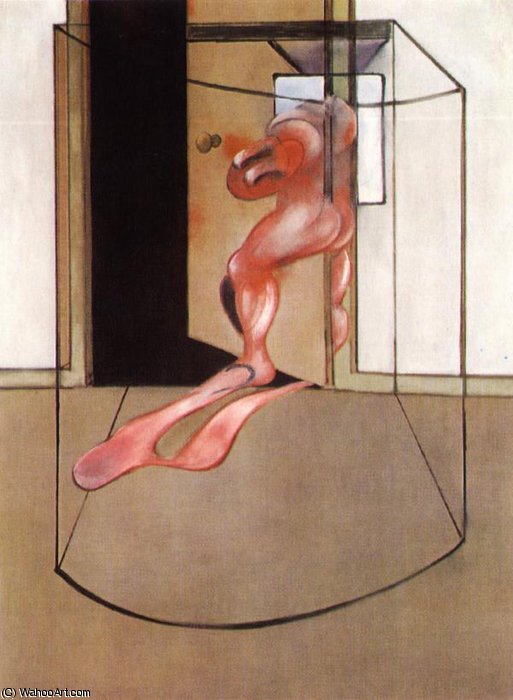
To encounter Triptych Inspired by The Oresteia of Aeschylus, Right is to step into a realm where the boundaries between the physical body and psychological torment dissolve. Created in 1981, this profound work by Francis Bacon serves as more than a mere painting; it is a haunting meditation on the inescapable weight of mortality and guilt. The composition presents a stark, unsettling tableau: a solitary figure stands before an open doorway, gazing intently into an encroaching darkness. This threshold acts as a powerful metaphor for the transition between life and death, or perhaps between the known self and the terrifying unknown. Through his masterful use of visceral abstraction, Bacon invites the viewer to witness a soul grappling with the echoes of ancient tragedy, specifically the heavy repercussions of murder and fate found in Aeschylus’s Greek trilogy.
The technical brilliance of this piece lies in Bacon’s relentless and emotive application of pigment. Eschewing the polished surfaces of traditional portraiture, he employs a technique characterized by thick layering, drips, and splatters that create a textured landscape reminiscent of raw flesh and weathered bone. This method achieves a remarkable illusionistic effect; while the anatomical forms are deliberately distorted and fragmented, they possess a startlingly real presence. The way the light catches the uneven surfaces of the paint mimics the vulnerability of human skin, making the psychological fragmentation of the subject feel physically palpable to anyone standing before the canvas. For the discerning collector or interior designer, this texture provides a commanding focal point that brings a sense of profound depth and movement to any sophisticated space.
The Echoes of Tragedy and Post-War Anxiety
Beyond its striking visual surface, the painting is deeply rooted in the historical and cultural anxieties of the late 20th century. Bacon’s work emerged from the wreckage of a post-war era, a period defined by existential dread and the disintegration of long-held traditional values. By drawing inspiration from the Oresteia, Bacon bridges the gap between ancient classical tragedy and modern psychological trauma. The figure in the doorway is not merely an observer but an embodiment of the tormented human condition—trapped within claustrophobic structures, haunted by unseen consequences, and facing the inevitable confrontation with one's own end. This connection to the timeless themes of justice and suffering allows the artwork to resonate across generations.
For those seeking to integrate art into a curated environment, this reproduction offers an unparalleled emotional impact. It is a piece that demands attention and provokes deep thought, making it an ideal selection for spaces designed for contemplation or as a bold statement of intellectual depth. The interplay of the dark, void-like spaces with the sudden, jarring presence of color—such as the striking red shirt of the central figure—creates a dynamic tension that can transform the atmosphere of a room. Owning a piece of this caliber is an invitation to engage with the very limits of human experience, bringing the raw, unflinching beauty of Bacon’s vision into the modern home.