A Visceral Encounter with Human Vulnerability
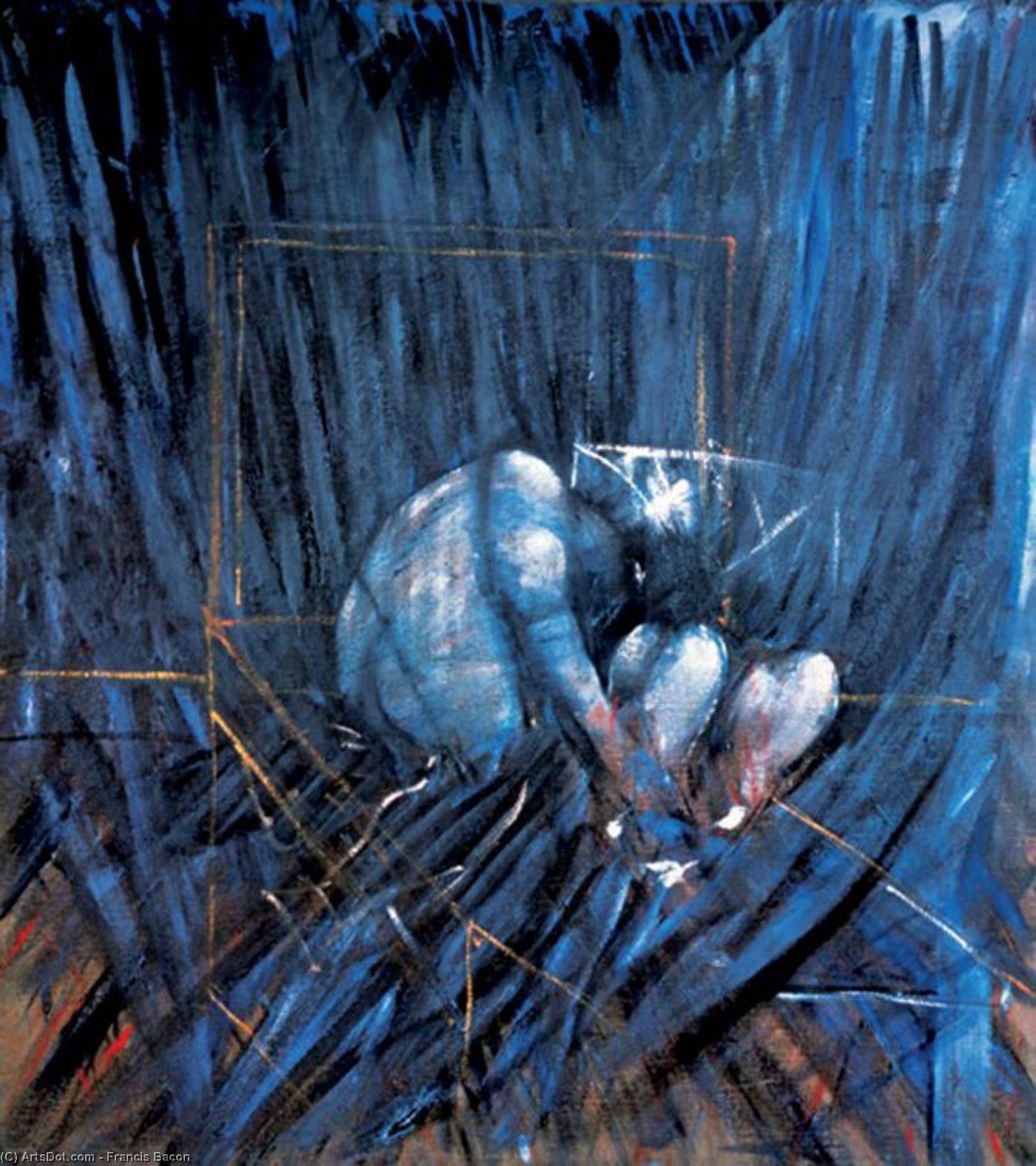
In the hauntingly evocative masterpiece “Two Figures in the Grass,” created by the legendary Francis Bacon in 1953, we are invited into a realm where the boundaries between physical struggle and psychological torment dissolve. This oil on canvas work serves as a profound exploration of the human condition, capturing a moment of intense, raw emotion that transcends mere representation. The composition presents two nude figures locked in a desperate, contorted embrace—a scene that oscillates between the agony of conflict and the ecstasy of connection. As one figure grapples with another upon a disarrayed surface, the viewer is thrust into a private, almost voyeuristic encounter with the primal forces of instinct and vulnerability.
The painting’s atmosphere is defined by a striking juxtaposition. While the figures themselves are caught in a whirlwind of movement and tension, they are set against a deceptively serene backdrop of deep blues and ethereal light. This contrast creates a sense of isolation, as if the struggle unfolding is occurring within a vacuum of existential reflection. For collectors and lovers of fine art, this piece offers more than just visual intrigue; it provides a window into the turbulent psyche of the post-war era, making it an intellectually stimulating addition to any curated collection.
The Mastery of Fragmentation and Texture
Bacon’s technique in this work is nothing short of revolutionary, eschewing the traditional pursuit of anatomical perfection in favor of what can be described as psychological painting. He employs a method of fragmentation, where the edges of the bodies and the surrounding environment appear blurred and unstable. This deliberate lack of clarity serves to heighten the sense of motion and instability, suggesting that the very fabric of reality is fraying under the weight of the figures' emotions. The paint itself is applied with a visceral energy; thick, expressive brushstrokes and scraped surfaces create an illusionistic texture that mimics the roughness of skin, bone, and the grit of the earth.
For interior designers seeking to introduce a focal point of profound depth, the technique used in this reproduction offers a remarkable tactile quality. The interplay of light and shadow across the blurred forms creates a dynamic visual rhythm that can anchor a room, providing a sophisticated layer of complexity to modern or contemporary decor. The way Bacon manipulates color—using pale whites, soft pinks, and lilac tones against a heavy, dark blue void—ensures that the painting commands attention through its sheer atmospheric power.
Echoes of Postwar Anxiety and Existentialism
To understand the profound impact of “Two Figures in the Grass,” one must consider the historical landscape from which it emerged. Painted in the immediate aftermath of World War II, the work is saturated with the pervasive anxieties of a world grappling with the trauma of conflict and the looming shadow of nuclear uncertainty. The figures do not merely represent men in combat; they embody the broader existential crisis of the mid-20th century—the struggle to find meaning in a fragmented and often violent existence. Bacon’s ability to translate these heavy philosophical themes into such a visceral visual language is what secures his place as a titan of modern art.
The symbolism within the piece is deeply layered, touching upon themes of mortality, the fragility of the flesh, and the inescapable nature of human instinct. The struggle depicted is both a physical battle and a spiritual one, reflecting the disillusionment that followed the collapse of heroic ideals. Owning or displaying a high-quality reproduction of this work allows for a continuous dialogue with these powerful themes, offering an enduring source of inspiration and a profound meditation on what it truly means to be human in an unpredictable world.