A Descent Into Visceral Emotion: Exploring Francis Bacon’s “Two Figures Lying on a Bed with Attendants”
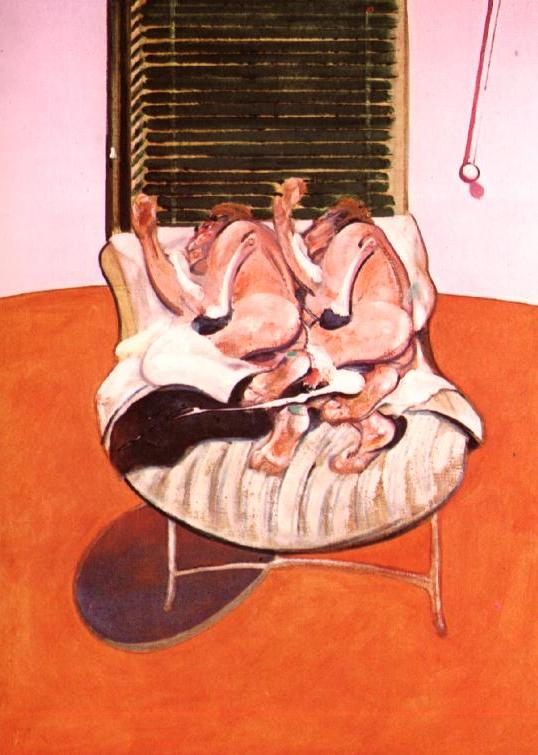
The painting "Two Figures Lying on a Bed with Attendants," completed in 1968 by Francis Bacon, stands as an arresting testament to the artist's unwavering commitment to confronting profound psychological anxieties. More than just a depiction of two men intertwined on a bed—a motif recurrent throughout Bacon’s oeuvre—it embodies a complex tapestry of fear, vulnerability, and primal instinct rendered with unparalleled expressive power. Situated within the broader context of post-war Britain, where artists wrestled with existential disillusionment following the devastation of World War II, Bacon's work represents a radical departure from prevailing artistic conventions. He eschewed idealized beauty, rejecting academic traditions in favor of a brutally honest portrayal of human experience—a stance that cemented his reputation as one of the most influential figures of 20th-century art.
- Subject Matter & Composition: Bacon’s fascination with the human body—particularly its grotesque distortions—is palpable here. The central figure, positioned on the bed beneath a Venetian blind, is rendered in unsettling detail, resembling a monkey's face – a deliberate allusion to primal savagery and instinctual vulnerability. Alongside him lies another man, equally distorted, mirroring his posture and gaze. The arrangement of the figures within the curved white walls and oval red floor contributes to an atmosphere of claustrophobia and unease, amplifying the emotional impact of the scene.
- Style & Technique: Bacon’s signature style—characterized by fragmented forms, jarring juxtapositions, and a masterful blend of oil paint and pastel—is evident throughout. The pastel medium lends itself to capturing subtle nuances of color and texture, juxtaposed against the denser impasto of oil paint, creating a dynamic surface that pulsates with energy. Bacon’s technique prioritizes conveying emotion over meticulous representation, prioritizing visceral sensation above visual accuracy.
Historical Context & Influences
Bacon's artistic vision was profoundly shaped by the intellectual currents of his time—particularly Surrealism and Expressionism. The influence of Surrealist artists like René Magritte and Salvador Dalí can be discerned in Bacon’s exploration of dreamlike imagery and subconscious anxieties. Simultaneously, he absorbed elements from German Expressionists such as Ernst Ludwig Kirchner and Emil Nolde, mirroring their preoccupation with portraying the darker side of human psychology and confronting societal ills. The painting's creation coincided with a period of intense social upheaval—the Civil Rights Movement in America and the Vietnam War protests—reflecting Bacon’s engagement with pressing political concerns.
- Symbolism & Interpretation: Beyond its immediate visual impact, “Two Figures Lying on a Bed with Attendants” is laden with symbolic significance. The monkey's face represents not merely physical deformity but also the suppression of instinctual desires and the fear of confronting one’s own primal nature. The seated figures flanking the bed serve as witnesses to this psychological drama—passive observers grappling with the unsettling realities presented before them. Bacon deliberately avoids offering definitive interpretations, inviting viewers to engage in a dialogue with the painting's emotional core.
Emotional Impact & Legacy
The enduring power of “Two Figures Lying on a Bed with Attendants” lies in its ability to evoke profound feelings of anxiety, vulnerability, and despair. Bacon’s masterful manipulation of color, texture, and form compels viewers to confront uncomfortable truths about the human condition—a challenge that continues to resonate across generations of artists and critics alike. Considered one of Bacon's most iconic works, it exemplifies his unwavering dedication to exploring the darkest recesses of consciousness and resisting simplistic narratives of beauty or morality. Its influence can be traced throughout contemporary art, inspiring artists to embrace experimentation and confront challenging themes with uncompromising honesty—a legacy that secures Bacon’s place as a cornerstone of 20th-century artistic innovation.