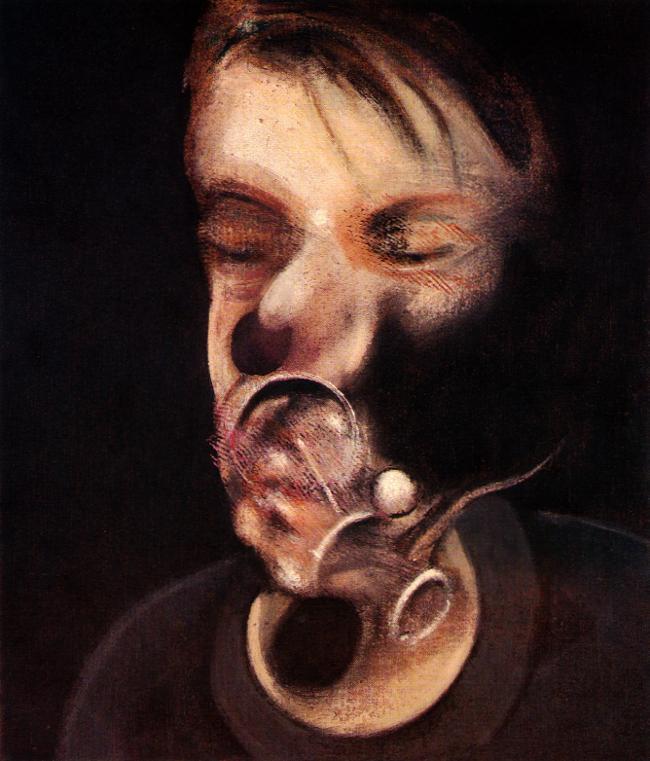
Two Studies for Self-Portrait, 1977 (b) by Francis Bacon – A haunting depiction of the artist’s gaze, rendered in stark black and white with subtle textural variations. Explore Bacon's masterful use of form and emotion to convey profound psychological insight.
A Portrait of Existential Angst: Examining Francis Bacon’s “Man with Halo”
Francis Bacon’s “Man with Halo,” painted in 1968, stands as one of the most arresting and unsettling images produced by British Surrealism during its twilight years. More than just a depiction of a human face—albeit a grotesquely distorted one—it embodies a profound exploration of psychological torment and the inescapable awareness of mortality, anxieties that resonated deeply within the cultural climate of the era.
- Subject Matter: The painting presents a solitary figure, rendered in shades of bruised flesh tones, dominated by an oversized halo – a symbol traditionally associated with divine grace and redemption. However, Bacon deliberately subverts this iconography, transforming it into a cage-like structure that imprisons the man’s face, emphasizing his isolation and vulnerability.
- Style: Bacon’s style is characterized by its brutal honesty and uncompromising rejection of idealized representation. He employs a technique known as “squeeze,” where he presses pigment onto the canvas with gloved hands—a method that imparts an almost palpable physicality to the image, conveying the sensation of suffering and decay.
- Technique: Bacon’s masterful use of color contributes significantly to the painting's emotional impact. The muted palette – predominantly browns, reds, and yellows – reflects the psychological darkness at play, while subtle variations in tone heighten the sense of unease and disorientation. He builds up layers of paint with meticulous detail, creating textures that mimic skin imperfections and conveying a visceral impression of flesh.
Historical Context: The Shadow of Nuclear Anxiety
“Man with Halo” emerged during a period marked by escalating Cold War tensions and the pervasive fear of nuclear annihilation. Bacon’s preoccupation with themes of death, decay, and psychological breakdown mirrored anxieties prevalent throughout society—a reflection of the existential crisis gripping intellectuals and artists grappling with the implications of technological advancement and the fragility of human existence.
- Nuclear Deterrence: The painting's unsettling imagery served as a powerful commentary on the pervasive dread surrounding nuclear weapons, capturing the psychological fallout of living under constant threat of destruction. Bacon’s deliberate distortion of form mirrored the perceived distortions of reality brought about by scientific progress.
- Surrealist Legacy: Despite the waning influence of Surrealism in mainstream art circles, Bacon remained steadfastly committed to its principles—particularly its exploration of subconscious imagery and irrational emotion. “Man with Halo” exemplifies this legacy, presenting a dreamlike vision infused with disturbing symbolism.
Symbolism Beyond Appearance
The halo itself is arguably the painting’s most potent symbol – representing not divine protection but rather confinement and oppression. Its oversized size underscores the man's helplessness against forces beyond his control, mirroring the broader anxieties surrounding vulnerability in a hostile world.
- Halo as Cage: Bacon deliberately employs this traditional emblem to undermine its comforting connotations, transforming it into an instrument of psychological imprisonment—a visual metaphor for the inescapable burden of consciousness and awareness.
- Facial Distortion: The man’s grotesquely distorted face serves as a conduit for conveying profound emotional distress. Bacon’s technique amplifies this effect, capturing the visceral sensation of suffering and decay – mirroring the anxieties surrounding mortality that permeate the artwork.
Emotional Impact: Confronting Mortality
"Man with Halo" compels viewers to confront uncomfortable truths about human existence—namely, the inevitability of death and the pervasive presence of psychological torment. Bacon’s uncompromising vision transcends mere aesthetic beauty, offering instead a harrowing glimpse into the darkest recesses of the human psyche.
- Psychological Resonance: The painting's enduring power lies in its ability to evoke profound emotional responses—inducing feelings of anxiety, despair, and vulnerability. Bacon’s masterful technique captures the visceral sensation of suffering – resonating deeply with audiences who grapple with similar existential concerns.
Conclusion
Francis Bacon’s “Man with Halo” remains a landmark achievement in Surrealist art—a testament to his unwavering commitment to exploring psychological complexity and confronting uncomfortable truths about human mortality. Its unsettling imagery continues to captivate audiences today, serving as a poignant reminder of the enduring power of art to provoke reflection and inspire empathy.