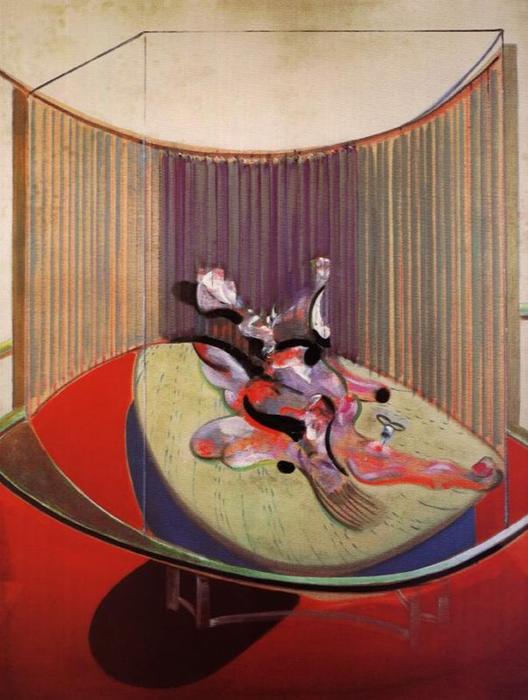
Version No. 2 of Lying Figure with Hypodermic Syringe: A Descent into Visceral Emotion
Francis Bacon’s “Version No. 2 of Lying Figure with Hypodermic Syringe,” completed in 1968, stands as a haunting testament to the artist's preoccupation with human vulnerability and psychological torment—a cornerstone of his distinctive artistic vision.
The Model: Henrietta Moraes – A Fragmented Portrait
This painting draws inspiration from Henriette Moraes, Bacon’s lifelong companion and muse. The photograph upon which it is based depicts Moraes in a bed, her body partially obscured by drapery—a pose that would become recurring motif throughout Bacon's oeuvre. Bacon meticulously recreated this image on canvas, capturing not merely the physical form but also the palpable sense of unease and isolation inherent in Moraes’s presence.
Style and Technique: Brutal Minimalism
Bacon’s style is characterized by brutal minimalism—a deliberate rejection of decorative elements in favor of stark contrasts and unsettling distortions. The canvas is dominated by a single, monumental panel painted in oil on canvas, employing a technique that prioritizes expressive brushstrokes over precise representation. Thick impasto creates a textured surface that conveys the physicality of emotion itself; it’s as if the paint embodies the artist's inner turmoil.
Historical Context: The Shadow of Existential Angst
Painted during the height of the Cold War and amidst a broader cultural climate marked by existential angst, “Version No. 2” reflects the anxieties of its time. Bacon’s work engages with themes of mortality, trauma, and the disintegration of identity—concerns that resonated deeply within intellectual circles grappling with the philosophical implications of nuclear deterrence.
Symbolism: Collapsed Figures and Anatomical Dissection
The painting's symbolism is multilayered. The reclining figure embodies vulnerability and surrender to an inescapable fate; her exposed flesh underscores the fragility of human existence. Bacon’s penchant for anatomical dissection—evident in the fragmented depiction of Moraes’s torso—serves as a visual metaphor for confronting psychological wounds and dismantling illusions.
Emotional Impact: A Confrontation with Darkness
"Version No. 2" compels viewers to confront the darkest recesses of human experience. Its unsettling imagery—the stark red wall, the empty chairs—creates an atmosphere of claustrophobia and despair. Yet, within this darkness lies a profound beauty—a testament to Bacon’s ability to transform suffering into artful expression.
- Artist: Francis Bacon
- Year: 1968
- Medium: Oil on Canvas
- Dimensions: Unknown
- Location: Private Collection
This striking artwork exemplifies Bacon’s masterful manipulation of form and color to convey profound psychological depth. Its enduring power lies in its unflinching portrayal of human vulnerability—a timeless exploration of the anxieties that define our condition.