Discover Francis Hayman (1708-1776), a founding member of the Royal Academy! Explore his Rococo-influenced portraits, Shakespearean scenes, Vauxhall Gardens paintings & book illustrations. A key figure in 18th-century British art.
Discover art & history at the Fitzwilliam Museum, Cambridge! Explore world-class collections from ancient Egypt to modern masterpieces – free admission awaits!
A Moment Frozen in Time: The Innocence of Hayman’s Vision
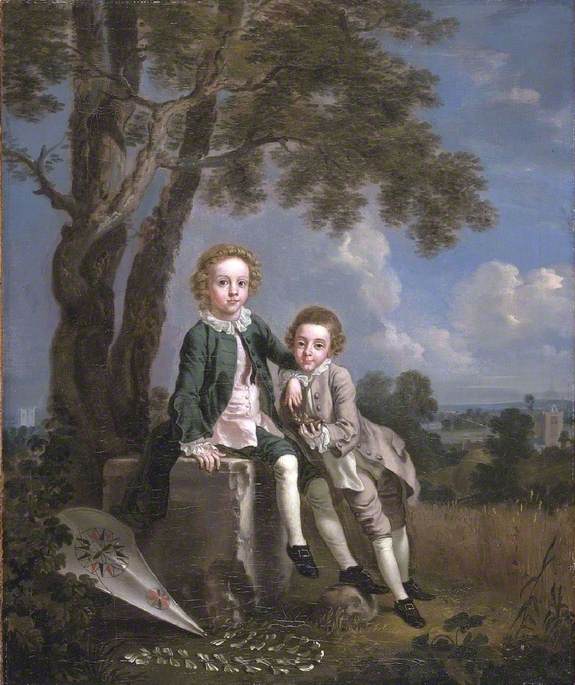
In the gentle embrace of a sun-drenched landscape, Francis Hayman’s 1742 masterpiece, The Masters Martin Atkin, invites the viewer into a world of profound serenity and quiet discovery. This exquisite painting captures two young children, their blonde curls catching the light, as they occupy a tranquil corner of the natural world. One child sits poised upon a weathered stone pedestal, dressed in a vibrant green jacket that echoes the lush foliage surrounding them, while their companion stands nearby, cradling a small creature with a tenderness that speaks to the purity of youth. The presence of an open book resting upon the earth suggests a shared moment of learning, a silent dialogue between the wisdom of literature and the raw beauty of the outdoors. It is a scene that transcends its era, offering a timeless meditation on the fleeting nature of childhood innocence.
The composition is a masterful display of the Rococo spirit, blended with the structured elegance of classical portraiture. Hayman, a pioneer who would later help found the Royal Academy, utilizes a palette that breathes with life; the soft pinks and crisp whites of the children's attire contrast beautifully against the deep, verdant greens of the sprawling trees and the brilliant, cloud-dappled blue of the English sky. His technique reveals an extraordinary command over light and shadow, creating a sense of three-dimensional depth that pulls the observer into the pastoral setting. Every brushstroke serves to enhance the texture of the fabric, the softness of the hair, and the atmospheric haze of the distant rolling hills, making the landscape feel not just like a backdrop, but a living, breathing participant in the narrative.
Beyond its aesthetic splendor, the painting carries a weight of symbolic significance that resonates with collectors and decorators alike. The interplay between the man-made elements—the stone bench and the printed book—and the untamed beauty of the forest serves as a metaphor for the cultivation of the human spirit through nature and education. For the discerning interior designer, this piece offers more than mere decoration; it provides an emotional anchor. Whether placed in a sunlit library or a grand formal drawing room, the artwork radiates a sense of calm and historical prestige. It is a window into the 18th century, a sophisticated fragment of history that brings a touch of classical grace and a soulful, contemplative atmosphere to any curated space.