A Quiet Moment in Post-War Australia
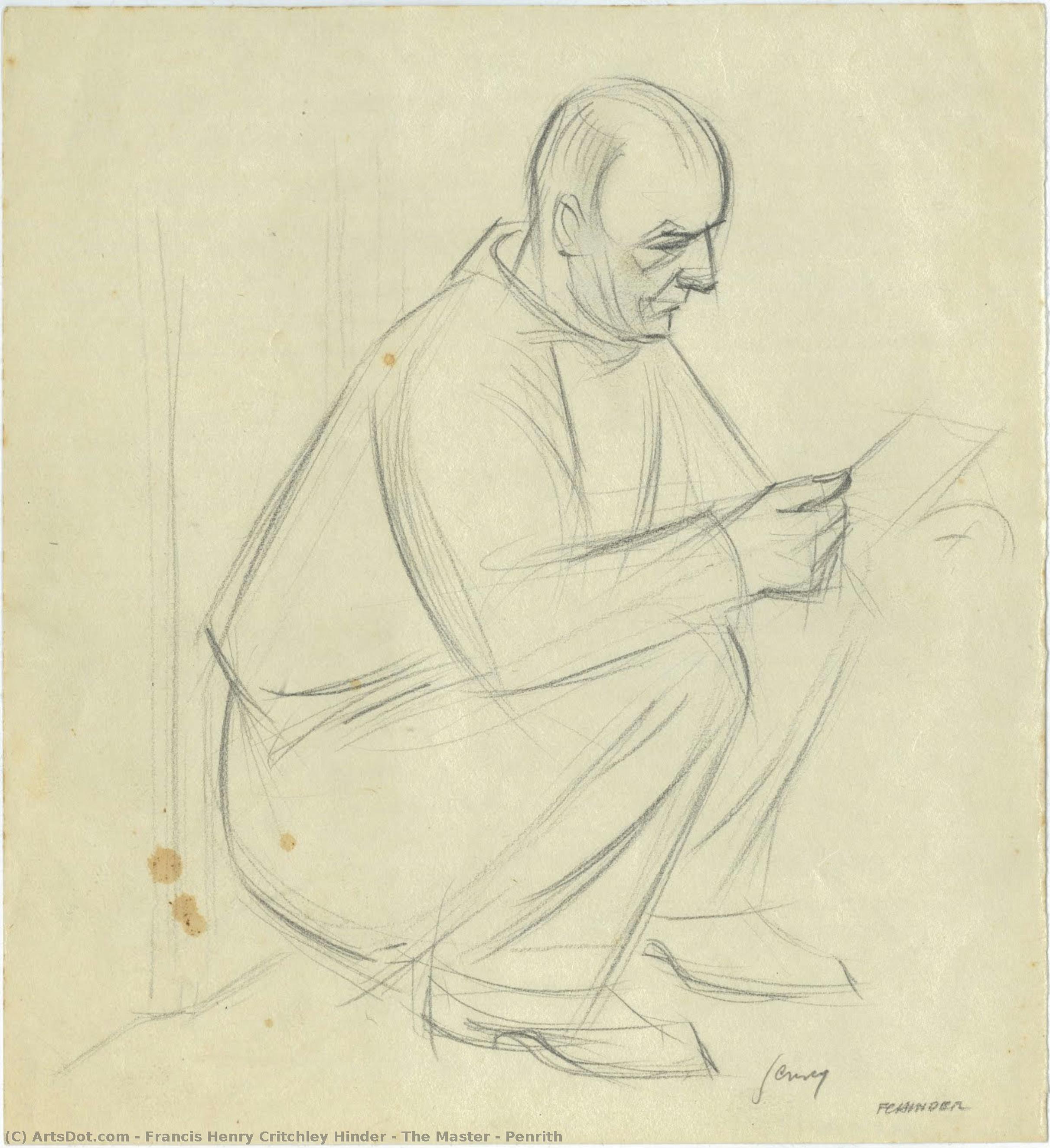
In the delicate, monochromatic strokes of "The Master … Penrith," we are invited into a profound moment of stillness captured by the Australian pioneer of abstraction, Francis Henry Critchley Hinder. Created in 1945, as the world began to emerge from the shadows of World War II, this intimate drawing serves as more than just a portrait; it is a window into a specific, soulful era of Australian modernism. The subject, depicted with a dignified and somber grace, sits with hands folded, his formal attire suggesting a weight of responsibility or perhaps a moment of quiet reflection amidst the shifting tides of history. Through Hinder’s meticulous hand, the piece transcends simple representation to become an evocative study of character and composure.
The technique employed in this work reveals the artist's deep mastery of line and tonal depth. Though Hinder would later become a titan of abstract expressionism, this 1945 work showcases his foundational brilliance in figurative detail. Every fold of the subject's suit and every subtle contour of his facial features is rendered with an exacting care that commands attention. The play of light and shadow—the chiaroscuro effect—lends a sculptural quality to the figure, making the man appear almost tangible within the frame. For the discerning collector, this piece offers a rare glimpse into the artist's evolution, capturing the precise moment where classical observation meets the burgeoning modern sensibility that would soon define his legacy.
Beyond its technical prowess, "The Master … Penrith" carries an emotional resonance that is deeply moving. There is a palpable sense of solitude and introspection in the man's gaze, a quietude that reflects the contemplative atmosphere of the post-war period. This artwork does not merely decorate a space; it anchors it with a sense of history and gravity. For interior designers seeking to introduce a piece of intellectual depth into a curated environment, this drawing provides a sophisticated focal point. It pairs exquisitely with minimalist or contemporary settings, where its monochromatic elegance can act as a silent, powerful narrator of human dignity and the enduring strength of the human spirit.