The Triumph of Saint Hermengild: A Vision of Faith and Divine Ascent
Francisco de Herrera el Mozo’s “The Triumph of Saint Hermengild,” painted in 1654, is not merely a religious depiction; it's a dynamic tapestry woven with threads of spiritual fervor, dramatic composition, and masterful technique. Housed within the Museo del Prado in Madrid, this monumental work offers a profound glimpse into the artistic sensibilities of the Spanish Golden Age and the fervent piety that permeated its society. The painting immediately commands attention with its sheer scale – measuring an impressive 328 x 229 centimeters – inviting the viewer to become immersed in a scene brimming with movement, light, and symbolic weight.
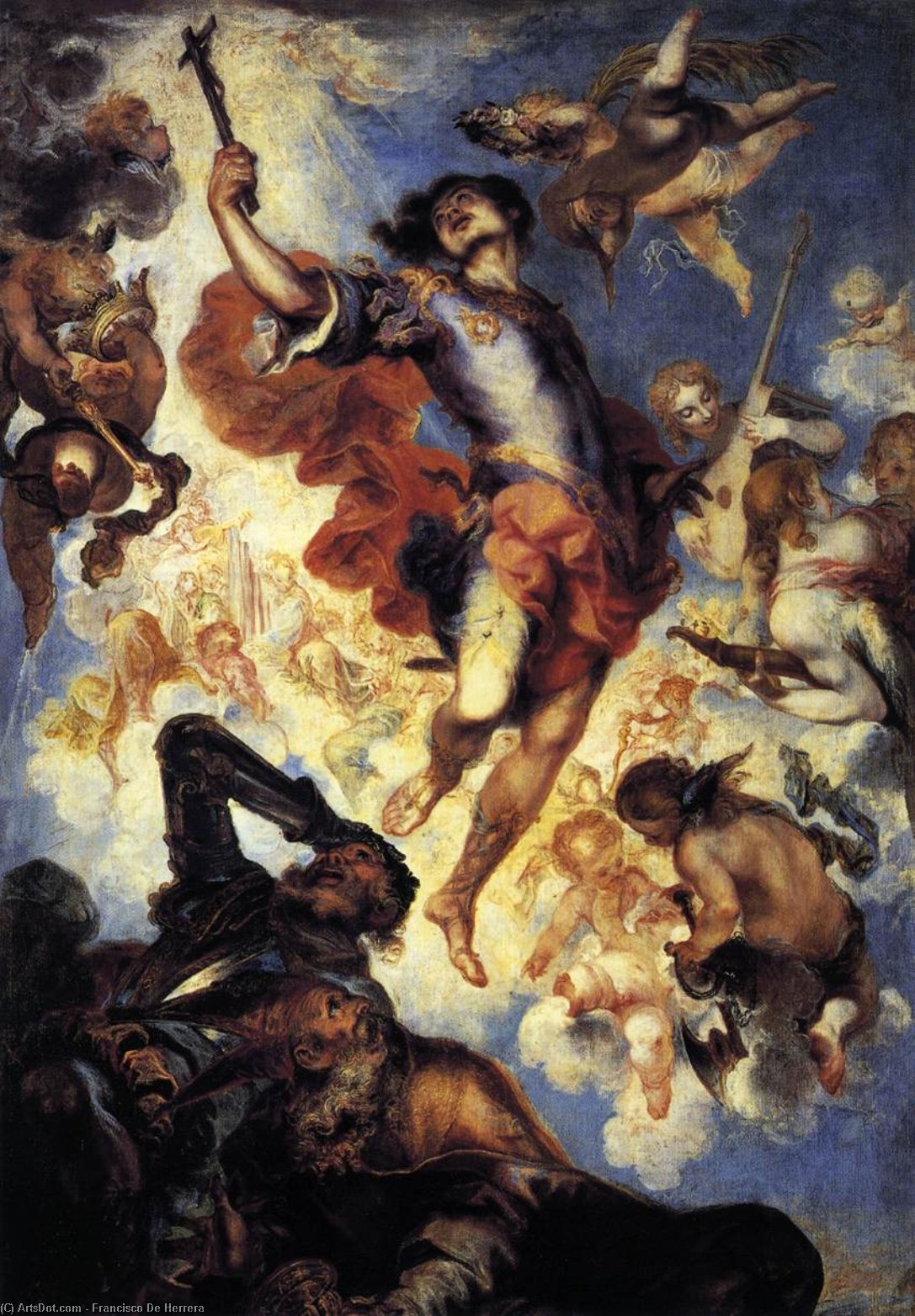
At the heart of the composition stands Saint Hermengild himself, depicted not as a static martyr but as a figure undergoing a transformative ascent. He’s shown seemingly floating amidst a swirling vortex of celestial blues and golds, his outstretched arms reaching towards an unseen heaven. The dramatic use of foreshortening – particularly evident in his posture – creates a powerful illusion of flight, suggesting a liberation from earthly constraints and a direct connection with the divine. Surrounding him are angels, not as passive observers but actively participating in his journey, their wings beating with urgency and their gestures conveying both support and awe.
A Narrative of Sacrifice and Divine Grace
The story behind “The Triumph” is deeply rooted in Spanish religious history. Saint Hermengild, a Visigothic prince, famously refused to participate in the Aryan rituals imposed by his father, Leovigild, choosing instead to embrace Catholicism. This act of defiance led to his imprisonment and execution, yet it ultimately secured his place as a martyr for the true faith. Herrera masterfully captures this pivotal moment, transforming a tale of persecution into a celebration of unwavering conviction. The shadowed figures of Leovigild and the Aryan bishop at the base of the composition serve as stark reminders of the opposition faced by those who dared to challenge established dogma, while Saint Hermengild’s radiant presence embodies the ultimate victory of faith over earthly power.
The painting's symbolism is layered and rich. The swirling clouds represent both the turbulent journey of faith and the boundless expanse of God’s grace. The use of light – a dramatic chiaroscuro technique – highlights Saint Hermengild, drawing our attention to his central role as a symbol of spiritual transcendence. The inclusion of birds, one soaring upwards and another descending, perhaps allude to the duality of earthly existence and the aspiration towards heavenly realms.
Herrera’s Masterful Technique
Francisco Herrera el Mozo was renowned for his bold brushwork and innovative approach to painting. “The Triumph of Saint Hermengild” exemplifies these qualities. His use of impasto – applying paint thickly to create texture and dimension – is particularly evident in the depiction of the angels’ wings and the swirling clouds, lending a palpable sense of movement and energy to the scene. Herrera's skill in rendering fabrics—the flowing robes of the figures—is equally impressive, demonstrating his meticulous attention to detail. The color palette, dominated by rich blues, golds, and reds, is both visually stunning and deeply symbolic, evoking feelings of majesty, divinity, and sacrifice.
A Legacy of Spiritual Intensity
“The Triumph of Saint Hermengild” stands as a testament to Herrera’s artistic genius and the profound religious fervor of 17th-century Spain. It's more than just a historical painting; it’s an emotional experience, inviting viewers to contemplate themes of faith, sacrifice, and redemption. Reproductions of this powerful work offer a chance to bring its dramatic intensity into any space, serving as a reminder of the enduring power of spiritual conviction and the beauty that can be found in artistic expression.