A Serene Vision of Celestial Grace: Francisco de Zurbarán’s *Angel Tiruferario*
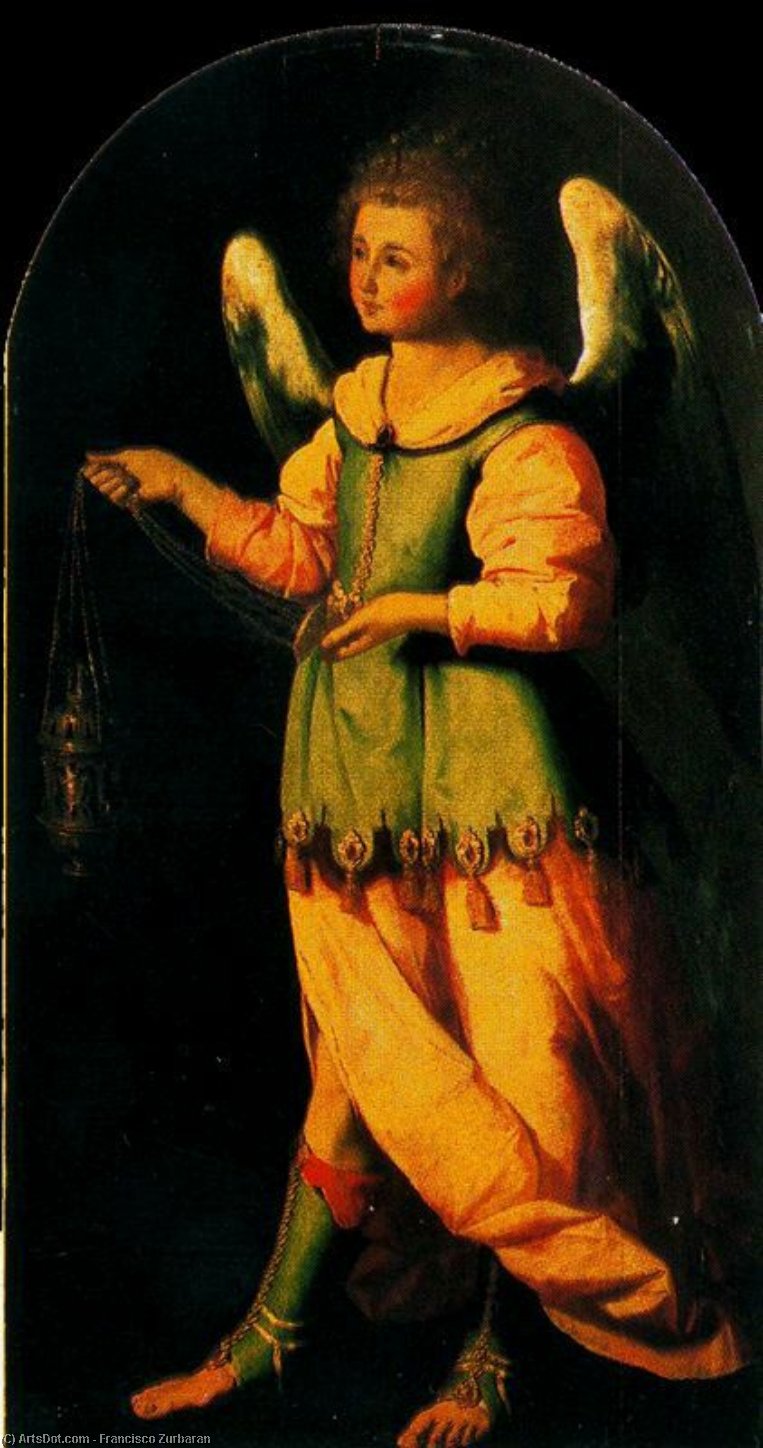
Francisco de Zurbarán's Angel Tiruferario is more than just a portrait; it’s an immersion into the profound spirituality that defined the artist’s oeuvre and, indeed, much of Spanish Baroque art during the 17th century. Painted in black and white, this captivating image depicts an angel – likely inspired by biblical narratives – radiating an almost palpable serenity. The composition immediately draws the eye to the central figure, a young woman poised with an ethereal grace, her one foot raised as if in perpetual flight, while the other rests delicately beneath her. Her wings, dramatically spread behind her, reinforce this impression of levitation, transporting the viewer into a realm beyond earthly concerns.
- The Artist’s Vision: Zurbarán, born in 1598 in Fuente de Cantos, Extremadura, was deeply influenced by the region's austere religious landscape. This upbringing profoundly shaped his artistic style, characterized by a commitment to realism and an intense focus on capturing spiritual essence rather than mere physical likeness.
- Baroque Influence: While rooted in traditional Spanish painting techniques, Zurbarán embraced elements of the burgeoning Baroque style, particularly its dramatic use of light and shadow – known as *tenebrism*. This technique is powerfully evident here, highlighting the angel’s form while enveloping her in a dark, contemplative background.
Symbolism and Musicality
The angel's posture itself is laden with symbolic meaning. The raised foot represents aspiration towards heaven, while the lute she holds – often interpreted as a harp – symbolizes divine music and the harmony of creation. The instrument isn’t merely an object; it’s an extension of her being, suggesting a direct connection to the celestial realm. This focus on musicality was common in religious art of the period, reflecting the belief that music could elevate the soul and bring one closer to God. The serene expression on the angel's face further emphasizes this sense of peace and devotion.
Technique and Materiality
Zurbarán’s mastery is immediately apparent in his meticulous rendering of detail. The texture of the angel’s dress, the delicate folds of her wings, and the smooth surface of the lute are all rendered with astonishing precision. This level of realism was achieved through a painstaking process of layering thin glazes of oil paint – a hallmark of Zurbarán's technique – allowing him to build up depth and luminosity gradually. The use of black and white further intensifies this effect, stripping away any distractions and focusing the viewer’s attention entirely on the angel’s form and expression. The stark contrast creates a sense of drama and emphasizes the spiritual weight of the subject.
Historical Context and Emotional Impact
Painted during Zurbarán's most productive period (roughly 1620-1640), *Angel Tiruferario* reflects the Counter-Reformation’s emphasis on religious devotion and emotional engagement. The painting served not merely as a devotional image but also as a powerful tool for inspiring piety and reinforcing Catholic beliefs. The overall effect is one of profound stillness and contemplation, inviting the viewer to share in the angel's serene experience. This reproduction offers an opportunity to possess a piece of art that embodies centuries of artistic skill and spiritual aspiration.