A Celestial Encounter: The Serenity of Zurbarán’s Angel
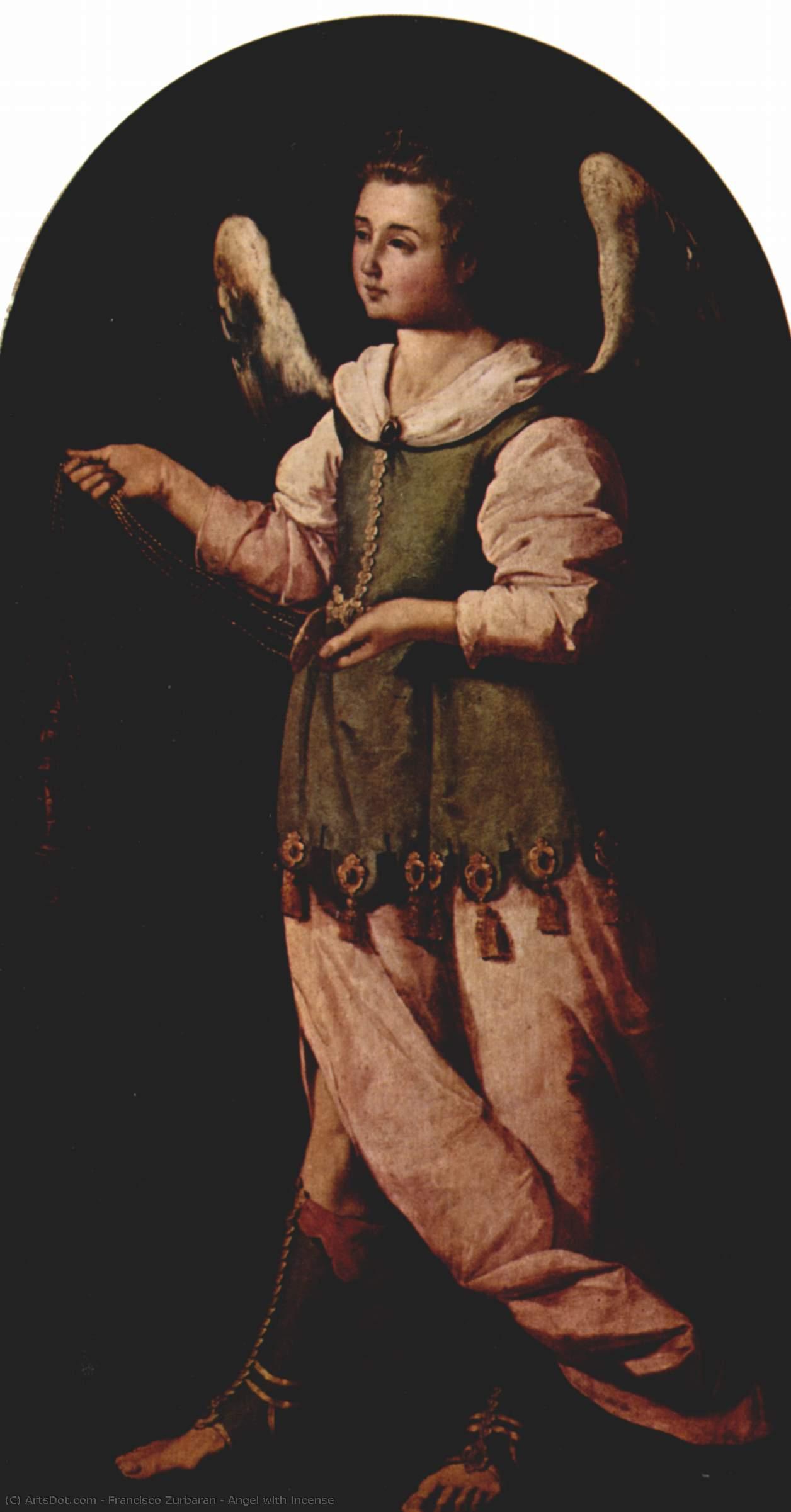
In the quietude of a darkened space, a single figure emerges from the shadows, draped in light and profound stillness. Francisco de Zurbarán’s “Angel with Incense,” completed around 1638, is not merely a painting but a spiritual threshold. As one gazes upon this masterpiece of the Spanish Baroque, the boundaries between the earthly and the divine seem to dissolve. The artwork centers on a solitary celestial being, framed within an elegant arched border that evokes the solemn grandeur of a cathedral alcove. There is no chaotic narrative here; instead, Zurbar andán invites us into a moment of pure, unadulterated contemplation, where the only movement is the silent, rising smoke of devotion.
The technical brilliance of this work lies in its masterful command of chiaroscuro. Often referred to as the "Spanish Caravaggio," Zurbarán employs dramatic contrasts between deep, velvety shadows and luminous highlights to sculpt the angel’s form. The light does not simply illuminate; it breathes life into the textures of the canvas. One can almost feel the weight of the heavy, intricately folded drapery and the delicate, ethereal softness of the wings. Through precise oil painting techniques, the artist achieves a breathtaking realism, where the subtle gradations of skin tones and the tactile richness of the fabric create an immersive, three-dimensional presence that commands the room.
Symbolism and the Spirit of the Golden Age
To understand this painting is to understand the heartbeat of 17th-century Spain. Created during the height of the Spanish Golden Age, a period defined by intense religious piety and artistic flourishing, the work serves as a visual prayer. The angel itself is a vessel of divine grace, embodying purity and the benevolent presence of God. In the figure's hands, the incense burner—or censer—serves as a potent symbol of ascending prayer, representing the human soul’s desire to reach toward the heavens. Every element, from the warm earth tones of ochre and brown to the stark, dark background, is meticulously chosen to reinforce a sense of sacredness and liturgical solemnity.
For the discerning collector or interior designer, "Angel with Incense" offers more than just aesthetic beauty; it provides an emotional anchor. The painting possesses a unique ability to transform a space, infusing it with a sense of peace, reverence, and a touch of melancholic beauty. Whether placed in a quiet study, a grand library, or a contemporary living space, a high-quality reproduction of this work acts as a window into a more contemplative era. It is an invitation to slow down, to breathe, and to find beauty in the profound simplicity of light emerging from the dark.