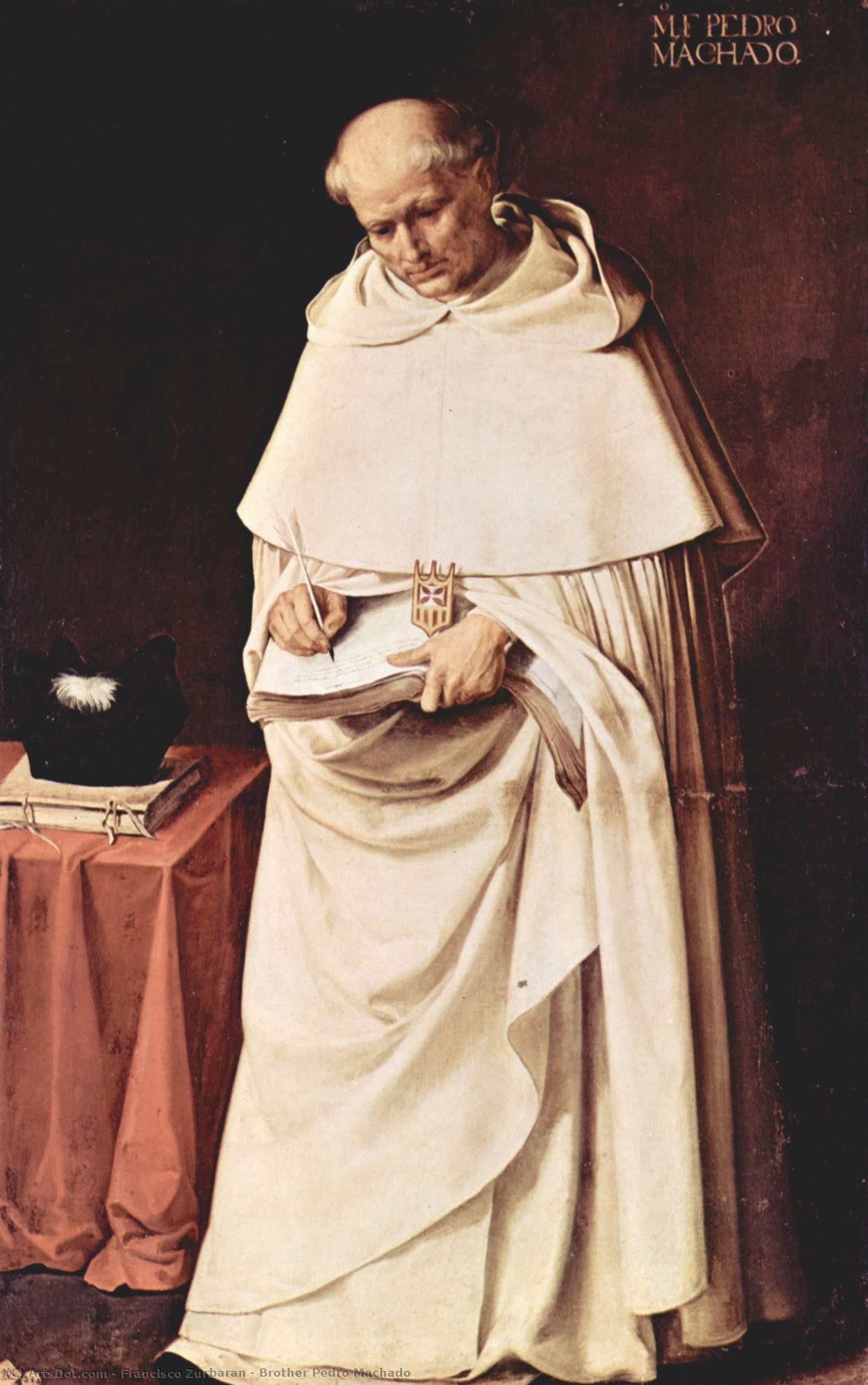
Brother Pedro Machado: A Testament to Faith and Baroque Precision
The painting “Brother Pedro Machado,” executed by Francisco de Zurbarán in 1633, stands as a poignant emblem of the Spanish Baroque era—a period characterized by dramatic contrasts between light and shadow, intense emotion, and unwavering devotion. More than just a portrait, it’s an immersive experience into the spiritual landscape of seventeenth-century Castile, meticulously crafted with unparalleled artistic skill.
- Subject Matter: The artwork depicts Brother Pedro Machado, a Dominican monk known for his piety and contemplative life. He is presented in profile against a starkly illuminated background—a technique that would become synonymous with Zurbarán’s signature style—creating an arresting visual effect that draws the viewer's gaze directly to the figure.
- Style: Zurbarán’s Baroque aesthetic prioritizes stillness and solemnity. Unlike many of his contemporaries who sought to convey dynamism and theatrical grandeur, he deliberately eschewed elaborate ornamentation, opting instead for a minimalist approach focused on conveying profound psychological depth. This restraint serves not as weakness but as an instrument of heightened impact.
Technique: The Illusion of Light and Shadow – Chiaroscuro Mastery
Zurbarán’s mastery of *chiaroscuro*, the dramatic interplay between light and dark, is arguably the painting's most remarkable achievement. He employs a masterful use of modeling—creating subtle gradations of tone to sculpt the monk’s form—to achieve an astonishing degree of realism. The single source of illumination casts a radiant glow upon Machado’s face and robe, highlighting his features with breathtaking clarity while simultaneously enveloping him in deep shadow. This technique isn't merely decorative; it serves as a powerful metaphor for divine grace penetrating into darkness, symbolizing the monk’s inner sanctum and conveying an overwhelming sense of serenity.
- Historical Context: Painted during Machado’s lifetime, “Brother Pedro Machado” reflects the pervasive influence of Catholicism within Spanish society. The Dominican Order held considerable sway in Castile at the time, advocating for intellectual rigor and spiritual contemplation—values powerfully embodied by the depicted figure.
- Symbolism: Beyond its visual splendor, the painting is laden with symbolic significance. The books on the table represent knowledge and faith—essential components of monastic life. The bowl symbolizes humility and simplicity, mirroring Zurbarán’s artistic philosophy. Most importantly, Machado's posture exudes unwavering concentration, embodying the ideal of contemplative prayer.
Emotional Impact: A Window into Spiritual Contemplation
“Brother Pedro Machado” transcends mere representation; it aspires to evoke a profound emotional response in the viewer. The artist’s deliberate use of light and shadow, combined with the monk's serene expression, invites contemplation on themes of faith, humility, and inner peace. It captures not just an image but a feeling—a palpable sense of solemn reverence that speaks to the enduring power of religious iconography. Reproductions of this masterpiece offer collectors and interior designers alike the opportunity to infuse their spaces with a timeless aesthetic rooted in spiritual devotion.