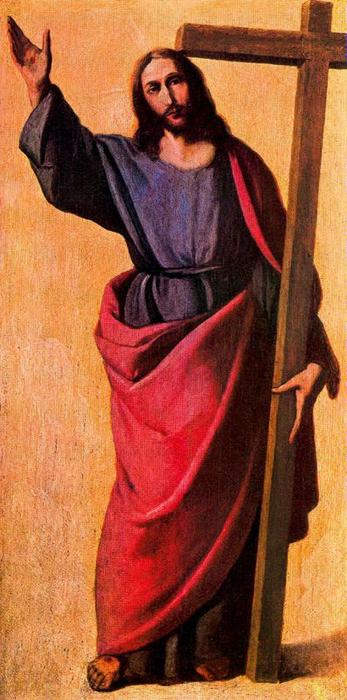
A Portrait of Faith: Exploring Francisco de Zurbarán’s Cristo Bendiciendo
Francisco de Zurbarán's *Cristo Bendiciendo*, completed sometime around 1630, stands as a cornerstone of Baroque art—a testament to the period’s obsession with dramatic realism and spiritual contemplation. This monumental painting depicts Jesus Christ in an act of benediction, his right hand raised in blessing, capturing a moment of profound serenity amidst the austere beauty of his surroundings. The image immediately draws the eye to the central figure, rendered with astonishing precision—Zurbarán's mastery of chiaroscuro is evident in the masterful manipulation of light and shadow, creating an ethereal glow around Christ’s body while plunging the background into deep darkness.
- Style: Baroque – Characterized by theatrical lighting, intense emotion, and opulent ornamentation, Baroque art sought to inspire awe and convey religious fervor. Zurbarán's work exemplifies these principles perfectly, prioritizing spiritual depth over mere visual spectacle.
- Technique: Zurbarán employed a technique known as sfumato—a subtle blending of tones that softens edges and creates an atmospheric haze—to achieve remarkable realism. He meticulously studied anatomy and drapery, painstakingly recreating the folds of Christ’s robe with painstaking detail. The painting is executed in oil on canvas, utilizing layering techniques to build up texture and depth.
The setting contributes significantly to the painting's emotional impact. A simple crucifix dominates the upper portion of the composition, anchoring the scene and symbolizing Jesus’ sacrifice. Below Christ stands a solitary figure—likely representing Saint Peter—who gazes upwards with reverence. The muted palette—primarily browns and ochres—reflects the austerity of monastic life and reinforces the painting's solemn mood. However, it is not merely the visual elements that convey Zurbarán’s intention; rather, it is the palpable stillness and contemplative gaze of Christ himself. He embodies unwavering faith and compassion, inviting viewers to contemplate the divine grace offered through prayer and devotion.
Symbolism: The crucifix serves as a powerful reminder of Christian theology—the sacrifice of Jesus for humanity's salvation. The solitary figure underscores the importance of humility and piety in spiritual practice. Furthermore, the subdued colors symbolize purity and asceticism – values central to Baroque spirituality.
Historical Context
*Cristo Bendiciendo* emerged during a period of intense religious revival in Spain—the Counter Reformation—following the Protestant Reformation. The Catholic Church actively sought to reaffirm its authority and inspire piety among its followers, commissioning artists like Zurbarán to create works that communicated spiritual truths with uncompromising conviction. This painting reflects the broader artistic trends of the era, prioritizing emotional intensity and dramatic visual effects over elaborate decorative embellishments. It stands as a poignant emblem of Baroque faith and artistry—a timeless masterpiece destined to resonate with audiences for centuries to come.