A Paragon of Spanish Baroque: Encountering Fray Hernando de Santiago
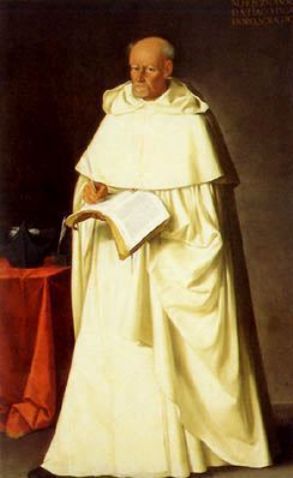
Francisco Zurbarán’s *Fray Hernando de Santiago* is more than a portrait; it's an encounter. This masterful oil on canvas presents a compelling study in devotion, austerity, and the power of light – hallmarks of the Spanish Baroque period. The painting depicts a half-length figure, identified as Fray Hernando de Santiago, likely a member of the esteemed Order of Santiago, instantly recognizable by his dark, somber robes. He is captured in a moment of quiet contemplation, holding a book and with a simple cup resting nearby – symbols that speak volumes about a life dedicated to faith and scholarship.
The Dramatic Artistry of Zurbarán
Zurbarán (1598-1664) stands as one of Spain’s most significant Baroque painters, flourishing during the nation's Golden Age. His artistic prowess lay in his ability to imbue religious subjects with a profound sense of realism and spiritual intensity. *Fray Hernando de Santiago* exemplifies his signature technique:
tenebrism. This dramatic use of light and shadow isn’t merely aesthetic; it sculpts the figure, emphasizing the textures of the fabric, the lines etched by time on the friar's face, and ultimately, directing our gaze towards his inner world. The stark contrast recalls the influence of Caravaggio, yet Zurbarán develops a uniquely Spanish sensibility within this framework.
Decoding the Symbolism
Every element in *Fray Hernando de Santiago* carries symbolic weight:
- The Order of Santiago’s robes: Representing both religious devotion and a historical legacy of military defense of Christianity.
- The book: A potent symbol of learning, piety, and the importance of scripture within monastic life. It suggests intellectual rigor alongside spiritual dedication.
- The simple cup: Underscores a commitment to humility and a rejection of worldly possessions – a cornerstone of the religious order’s ethos.
- The austere background: Deliberately devoid of distractions, focusing attention solely on the figure and his spiritual state.
Historical Context & Religious Significance
Painted during a period of intense religious fervor in Spain, this portrait would have resonated deeply with contemporary audiences. The Order of Santiago held significant prestige, and depicting one of its members served to reinforce ideals of faith, duty, and sacrifice. Zurbarán’s work often catered to monastic orders and the aristocracy, providing devotional images for churches and private collections. His paintings weren't simply decorative; they were intended to inspire contemplation and strengthen religious belief.
Emotional Resonance & Lasting Legacy
What truly sets *Fray Hernando de Santiago* apart is its emotional depth. Zurbarán avoids idealization, presenting a remarkably
human portrayal of faith. The friar’s gaze is direct yet gentle, inviting the viewer into a shared moment of quiet contemplation. There's a sense of reverence and dignity that transcends time.
Zurbarán’s influence on subsequent generations of artists is undeniable. His mastery of light, shadow, and realistic detail continues to inspire awe and admiration. Today, his works are treasured in museums and private collections worldwide. A reproduction of this painting offers not only a beautiful aesthetic addition but also a powerful statement – a touch of Old World elegance infused with profound spiritual resonance.