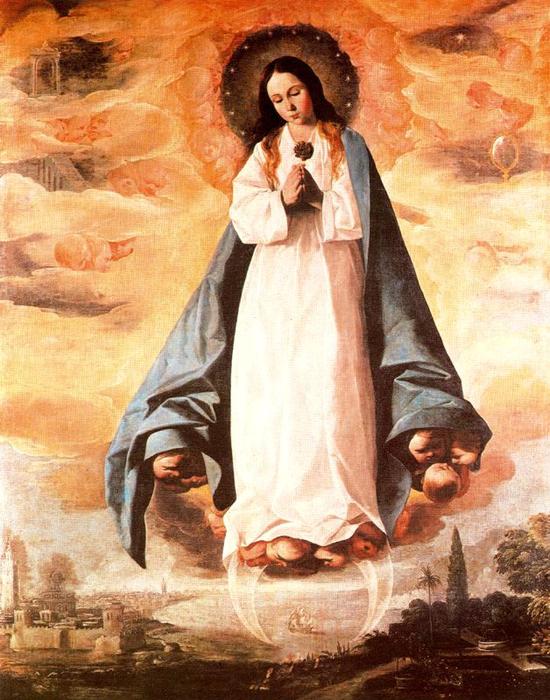
Francisco de Zurbarán’s serene Inmaculada 1 captures the profound spirituality of Baroque Spain through masterful realism and luminous chiaroscuro—a breathtaking depiction of Mary cradling Jesus amidst ethereal clouds, inviting viewers to contemplate divine grace.
Francisco de Zurbarán (1598-1664): Spanish Baroque master of dramatic tenebrism & religious art. Explore paintings of monks, saints & still lifes – the 'Spanish Caravaggio'!
A Testament to Faith: Exploring Francisco de Zurbarán’s “Inmaculada”
The painting "Inmaculada" by Francisco de Zurbarán stands as an enduring emblem of Baroque piety and artistic mastery, transporting viewers back to 17th-century Spain. More than just a depiction of the Virgin Mary cradling Jesus—a motif prevalent throughout Christian iconography—this artwork embodies a profound spiritual contemplation that continues to resonate with audiences today. Its austere beauty derives from Zurbarán’s meticulous attention to detail and his masterful manipulation of light, creating an atmosphere of serene solemnity unlike anything produced before him.
The Style and Technique: Baroque Minimalism
Zurbarán's approach to painting aligns perfectly with the tenets of Baroque art—specifically its embrace of dramatic chiaroscuro, or strong contrasts between light and dark. Unlike the opulent grandeur favored by many contemporaries, Zurbarán deliberately eschewed excessive ornamentation, prioritizing instead a reductive style that focused on conveying spiritual essence through carefully considered forms and textures. He achieved this remarkable feat using oil paint on canvas, applying thin glazes to build up tonal gradations with painstaking precision. This technique allowed him to sculpt the figures almost as if they were carved from stone, emphasizing their physicality while simultaneously elevating them to a realm of divine grace. The artist’s masterful use of modeling and shading contributes significantly to the painting's emotional impact—drawing the eye inward toward the central Madonna and Child.
Historical Context: Spain Under Habsburg Rule
“Inmaculada” emerged during the reign of Philip IV, marking a pivotal moment in Spanish history as the Habsburg dynasty consolidated its power and exerted considerable influence across Europe. The Baroque period itself was characterized by a fervent religious revival following the Protestant Reformation, fueled by papal decrees and driven by an earnest desire to reaffirm Catholic dogma. Artists like Zurbarán responded to this cultural climate by producing works that aimed to inspire devotion and communicate theological truths with unwavering conviction. This painting reflects the prevailing artistic sensibilities of its time—a yearning for transcendence expressed through restrained visual language.
Symbolism: Light as Divine Revelation
The pervasive use of light within “Inmaculada” is laden with symbolic significance. Zurbarán skillfully employs a single, diffused beam of illumination to bathe Mary and Jesus in an ethereal glow, representing divine grace and illuminating the sacred narrative. This technique harkens back to biblical depictions of God’s radiant presence—emphasizing the Madonna's purity and highlighting the infant Jesus as the embodiment of Christ’s divinity. The surrounding darkness serves not merely as a backdrop but actively contributes to the painting’s emotional depth, symbolizing spiritual obscurity and inviting contemplation on themes of faith and humility.
Emotional Impact: Reverence and Contemplation
Ultimately, “Inmaculada” transcends mere visual representation; it evokes a powerful sense of reverence and invites viewers into a state of meditative contemplation. The stillness of the figures—Mary’s serene gaze and Jesus’ peaceful repose—communicates an unwavering faith and conveys a profound understanding of spiritual truth. Zurbarán's ability to capture this intangible quality—the very essence of piety—solidifies his place among the greatest Baroque painters, ensuring that “Inmaculada” continues to inspire awe and admiration for centuries to come.