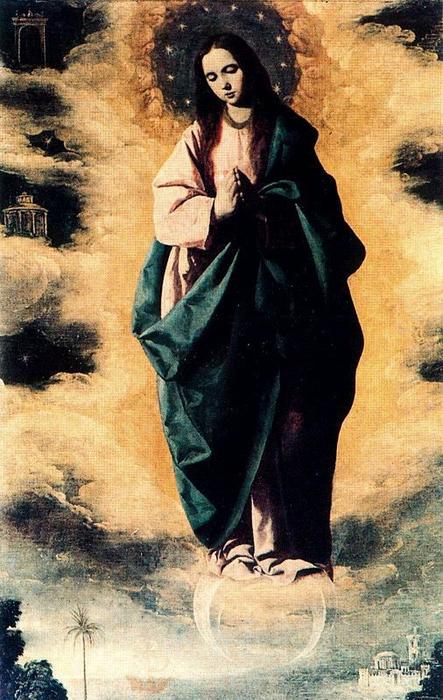
Francisco de Zurbarán’s serene depiction of The Immaculate Conception embodies Baroque solemnity, capturing Mary in prayer beneath a dramatic cloudy sky—a masterful blend of realism and spiritual contemplation. Explore this iconic masterpiece and bring its timeless beauty into your home.
Francisco de Zurbarán (1598-1664): Spanish Baroque master of dramatic tenebrism & religious art. Explore paintings of monks, saints & still lifes – the 'Spanish Caravaggio'!
A Portrait of Devotion: Exploring Francisco de Zurbarán’s La Inmaculada Concepción
The painting “La Inmaculada Concepción,” attributed to Francisco de Zurbarán, stands as a testament to the profound influence of Baroque art on Spanish religious iconography. Executed sometime between 1630 and 1640, this monumental canvas transcends mere representation; it strives for spiritual contemplation and embodies the austere beauty characteristic of Zurbarán’s oeuvre. Its enduring appeal lies not only in its masterful execution but also in its ability to communicate a powerful emotional resonance that continues to captivate viewers centuries later.
Style and Technique: The Essence of Baroque Drama
Zurbarán's style is undeniably rooted in the Baroque period, yet he distinguishes himself from many of his contemporaries through an unparalleled commitment to naturalism and tonal gradation. Unlike other artists who prioritized theatricality and opulent ornamentation—a hallmark of the era—Zurbarán favored a subdued palette dominated by earthy browns and ochres, meticulously blended to create an illusion of depth and luminosity. This technique, known as *tenebrismo*, employs dramatic contrasts between light and shadow, highlighting the Virgin Mary’s serene countenance and emphasizing her posture of prayer. The artist skillfully utilizes chiaroscuro—the interplay of light and dark—to sculpt form and convey a sense of solemn reverence. Brushstrokes are deliberate and restrained, prioritizing texture and tonal variation over elaborate detailing, resulting in an image that feels both timeless and intensely present.
Historical Context: Seville’s Spiritual Heart
The painting emerged during a period of significant religious fervor within Seville, Spain—Zurbarán's adopted home—following the Council of Trent (1545-1563). This council reinvigorated Catholic piety across Europe and fueled demand for devotional art that would inspire faith and elevate the soul. Zurbarán’s patrons were largely aristocratic families committed to upholding religious traditions, commissioning works intended to adorn their chapels and express their devotion. The painting reflects the prevailing artistic sensibilities of the time—a reaction against Mannerism's artificiality—and aligns perfectly with the broader movement toward portraying saints and biblical figures with dignity and solemn piety.
Symbolism: Reverence and Maternal Grace
“La Inmaculada Concepción” is laden with symbolic significance, reflecting core tenets of Catholic theology. The Virgin Mary’s outstretched hands represent humility and supplication before God—a gesture universally recognized as embodying divine grace. Her gaze directs upward toward heaven, symbolizing spiritual aspiration and transcendence. The cloudy sky serves not merely as a backdrop but as a visual metaphor for the divine realm, emphasizing Mary's connection to God’s eternal glory. Furthermore, the sparse composition underscores the sanctity of her presence—a deliberate choice designed to evoke contemplation and reverence in the viewer.
Emotional Impact: A Window into Spiritual Serenity
Ultimately, “La Inmaculada Concepción” succeeds in conveying a profound sense of serenity and spiritual devotion. The painting’s muted colors and masterful use of tenebrismo create an atmosphere of solemn stillness—drawing the eye inward toward the Virgin Mary's serene expression. It invites viewers to pause and contemplate the beauty of faith, mirroring the contemplative spirit that characterized Baroque art itself. Reproductions of this iconic masterpiece offer a tangible connection to a rich artistic heritage and provide inspiration for those seeking solace and aesthetic appreciation.