A Vision of Devotion: The Soul of the Spanish Baroque
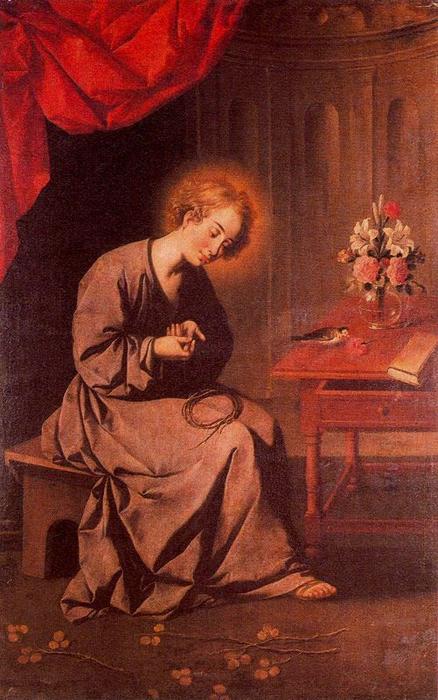
In the quietude of Francisco de Zurbarán’s “Niño de la Espina”, one finds more than just a portrait; one encounters a profound meditation on the human spirit. Painted during the height of the Spanish Golden Age, around 1630-1632, this masterpiece serves as a window into the fervent religious landscape of the Counter-Reformation. The young boy, draped in humble brown robes, sits with an unwavering gaze directed upward, his eyes capturing a moment of pure, unadulterated spiritual contemplation. This is not merely a depiction of a child, but an embodiment of piety and serenity that transcends the boundaries of time, inviting every viewer to pause and reflect on the beauty of quiet faith.
The technical brilliance of Zurbarán is nowhere more evident than in his masterful use of tenebrism. By employing a dramatic chiaroscuro, the artist orchestrates a powerful dialogue between light and shadow. A singular, focused light source sculpts the boy's form, pulling him from the surrounding darkness with almost sculptural precision. This technique does more than create depth; it highlights the tactile reality of the scene—the coarse weave of the monastic fabric, the soft texture of the child's hair, and the subtle, luminous nuances of his skin. For the discerning collector or interior designer, this interplay of light offers a sophisticated focal point that brings a sense of dramatic elegance and classical weight to any curated space.
Symbolism and the Language of Light
Every element within the frame of “Niño de la Espina” is steeped in symbolic meaning, designed to evoke a sense of sacredness. Positioned directly beneath a thorny bush, the boy exists in a state of tension between suffering and grace. The thorns serve as a poignant allusion to the Crown of Thorns worn by Christ, representing sacrifice, purification, and the path to redemption. Yet, despite this symbol of pain, the atmosphere remains remarkably tranquil. The presence of the book held in his hand further reinforces themes of knowledge and spiritual discipline, suggesting that true wisdom is found through devotion.
The composition is balanced by a quiet, still-life arrangement in the foreground—books and a delicate vase of flowers that ground the ethereal subject in a tangible, earthly reality. This juxtaposition of the fleeting beauty of nature with the eternal nature of faith creates an emotional resonance that is both humbling and uplifting. To possess a reproduction of this work is to bring a piece of history into the home—a piece that does not merely decorate a wall but ennobles the environment with its themes of humility, innocence, and enduring peace.