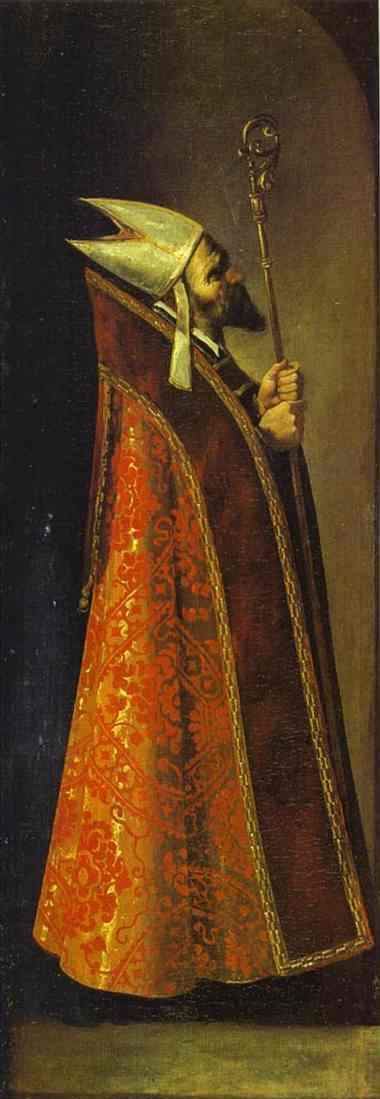
Francisco Zurbarán’s Saint Blasius captivates viewers with its masterful tenebrism—dramatic light and shadow—creating an ethereal glow around the monk's face and chest, embodying Baroque spirituality. Explore this iconic portrait by a Spanish Renaissance master.
Francisco de Zurbarán (1598-1664): Spanish Baroque master of dramatic tenebrism & religious art. Explore paintings of monks, saints & still lifes – the 'Spanish Caravaggio'!
A Portrait of Devotion: Exploring Francisco Zurbarán’s Saint Blasius
Francisco de Zurbarán's "Saint Blasius" stands as a cornerstone of Baroque art, embodying the movement’s profound preoccupation with spirituality and masterful execution. Painted circa 1630-1632, this oil on canvas depicts a solitary monk in austere repose, radiating an aura of serene contemplation—a testament to Zurbarán's unparalleled ability to convey inner piety through visual representation. The painting resides within the Benedictine Abbey of Saint-Pierre Solesmes, France, a location steeped in Gregorian chant heritage and artistic tradition, further amplifying its significance as a symbol of faith and contemplative practice.
The Baroque Aesthetic: Dramatic Light and Shadow
Zurbarán’s stylistic approach aligns perfectly with the tenets of Baroque art—specifically, tenebrism. This technique, popularized by Caravaggio, utilizes stark contrasts between light and darkness to heighten dramatic effect and create an illusionistic depth that transcends mere surface appearance. The luminous glow emanating from Saint Blasius's face and chest draws the viewer’s eye inwards, emphasizing his spiritual essence while simultaneously enveloping him in a shadowy embrace—a deliberate device designed to evoke feelings of solemnity and reverence. This masterful manipulation of light is not merely decorative; it serves as an integral component of Zurbarán’s expressive vision.
Technical Brilliance: Detail and Texture
Beyond the dramatic lighting, Zurbarán's technical prowess shines through in meticulous attention to detail and textural realism. The monk’s robe is rendered with astonishing accuracy, capturing the subtle folds and creases that convey both physicality and drapery weight. Similarly, the staff held by Saint Blasius possesses a palpable sense of solidity—a testament to Zurbarán’s painstaking observation of natural forms. These meticulous renderings underscore his commitment to portraying subjects with uncompromising realism, elevating them beyond mere likeness into embodiments of spiritual virtue. The Abbey of Saint-Florent-le-Vieil's stained glass windows contribute to the overall atmosphere, casting colored light onto the interior space and reinforcing the painting’s devotional theme.
Symbolism and Spiritual Significance
The iconography of “Saint Blasius” is laden with symbolic meaning. Saint Blasius was martyred for refusing to renounce his Christian faith during Diocletian's persecution—a narrative that underscores themes of courage, piety, and unwavering devotion. The monk’s posture—seated in meditative stillness—represents the ideal of contemplative prayer, mirroring the Benedictine monastic tradition. Furthermore, the crucifix adorning Saint Blasius’s neck symbolizes redemption and divine grace—affirming Christianity’s core beliefs. These elements converge to create a powerful visual statement about faith's transformative power.
Emotional Resonance: A Window into Inner Sanctity
“Saint Blasius” transcends mere representation; it aspires to evoke profound emotional resonance within the viewer. The painting’s stillness and luminosity invite contemplation, prompting us to consider questions of spirituality and moral virtue. Zurbarán succeeds in capturing not just a likeness but also an inner state—a palpable sense of serenity and acceptance that speaks to the human yearning for transcendence. Like Goya's portraits and Monasterio de San Juan de los Reyes’ architectural grandeur, this artwork embodies the spirit of its time, offering enduring inspiration to those who appreciate art as a vehicle for conveying profound truths about the human condition.