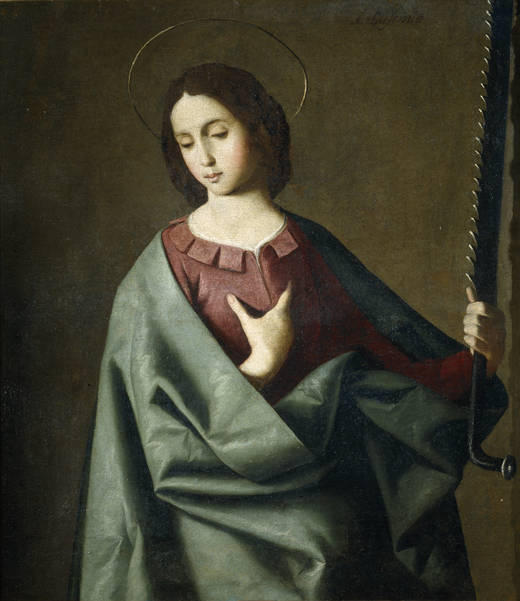
The Serene Majesty of Saint Eufemia: A Window into Spanish Baroque
Francisco de Zurbarán’s “Saint Eufemia” is more than just a portrait; it's a profound meditation on faith, humility, and the enduring power of spirituality. Painted circa 1637 during his peak period in Seville, this oil-on-canvas masterpiece offers a rare glimpse into the heart of Spanish Baroque art – a style characterized by dramatic contrasts, intense emotion, and an unwavering devotion to religious subjects. The painting depicts Saint Eufemia, a martyr from the early centuries of Christianity, whose story centers on her refusal to worship pagan gods and subsequent brutal execution. Zurbarán’s skill lies not merely in his technical prowess but in his ability to imbue this historical figure with a palpable sense of inner peace despite her tragic fate.
A Masterclass in Tenebrism and Realism
Zurbarán was renowned for his mastery of tenebrismo, a technique popularized by Caravaggio that employs stark contrasts between light and shadow to create dramatic effects. In “Saint Eufemia,” this is evident immediately – the figure is bathed in an almost ethereal glow emanating from an unseen source, while the background remains shrouded in deep, impenetrable darkness. This deliberate use of light draws the viewer’s eye directly to her face, emphasizing her youthful beauty and serene expression. The artist's meticulous attention to detail is equally remarkable; every fold of fabric, every strand of hair, appears rendered with astonishing realism. He achieves this through painstaking layering of thin glazes of oil paint, building up color and form slowly and deliberately – a technique that lends the painting an incredible luminosity and depth.
Symbolism Woven into the Composition
Beyond its technical brilliance, “Saint Eufemia” is rich in symbolic meaning. The halo above her head signifies her sanctity and divine grace, while her gesture of holding her chest – a common motif in depictions of the Virgin Mary – represents purity and devotion. Notably, she holds a saw, a direct reference to her martyrdom, subtly reminding us of her sacrifice. The simple, uncluttered setting further emphasizes her spiritual state; there are no distractions, only the saint and her unwavering faith. The muted color palette—primarily browns, ochres, and whites—contributes to the painting’s solemn atmosphere, reinforcing the sense of piety and contemplation.
Historical Context and Artistic Legacy
To understand “Saint Eufemia,” it's crucial to consider its historical context. The Spanish Baroque period (roughly 1600-1750) was a time of intense religious fervor, fueled by the Counter-Reformation. Artists like Zurbarán were commissioned to create works that would inspire piety and reinforce Catholic doctrine. His style—characterized by its stark realism, dramatic lighting, and emotional intensity—became hugely influential, earning him the moniker “Spanish Caravaggio.” His work resonated deeply with audiences seeking a more visceral and emotionally engaging form of religious art than had been prevalent in previous centuries. The painting’s enduring appeal lies in its ability to transcend time, offering viewers a timeless meditation on faith, sacrifice, and the beauty of spiritual devotion.
ArtsDot offers meticulously crafted hand-painted reproductions of “Saint Eufemia,” allowing you to experience the artistry and emotional depth of this iconic Baroque masterpiece in stunning detail. Explore our collection today and bring this profound work of art into your home or office – a testament to Zurbarán’s genius and a window into the soul of Spanish religious painting.