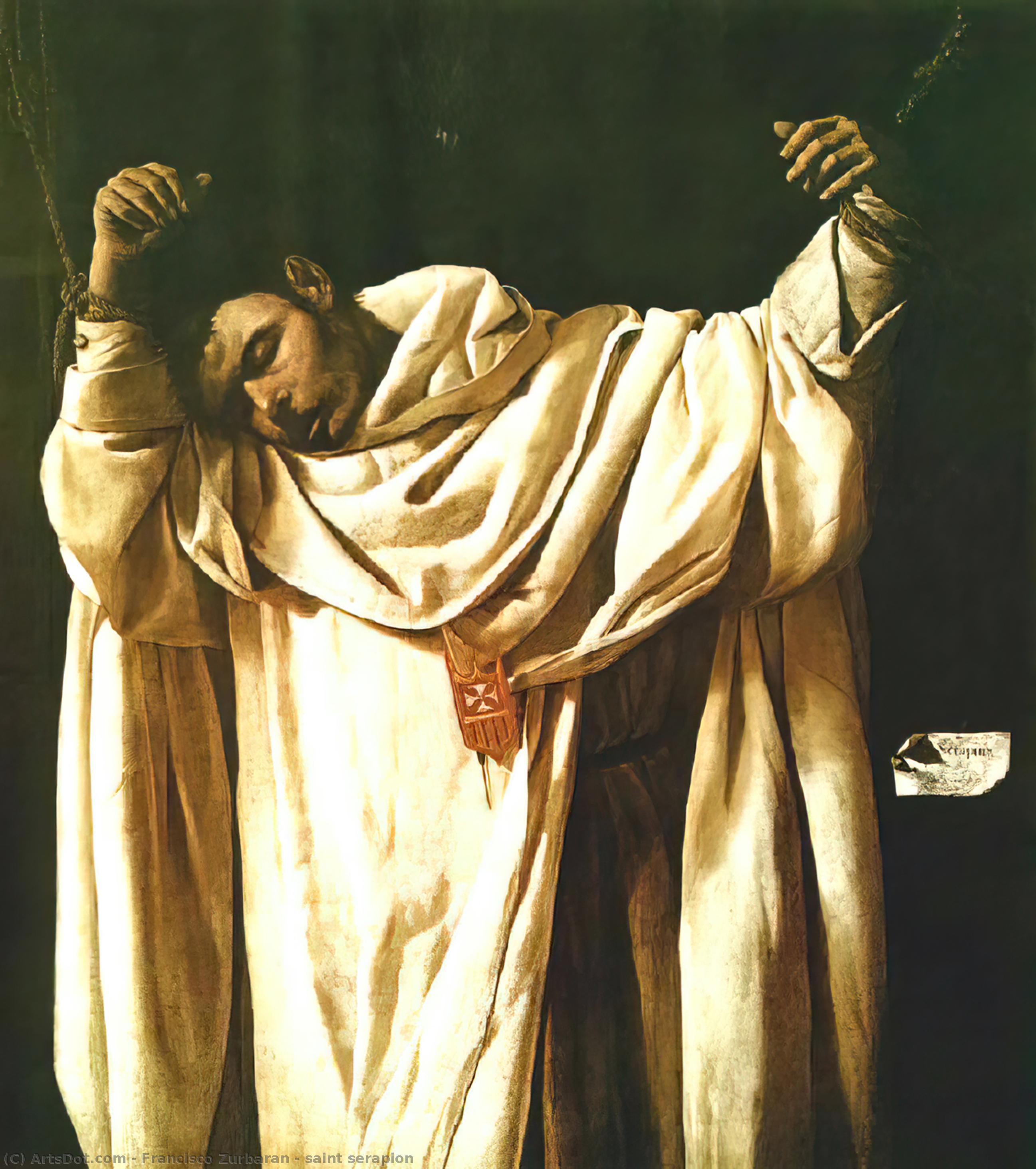
Discover Francisco Zurbarán's 1628 masterpiece 'Saint Serapion,' a powerful religious painting showcasing dramatic chiaroscuro, emotional depth, and exquisite realism. Perfect for art collectors and religious art enthusiasts.
Francisco de Zurbarán (1598-1664): Spanish Baroque master of dramatic tenebrism & religious art. Explore paintings of monks, saints & still lifes – the 'Spanish Caravaggio'!
Captivating Subject and Religious Significance
This exquisite sculpture captures the profound moment of martyrdom, depicting Saint Serapion in a powerful and contemplative pose. Bound and restrained, the saint’s expression conveys a deep sense of suffering, faith, and spiritual transcendence. As a revered figure in Christian tradition, Saint Serapion’s depiction embodies themes of sacrifice, devotion, and unwavering conviction, resonating deeply with viewers who seek spiritual inspiration or historical reverence.
Masterful Style and Artistic Technique
Created in 1628 by the masterful Spanish artist Francisco Zurbarán, this piece exemplifies the dramatic intensity characteristic of the Baroque era. Zurbarán’s signature use of chiaroscuro—bold contrasts between light and shadow—enhances the sculpture’s three-dimensionality and emotional depth. The meticulous attention to detail in the folds of the drapery, the textured surface of the figure, and the subtle rendering of facial expression showcase his exceptional craftsmanship and mastery of realism.
Historical Context and Artistic Significance
Commissioned by the Mercedarian Order for their Seville monastery, this sculpture reflects the Counter-Reformation’s emphasis on religious fervor and martyrdom. Zurbarán’s work aligns with the period’s focus on spiritual intensity and the veneration of saints, serving both devotional and didactic purposes. The restrained yet emotionally charged depiction exemplifies Zurbarán’s ability to evoke empathy and reverence, making it a quintessential example of Spanish Baroque religious art.
Symbolism and Emotional Impact
Every element of this sculpture is imbued with symbolic meaning. The bound hands and chains represent sacrifice and the saint’s unwavering faith in the face of persecution. The stark contrast of light and dark underscores the spiritual victory over worldly suffering, inviting viewers to reflect on themes of resilience and divine grace. The serene yet intense expression of Saint Serapion evokes a sense of calm amidst suffering, inspiring contemplation and spiritual connection.
A Timeless Piece for Collection and Interior Design
This high-quality reproduction offers art lovers, collectors, and interior designers an opportunity to bring a touch of historical grandeur and spiritual depth into their spaces. Its compelling presence makes it an ideal centerpiece in religious, classical, or modern interiors, adding both aesthetic beauty and profound meaning. Whether displayed in a private collection, a sacred space, or an elegant interior, this sculpture promises to inspire and elevate any environment with its timeless artistry and emotional resonance.