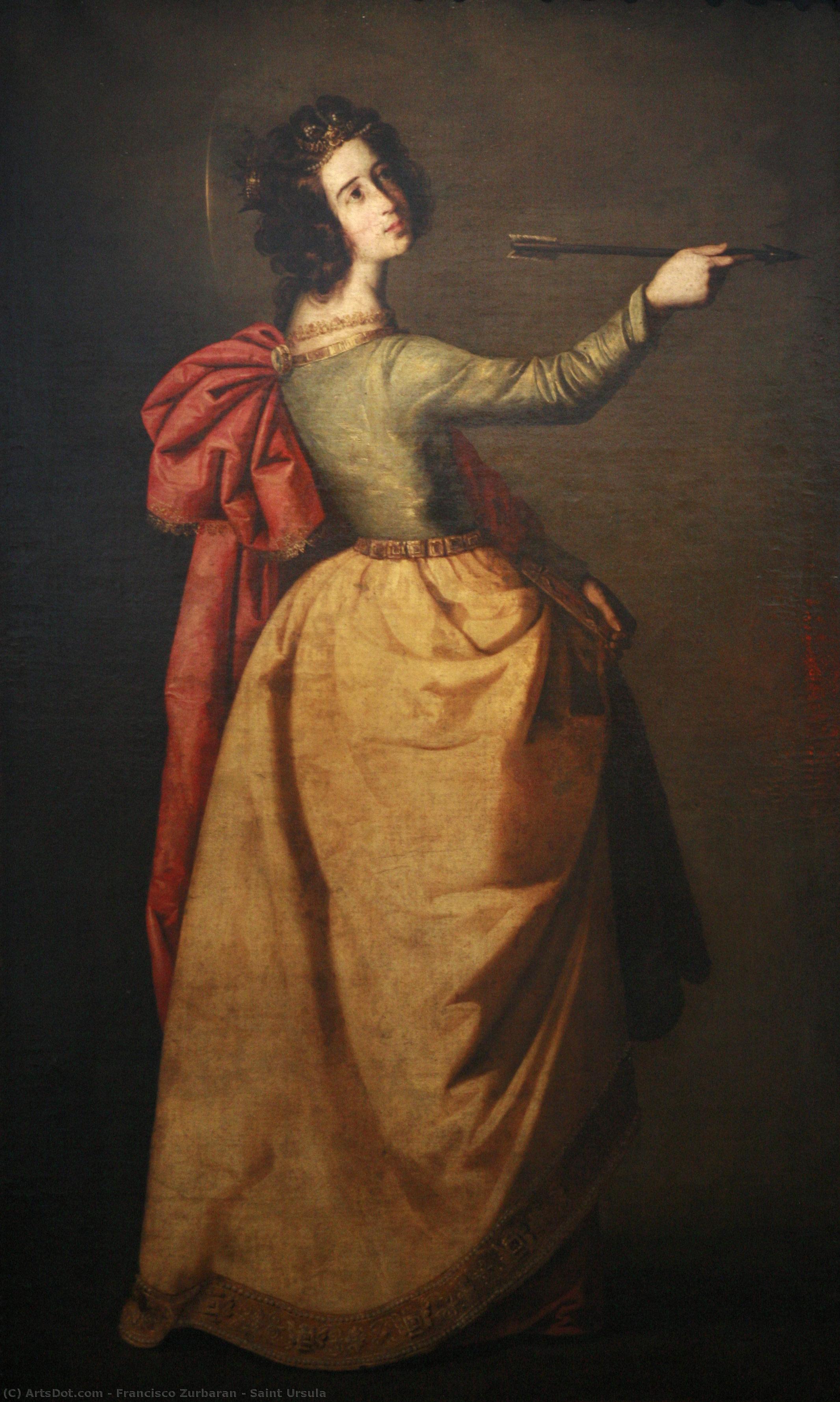
A Vision of Devotion: The Piercing Gaze of Saint Ursula
In the quiet intensity of Francisco de Zurbarán’s 1650 masterpiece,
Saint Ursula, the viewer is not merely an observer but a participant in a profound spiritual encounter. This monumental oil on canvas serves as a breathtaking window into the heart of the Spanish Baroque, capturing a moment where the earthly and the divine intersect. The saint herself stands as a pillar of resolute faith, her presence commanding the space with an unwavering gaze that confronts the onlooker directly. Holding aloft a spear—a potent symbol of both her martyrdom and her role as a protector—she embodies a sense of vigilant courage. To look upon this work is to feel the weight of her sanctity, a sensation that makes it an extraordinary centerpiece for any collection seeking to evoke contemplation and strength.
The technical brilliance of Zurbarán lies in his mastery of tenebrismo, a dramatic technique of light and shadow that breathes life into the canvas. Much like his contemporary Caravaggio, Zurbariente uses deep, enveloping shadows to sculpt the saint’s form, allowing sudden bursts of light to illuminate the textures of her garments and the sharp edge of her spear. This stark contrast does more than create depth; it fosters a meditative atmosphere, drawing the eye inward toward the luminous details of the subject. The meticulous layering of paint creates an illusionistic richness, where every subtle gradation of color contributes to the painting's palpable emotional weight. For the discerning collector or interior designer, this interplay of light and dark offers a sophisticated visual rhythm that can anchor a room with both drama and grace.
Historical Resonance and Symbolic Depth
Born from the religious fervor of Spain’s Counter-Reformation, Saint Ursula is a product of an era defined by a desire to reaffirm Catholic dogma through powerful, emotive imagery. Likely commissioned during a period of intense spiritual renewal, the painting reflects the values of the Jesuit Order and the broader Spanish society, which sought solace and moral fortitude in the lives of the saints. Saint Ursula, revered as a patron against epidemics and a symbol of purity, carries within her image the collective hopes of a people navigating turbulent political and religious landscapes. The spear she wields is not merely a weapon of defense but a testament to the resilience of the spirit in the face of adversity.
Beyond its historical significance, the painting offers a profound emotional impact that transcends time. There is a certain austerity in Zurbarán’s approach—a rejection of flamboyant ornamentation in favor of a solemn grandeur that speaks directly to the soul. The composition, while balanced and focused on the central figure, hints at a larger world through subtle background details, yet it never loses its intimate connection with the viewer. Whether displayed in a private study or a grand gallery, a high-quality reproduction of this work brings with it an aura of timelessness, offering anyone who encounters it a moment of stillness and a reminder of the enduring power of conviction.