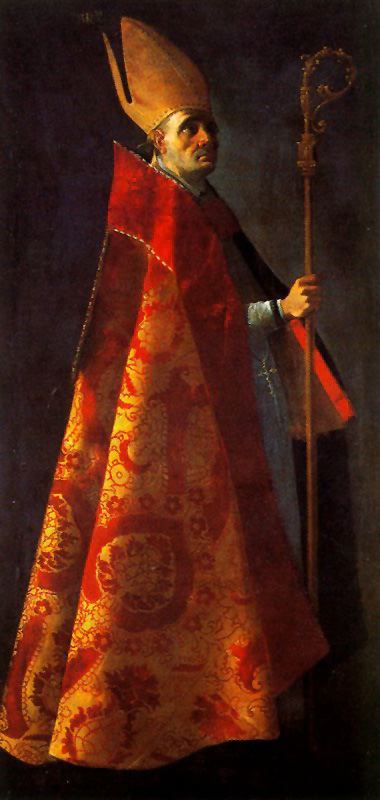
San Ambrosio: A Portrait of Faith and Authority
Francisco de Zurbarán’s *San Ambrosio* is a striking portrait that exemplifies the artist's mastery of Baroque painting. The work depicts Saint Ambrose, a 4th-century bishop of Milan and influential theologian, rendered with a compelling blend of realism and spiritual gravitas. This isn’t merely a likeness; it’s an embodiment of ecclesiastical power and unwavering devotion.
A Master of Tenebrism & Baroque Style
Zurbarán, born in 1598 in Extremadura, Spain, was deeply influenced by the dramatic use of light and shadow – *tenebrism* – popularized by Caravaggio. This technique is powerfully evident in *San Ambrosio*. The saint emerges from a dark background, illuminated with a focused intensity that draws the viewer’s eye directly to his face and upper body. The stark contrast heightens the emotional impact and emphasizes the solemnity of the subject. Zurbarán's style, while indebted to Caravaggio, developed its own distinct character – a quieter, more contemplative form of Baroque expression.
Decoding the Symbolism
Every element within the painting contributes to its symbolic weight:
- The Red Robes: Red was traditionally associated with bishops and martyrs, signifying both spiritual authority and sacrifice.
- Gold Trim & Staff: The ornate gold detailing on his vestments and the gilded staff are indicators of Saint Ambrose’s high rank within the Church hierarchy. The staff itself isn't merely a walking aid; it represents his role as a shepherd guiding his flock.
- The Gaze: Saint Ambrose’s direct, unwavering gaze conveys determination and profound faith. It invites contemplation and suggests an inner strength born of conviction.
Historical Context & Religious Significance
Zurbarán painted *San Ambrosio* during a period of intense religious fervor in Spain – the Counter-Reformation. The Catholic Church sought to reaffirm its authority and inspire devotion through art that was both emotionally engaging and doctrinally sound. Saint Ambrose, known for his defense of Christian orthodoxy against Arianism, became a particularly relevant figure during this time. Zurbarán’s depiction served as a powerful visual affirmation of Catholic beliefs and the sanctity of the priesthood. He produced numerous paintings of saints and monastic figures, often commissioned to adorn churches and monasteries throughout Spain.
Emotional Impact & Aesthetic Appeal
*San Ambrosio* evokes a sense of reverence and quiet contemplation. The painting’s restrained palette, masterful use of light, and the saint's dignified presence create an atmosphere of solemnity and spiritual power. It is a work that invites viewers to reflect on themes of faith, leadership, and devotion.
For collectors and interior designers, this piece offers a timeless elegance and historical depth. Its rich colors and dramatic composition would lend themselves beautifully to both traditional and contemporary settings, adding a touch of Old World sophistication and spiritual resonance to any space. A reproduction of *San Ambrosio* is not merely decorative; it’s an investment in artistic heritage and a statement of refined taste.