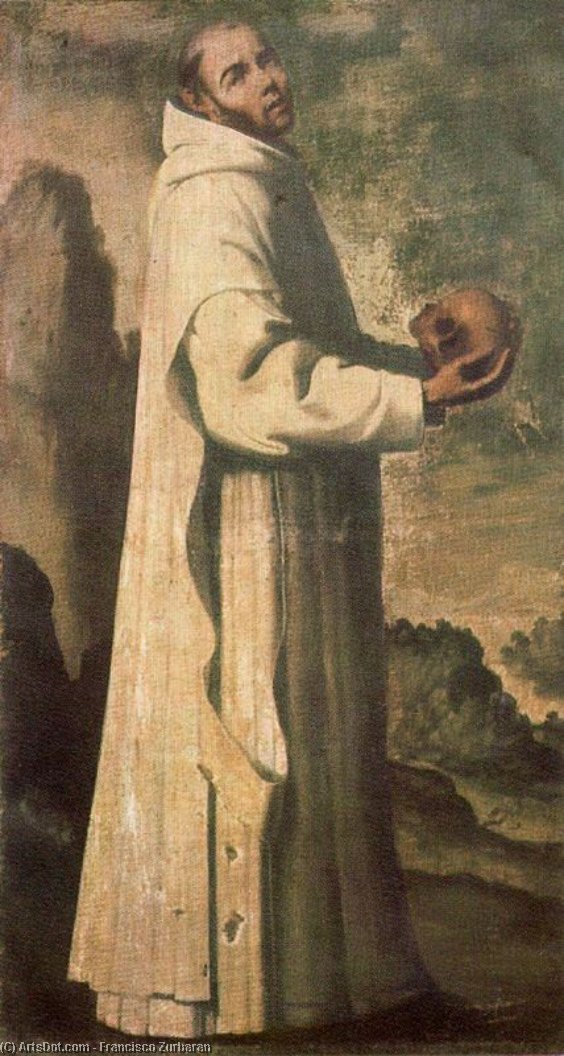
A Portrait of Contemplation: San Bruno by Francisco de Zurbarán
Francisco de Zurbarán’s “San Bruno” is not merely a portrait; it's an immersion into the profound stillness of religious devotion. Painted during the height of the Baroque era, circa 1630-1640, this arresting image captures a moment of intense introspection, likely depicting a Carmelite friar – a reference to the Order’s founding by St. Bruno himself – holding a skull before him. The painting's power resides in its ability to transcend simple representation and evoke a visceral sense of mortality and spiritual yearning. Zurbarán, born in the austere region of Extremadura, Spain, was deeply influenced by the religious landscape of his upbringing, a sensibility that permeates every brushstroke of this work.
Baroque Drama and Unflinching Realism
- Style: The painting exemplifies the Baroque style’s dramatic use of light and shadow – *tenebrismo* – to heighten emotional impact. Zurbarán masterfully employs this technique, bathing the figure in a stark, almost ethereal glow while plunging the background into deep darkness. This contrast isn't simply aesthetic; it serves to isolate the subject, emphasizing his vulnerability and solemnity.
- Technique: Zurbarán’s mastery of *sfumato*, achieved through meticulous layering of thin glazes of oil paint, creates a remarkable sense of depth and texture. The folds of the monk's robe are rendered with astonishing realism, conveying both its weight and the impression of constant movement – a subtle detail that speaks to his active devotion.
- Composition: The skull, positioned centrally and almost touching the figure’s hand, is not presented as a morbid symbol but rather as a poignant reminder of human frailty and the inevitability of death. It forces the viewer to confront their own mortality alongside the subject's contemplation.
Symbolism: Mortality and Spiritual Reflection
The inclusion of the skull is central to understanding the painting’s deeper meaning. In Baroque art, skulls frequently served as reminders of *Memento Mori* – “remember you must die” – a common theme in religious iconography. However, Zurbarán avoids a purely didactic approach. The monk's gaze is averted, suggesting not despair but rather a profound acceptance and contemplation of his own mortality within the context of faith. The simple brown robe, devoid of embellishment, further underscores this austerity, reflecting the Carmelite Order’s commitment to poverty and humility. The painting speaks to the core tenets of Catholic spirituality – repentance, sacrifice, and the pursuit of salvation.
Historical Context: Seville and the Rise of Baroque Art
Zurbarán spent much of his career in Seville, a vibrant center for artistic production during the 17th century. His work reflects the influence of Alonso de Najera, who introduced him to the burgeoning Baroque style. “San Bruno” demonstrates Zurbarán’s ability to synthesize this new style with his own deeply rooted religious convictions. The painting's emotional intensity and dramatic use of light were hallmarks of Seville’s Baroque art scene, contributing to its reputation as a major artistic hub during that period. This reproduction offers a window into the soul of 17th-century Spain, capturing not just a portrait but an entire era of artistic and spiritual fervor.