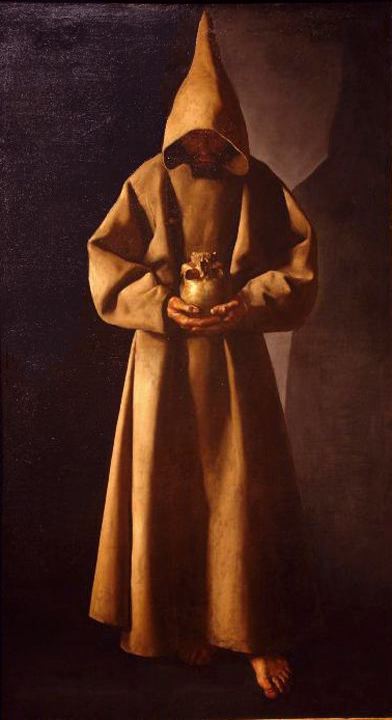
A Radiance in the Shadows: The Spiritual Depth of San Francisco 1
In the quiet, profound depths of the Spanish Baroque, few works capture the intersection of human mortality and divine light as poignantly as Francisco de Zurbarán’s San Francisco 1. Painted during the height of the Golden Age, circa 1630-1632, this masterpiece serves as a breathtaking testament to faith. At first glance, the viewer is met with an overwhelming sense of solitude; a figure emerges from an impenetrable, velvety darkness, illuminated by a singular, flickering source of light. This is not merely a portrait of a religious figure, but a visceral experience of chiaroscuro—the dramatic interplay of light and shadow that defines the era. The subject, draped in the heavy, textured folds of a monastic brown robe, holds a small lantern and a candle, tools that do more than provide illumination; they symbolize the flickering persistence of hope and the internal flame of devotion amidst the vast unknown of the world.
The emotional resonance of the piece lies in its ability to command silence. As the eye wanders over the subtle modeling of the saint's hands and the soft glow upon his face, one feels a sense of profound stillness. For the collector or the interior designer, this painting offers more than just aesthetic beauty; it provides an anchor of contemplative energy. The stark contrast between the illuminated subject and the void behind him creates an illusionistic depth that seems to pull the viewer into a private moment of prayer. It is a work that does not shout for attention through opulent color or complex composition, but rather whispers through its austere simplicity and psychological nuance, making it an ideal centerpiece for spaces dedicated to reflection, study, or sophisticated, soulful decor.
The Mastery of Texture and Tenebrism
To appreciate San Francisco 1 is to witness the technical virtuosity of a master who earned the moniker "the Spanish Caravaggio." Zurbarán’s technique is characterized by an almost tactile realism. He possessed an unparalleled ability to render the weight and coarseness of fabric, allowing the viewer to sense the ruggedness of the monk's habit. This meticulous attention to detail is balanced by his revolutionary use of tenebrism—a heightened form of chiaroscuro where darkness becomes a physical presence. By plunging the background into absolute shadow, Zurbarán strips away all worldly distractions, forcing an intimate confrontation between the viewer and the subject.
This technical brilliance is deeply rooted in the artist's origins. Growing up in the rugged landscapes of Extremadura, Spain, Zurbarán was surrounded by a sense of spiritual solemnity and natural austerity. This influence is woven into every brushstroke; there is no unnecessary ornamentation here, only the truth of light hitting form. For those seeking to bring a piece of art history into a modern setting, a high-quality reproduction of this work allows for the appreciation of these delicate gradations of tone and pigment blending. The painting serves as a bridge between the historical fervor of the 17th century and the contemporary desire for art that possesses both structural strength and emotional vulnerability.
A Legacy of Devotion and Light
Beyond its technical merits, San Francisco 1 carries a heavy symbolic weight that has captivated generations. The lantern and candle are classic emblems of spiritual guidance, representing the light of Christ or the clarity of faith in a period of intense religious upheaval in Spain. The monk’s posture—one of quiet, unyielding steadfastness—reflects the ascetic ideals of the monastic orders of his time. This sense of "inner stillness" is what makes the work so enduring; it captures a universal human longing for peace amidst chaos.
Integrating such a powerful work into a curated collection or a luxury interior design project allows for a dialogue between history and modernity. The painting’s restrained palette of earth tones, deep browns, and warm highlights complements a wide variety of sophisticated color schemes, from classical traditionalism to moody, contemporary minimalism. Owning a reproduction of this caliber is an invitation to experience the transformative power of the Baroque—a chance to surround oneself with a masterpiece that celebrates the enduring triumph of light over darkness.