San Luis Beltrán: A Study in Solitude and Spiritual Intensity
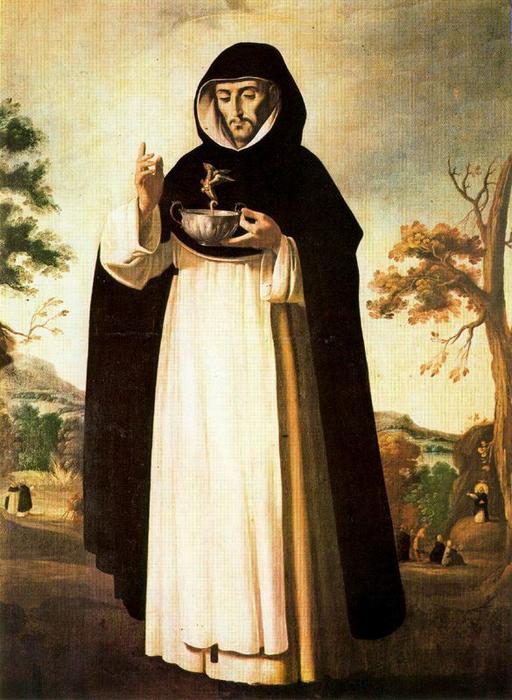
Francisco de Zurbarán’s “San Luis Beltrán” is not merely a portrait; it's an immersion into the austere heart of 17th-century Spanish religious art. Painted around 1630, this arresting work captures a moment of profound contemplation within the confines of a Dominican monastery, offering a glimpse into the soul of a man devoted to prayer and penance. The painting’s power lies not in dramatic action or vibrant color – rather, it resides in its masterful use of light, shadow, and carefully rendered detail to evoke an atmosphere of solemnity and spiritual intensity.
The subject, San Luis Beltrán (Saint Louis Bertrand), a Portuguese hermit known for his extreme asceticism and devotion, is presented with remarkable realism. He stands on a simple dirt road, suggesting a journey – not necessarily physical, but one of the spirit. His black robe, draped loosely over his body, emphasizes his humility and detachment from worldly concerns. The hood obscures his face, creating an air of mystery and inviting viewers to project their own interpretations onto this enigmatic figure. The darkness that envelops him isn’t simply a lack of light; it's a deliberate choice by Zurbarán, designed to heighten the sense of introspection and draw attention to the details of the scene.
Baroque Techniques: Light, Shadow, and Texture
Zurbarán was a master of the Baroque style, particularly known for his dramatic use of *tenebrism* – a technique that employs stark contrasts between light and dark. Here, this is most evident in the way the single shaft of light illuminates San Luis’s robe and hands, while the surrounding areas remain shrouded in deep shadow. This creates a powerful sense of depth and volume, making the textures of the fabric appear incredibly tactile. You can almost feel the rough weave of the cloth and the weight of his garments.
The artist's meticulous attention to detail is equally striking. Observe how he renders the folds of the robe with subtle variations in tone and texture, conveying a sense of movement and realism. The bowl held in his hand and the bird perched on his arm are depicted with astonishing accuracy – each feather, each curve of the ceramic, rendered with painstaking precision. This commitment to detail wasn’t simply decorative; it served to emphasize the saint's devotion and the tangible connection he maintains with the divine.
Symbolism and Context: The Spanish Counter-Reformation
“San Luis Beltrán” was created during a period of intense religious fervor in Spain – the height of the Spanish Counter-Reformation. Following the Protestant Reformation, the Catholic Church sought to reaffirm its authority and combat the spread of dissenting beliefs. Art played a crucial role in this effort, serving as a powerful tool for conveying religious doctrine and inspiring piety.
San Luis Beltrán himself was a figure revered for his extreme asceticism and unwavering faith. His life exemplified the virtues of self-denial and devotion to God. The painting’s somber mood and emphasis on spiritual contemplation reflect the prevailing atmosphere of religious seriousness during this era. The presence of the bird, often associated with hope and resurrection, could also be interpreted as a symbol of San Luis's faith in eternal salvation.
A Legacy of Dramatic Realism
Francisco de Zurbarán’s “San Luis Beltrán” stands as a testament to his extraordinary skill and artistic vision. It is a profoundly moving work that invites viewers to contemplate the mysteries of faith, devotion, and the human spirit. His influence on subsequent generations of Spanish painters – earning him the moniker "Spanish Caravaggio" – is undeniable. Reproductions of this iconic image offer a remarkable opportunity to experience the power and beauty of Baroque art in your own home, bringing a touch of solemn serenity and spiritual depth to any space.