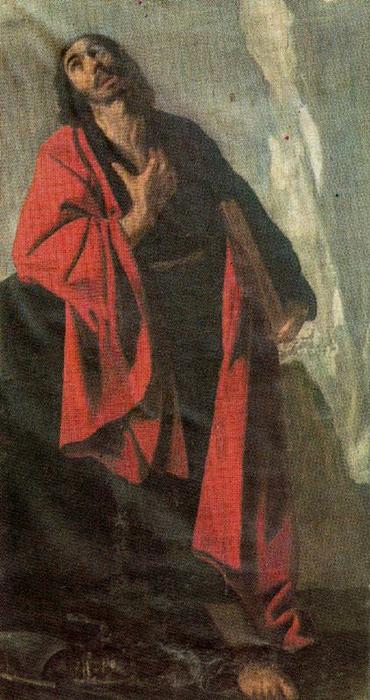
Francisco de Zurbarán’s “San Matías”: A Study in Solitude and Spiritual Intensity
Francisco de Zurbarán's "San Matías" is not merely a portrait; it’s an immersion into a profound state of contemplation, a window into the soul of a man wrestling with faith. Painted circa 1630-1635 during his most intensely productive period in Seville, this oil on panel captures a moment of quiet reverence, radiating a stillness that speaks volumes about the artist's mastery of capturing both physical realism and profound emotional depth. The painting’s power lies not just in its technical brilliance – the meticulous rendering of fabric, the subtle play of light – but also in its ability to evoke a sense of timelessness and spiritual gravity.
The subject himself, identified as Saint Matthias (Matías), is presented with an almost austere dignity. Dressed in deep crimson robes, he’s positioned within a simple, dark interior, the muted tones emphasizing his figure and drawing the viewer's eye to his face – etched with lines of age and experience, yet radiating an inner peace. His hands are clasped gently over his chest, holding a book open before him, suggesting a deep engagement with scripture or prayer. The pose is deliberately restrained, devoid of dramatic gestures; it’s a posture of quiet devotion, inviting the viewer to share in his meditative state.
The Baroque Embrace: Light, Shadow, and Dramatic Realism
Zurbarán was a pivotal figure in the development of Spanish Baroque painting, and “San Matías” exemplifies this style perfectly. He’s often described as “Spanish Caravaggio” due to his masterful use of *tenebrismo*, a technique characterized by stark contrasts between light and shadow. This dramatic lighting isn't merely decorative; it serves to heighten the emotional impact of the scene, isolating Saint Matthias within a pool of illumination while enveloping the background in darkness. This creates an atmosphere of mystery and introspection, drawing attention to the central figure and his spiritual journey.
The artist’s meticulous attention to detail is remarkable. The folds of the robe are rendered with astonishing realism, each crease and wrinkle meticulously depicted. The texture of the fabric appears almost tangible, inviting the viewer to reach out and touch it. Zurbarán's skill in portraying light on reflective surfaces – particularly the polished wood of the table – further enhances the painting’s visual impact. This commitment to realistic detail was a hallmark of his style, setting him apart from many of his contemporaries who favored more idealized representations.
Historical Context and Spiritual Themes
To understand “San Matías,” it's crucial to consider the historical context in which it was created. Spain during the 17th century was a deeply religious nation, profoundly influenced by the Counter-Reformation. The Catholic Church played a central role in all aspects of life, and art served as a powerful tool for conveying religious messages and reinforcing faith. Zurbarán’s paintings frequently depicted scenes from the lives of saints and biblical figures, often emphasizing themes of piety, humility, and devotion.
The choice of Saint Matthias himself is significant. He was one of the twelve apostles, martyred by Herod for refusing to renounce his faith. His story embodies sacrifice, unwavering conviction, and a deep connection to God. By portraying him in this moment of quiet contemplation, Zurbarán invites viewers to reflect on their own spiritual journeys and the importance of inner strength and devotion.
Symbolism and Emotional Resonance
Beyond its technical brilliance, “San Matías” is rich in symbolism. The book represents knowledge and divine guidance, while the crimson robes symbolize sacrifice and martyrdom. The darkness surrounding the figure suggests both the earthly realm and the mysteries of faith. The overall effect is one of profound serenity and spiritual intensity – a testament to Zurbarán’s ability to capture not just a likeness but also the very essence of his subject's soul.
Reproductions of “San Matías” offer an exceptional opportunity to bring this powerful work into your home or office. ArtsDot provides meticulously crafted, hand-painted reproductions that faithfully recreate the artist’s original techniques and atmosphere, allowing you to experience the painting’s beauty and emotional depth firsthand. Consider how this evocative image can contribute a sense of contemplation and spiritual grounding to your space.