Francisco de Zurbarán (1598-1664): Spanish Baroque master of dramatic tenebrism & religious art. Explore paintings of monks, saints & still lifes – the 'Spanish Caravaggio'!
San Pedro Mártir: A Testament to Faith and Dramatic Light
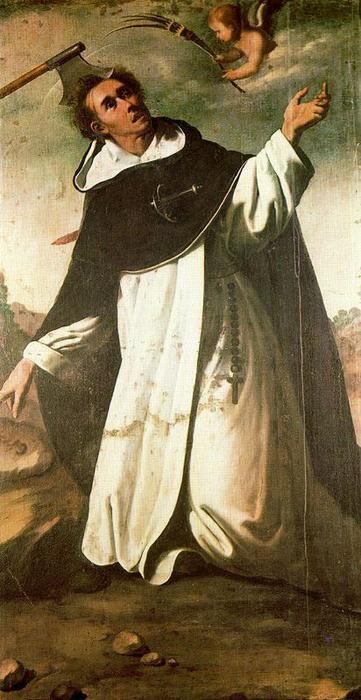
Francisco de Zurbarán’s “San Pedro Mártir” (Saint Peter Martyr) stands as an emblem of Baroque spirituality—a profound meditation on devotion rendered with unparalleled realism and bathed in the haunting glow of tenebrism. Painted circa 1630-1632, this monumental canvas resides within the Legion of Honor Museum in San Francisco, California, offering visitors a glimpse into the artistic fervor of Spain’s Golden Age. The artwork depicts Saint Peter Martyr, a Roman bishop martyred for his unwavering faith during Diocletian's persecution, kneeling in prayer before an angelic figure bearing a radiant halo above his head.
The Power of Tenebrism: Zurbarán's Signature Style
Zurbarán’s mastery lies not merely in depicting the saint but in conveying an atmosphere of solemn contemplation through his masterful use of tenebrismo—a technique characterized by extreme contrasts between light and dark. The stark illumination focuses intensely on Saint Peter’s face and hands, highlighting their musculature and conveying a palpable sense of vulnerability amidst unwavering piety. This dramatic chiaroscuro effect isn't simply stylistic; it serves to elevate the spiritual dimension of the scene, mirroring the inner turmoil and yearning for divine grace experienced by the saint. The darkness enveloping the landscape—representing mortality and earthly concerns—further emphasizes the luminosity emanating from Saint Peter’s figure, symbolizing God’s presence and salvation.
A Landscape Backdrop Reflecting Spiritual Depth
The backdrop is equally significant. Rendered in muted earthy tones, it depicts a rocky hillside dotted with sparse trees—a deliberate choice that underscores the saint's detachment from worldly distractions. The landscape isn’t merely decorative; it functions as a visual metaphor for the ascetic life embraced by Christian saints and symbolizes the spiritual wilderness traversed on the path to enlightenment. Zurbarán’s meticulous attention to detail extends beyond the figure itself, grounding the scene in a tangible reality while simultaneously hinting at an unseen realm of divine grace.
Symbolism: Haloes, Hands, and Prayerful Gestures
The halo encircling Saint Peter's head is a ubiquitous symbol of holiness throughout Christian iconography—representing divine illumination and spiritual perfection. Simultaneously, Saint Peter’s outstretched hand grasping upwards embodies fervent prayer and aspiration toward God. These gestures are rendered with astonishing realism, capturing the subtle nuances of human anatomy and conveying an emotional intensity that transcends mere representation. The angel's presence reinforces the saint’s faith and underscores the belief in angelic guardianship—a cornerstone of Christian theology.
Legacy: Zurbarán's Influence on Baroque Art
Francisco de Zurbarán’s “San Pedro Mártir” cemented his reputation as one of Spain’s foremost Baroque painters, influencing generations of artists who sought to emulate his dramatic style and profound spiritual vision. His unwavering commitment to realism combined with masterful tenebrism established a precedent for portraying religious subjects with unparalleled emotional depth—a legacy that continues to inspire admiration and contemplation today. Reproductions of this iconic artwork offer collectors and interior designers alike the opportunity to experience the enduring beauty and solemn power of Baroque art firsthand.