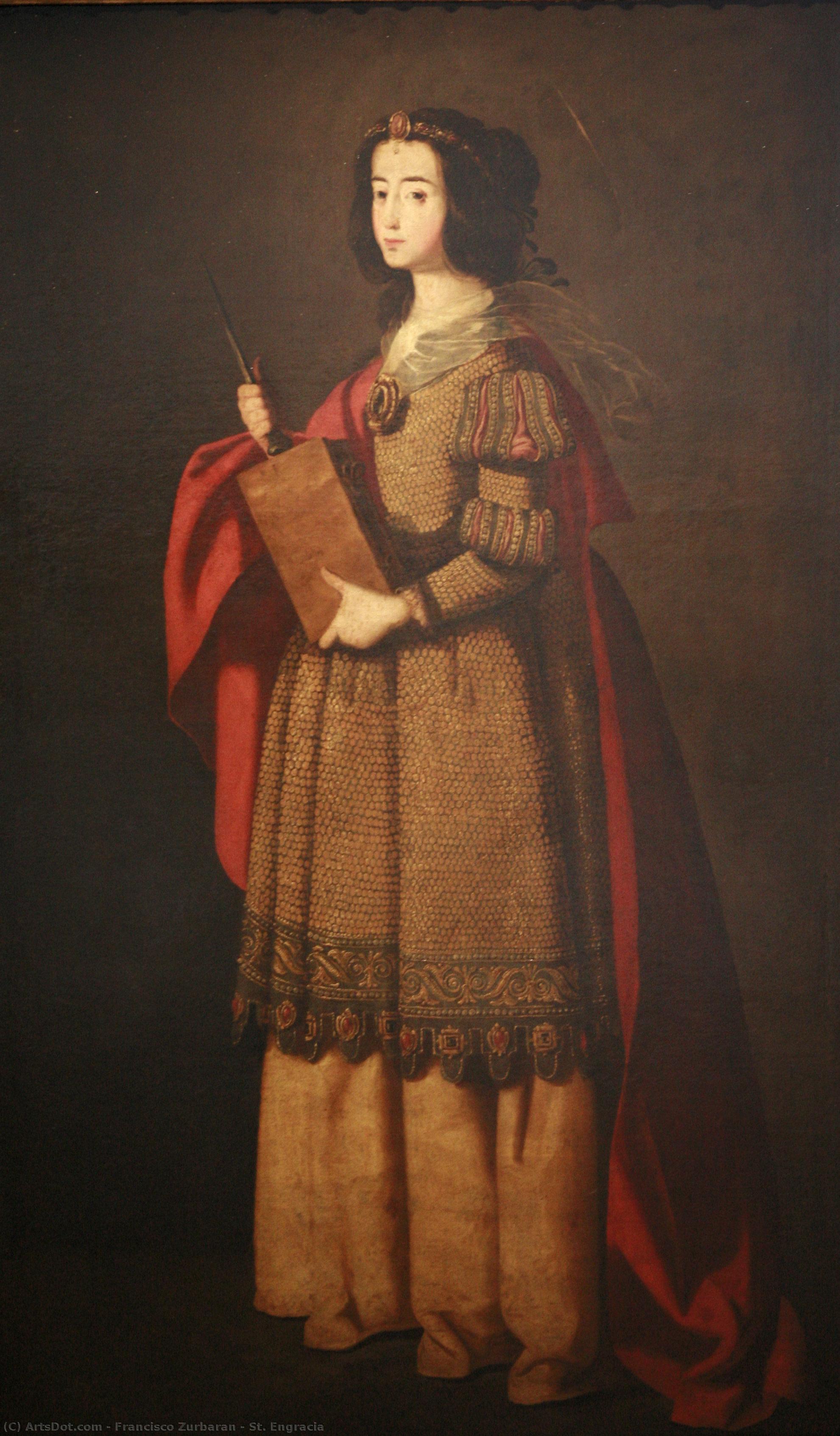
St. Engracia by Francisco Zurbarán (1598-1664) is a Baroque masterpiece depicting Saint Engracia, a Spanish nun known for her unwavering piety and serene countenance. Painted in 1650, the oil on canvas portrays Engracia dressed in a crimson robe with a hooded cowl, holding a book—a symbol of contemplation and spiritual devotion—against a muted landscape backdrop. Zurbarán’s masterful technique cap
A Study in Serenity and Spiritual Depth
Francisco de Zurbarán’s “St. Engracia,” painted circa 1650, stands as a testament to the enduring power of religious iconography within the Baroque period. Executed in oil on canvas, this portrait transcends mere representation; it strives for an almost ethereal capture of inner contemplation and devotion—a hallmark of Zurbarán’s distinctive artistic approach.
The Artist's Vision: Zurbarán and the Extremaduran Landscape
Born in Fuente de Cantos, Extremadura, Zurbarán absorbed the austere beauty of his homeland – a region characterized by rugged mountains and sparse vegetation—influencing profoundly his artistic sensibilities. Trained initially with Alejandro de la Mina and later under Alonso de Najera, he embraced the Baroque style’s dramatic contrasts and heightened realism, rejecting the Mannerist preoccupation with artificial elegance.
Technical Mastery: Oil Paint and Dramatic Lighting
Zurbarán's technique is remarkable for its meticulous attention to detail. He employed a masterful use of oil paint—a medium favored by Baroque artists—allowing him to achieve astonishing tonal gradations and textures. Crucially, he utilized dramatic chiaroscuro – the interplay between light and shadow – to sculpt the figure’s form and convey an overwhelming sense of solemnity. The stark illumination highlights Engracia's face and hands, emphasizing her gaze and drawing the viewer into a meditative state.
Symbolism Within Silence: Representing Saint Engracia
Saint Engracia (Encarnación Fernández de Encarnación), depicted in this painting, was a Carmelite nun known for her profound spiritual experience – she claimed to have received visions of Jesus Christ during prayer. The pose—seated calmly with a book held open—is deliberately symbolic, representing both intellectual contemplation and unwavering faith. The red gown signifies purity and penitence, while the hooded head conveys humility and reverence.
Emotional Resonance: A Portrait That Speaks Volumes
"St. Engracia" isn’t merely a depiction of a saint; it's an invitation to contemplate the essence of faith itself. The painting’s stillness—broken only by Engracia’s gaze—commands attention and encourages introspection. It captures not just outward appearance but also inner conviction, conveying a palpable sense of serenity and spiritual transcendence—a timeless achievement that continues to inspire admiration centuries after its creation.